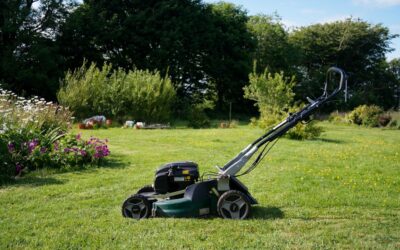
After 20 years running crews and mowing my own two-thirds of an acre, I’ve watched battery mowers go from toys to tools. A greenworks electric lawn mower is now a legitimate choice for most suburban lots, and the price of admission runs anywhere from $150 for a corded unit to about $600 for a self-propelled 80V machine. This guide breaks down the lineup so you buy the right deck and battery the first time.
- Corded, 40V, or 80V: Pick Your Platform First
- Deck Size and How It Maps to Your Yard
- Run Time: The Number That Actually Matters
- Push Versus Self-Propelled
- What These Mowers Actually Cost to Own
- Maintenance: Fifteen Minutes a Season
- Cutting Performance in Real Conditions
- Which Greenworks Should You Buy?
Corded, 40V, or 80V: Pick Your Platform First
Greenworks splits its walk-behind mowers into three families, and the platform matters more than any single model number because your batteries and chargers only work within a family.
- Corded electric (120V, 10-13 amp): 16 to 21-inch decks, roughly $150 to $250. Unlimited run time but you’re tethered to an extension cord. Best for flat lots under a quarter acre near an outlet.
- 40V cordless: 16 to 21-inch decks, $250 to $450. The volume seller. A 4.0Ah or 5.0Ah pack handles most yards, and the batteries cross over to Greenworks trimmers and blowers.
- 80V Pro cordless: 21-inch decks, $400 to $600. More torque for tall or damp grass, brushless motors, and self-propelled options. This is the closest a homeowner electric gets to a gas feel.
My rule of thumb: buy the platform, not the mower. If you already own 40V hand tools, staying on 40V saves you $150 in redundant batteries.
Deck Size and How It Maps to Your Yard
Deck width sets how many passes you make. A 16-inch corded mower is fine for a 2,000 to 4,000 square foot lawn. Step up to 20 or 21 inches once you’re mowing 5,000 square feet or more, because the extra 4 inches per pass shaves real time off a big yard.
Most Greenworks decks are 3-in-1: bag, mulch, or side discharge. The bagging capacity on the larger models runs around 2 to 2.5 bushels. Cutting-height adjustment is typically a single lever with 5 to 7 positions from about 1.25 to 3.75 inches. Set your deck at 3 inches for cool-season grass and you’ll cut watering and weed pressure at the same time.
Run Time: The Number That Actually Matters
Marketing claims assume ideal conditions. Here’s what I see in the field with a fresh, healthy pack:
- 40V, 4.0Ah: roughly 45 minutes of light cutting, or about 1/3 acre before the pack taps out.
- 40V, 5.0Ah: around 60 minutes, comfortably a 1/3 to 1/2 acre lawn.
- 80V, 4.0Ah: similar minutes to the 40V 5.0Ah but with far more power in thick grass, so it holds RPM instead of bogging.
Tall, wet, or seed-heavy grass can cut those numbers by a third. The fix is a second battery. Buy the mower as a kit with two packs, or add a 2.0Ah spare, and hot-swap at the halfway point. A dual-port model that runs one battery while the second waits keeps you moving without a charging break.
Push Versus Self-Propelled
Self-propelled matters more than people admit. On flat ground a push mower is fine and lighter, around 40 to 50 pounds. Once you have any slope, a berm, or you’re pushing 5,000-plus square feet, the rear-wheel-drive self-propelled 80V is worth the extra $100 to $150. Variable-speed models let you dial 1.5 to 3 mph so the mower matches your walking pace instead of dragging you. Rear-wheel drive is what you want over front-wheel drive on hills, because the drive wheels keep traction when the bagger fills and shifts weight to the back of the deck.
Weight is the trade-off. A self-propelled 80V with a big pack pushes 60 pounds. That’s a consideration if you’re lifting it up deck stairs or into a truck bed.
What These Mowers Actually Cost to Own
The sticker isn’t the whole story, but electric wins on running cost. There’s no oil, no spark plug, no air filter, and no carburetor to gum up over winter. Over five years you skip roughly $200 to $300 in gas and tune-up parts versus a comparable gas push mower.
Your one real wear item is the battery. Lithium packs hold up for about 500 charge cycles, or five to seven seasons of homeowner use, before capacity noticeably drops. A replacement 40V 4.0Ah pack runs $130 to $180, and an 80V pack $180 to $250. Budget for one replacement in year six and the math still beats gas for most people.
Maintenance: Fifteen Minutes a Season
Battery mowers are refreshingly low-maintenance, but a few habits keep them cutting clean.
- Pull the safety key and scrape the underside of the deck every few mows so clippings don’t cake and rob airflow.
- Sharpen or replace the blade once a year. A dull blade tears grass, leaving brown tips, and it hammers your run time because the motor works harder. Replacement blades are $15 to $25.
- Store batteries indoors at room temperature, ideally at a 40 to 80 percent charge for long winter layups. Freezing a fully drained pack shortens its life.
- Blow the motor vents clear with compressed air so the brushless motor doesn’t run hot.
Cutting Performance in Real Conditions
A common worry with electric mowers is whether they can handle grass that isn’t picture-perfect. In my experience the honest answer depends on the platform and the blade. On a 40V push model cutting dry cool-season grass at a 3-inch height, you’ll get a clean, even cut that rivals gas. Push that same mower into shin-high fescue after a week of rain and it will bog, throw wet clumps, and drain the pack fast. The 80V Pro handles those conditions far better because the brushless motor has enough torque reserve to hold blade RPM under load.
Three habits make any Greenworks cut better regardless of model:
- Never remove more than the top third of the grass blade in one pass. If the lawn got away from you, raise the deck to 3.5 inches, cut once, then lower and cut again a few days later.
- Mow in the afternoon once the dew has burned off. Wet grass is the number-one cause of clumping and clogged discharge chutes on battery mowers.
- Keep the blade sharp. A dull edge is the single biggest reason people think their electric mower is underpowered.
Greenworks isn’t the only battery brand on the shelf, and it helps to know where it lands against the competition. Compared to EGO and Ryobi, the two other big cordless names, Greenworks generally comes in $50 to $100 cheaper at a comparable deck size and battery capacity. EGO’s 56V arc-lithium packs have a slight edge in cold-weather performance and premium fit and finish, but you pay for it. Ryobi’s 40V ecosystem is broad and affordable but leans more homeowner-casual than the Greenworks Pro 80V line, which is built tougher. If value per dollar is your priority and you want a mower that punches above its price, Greenworks is hard to beat. If you want the absolute premium feel and don’t mind paying, EGO is the alternative worth cross-shopping. For most homeowners, though, the Greenworks lineup covers every realistic need at a friendlier price, which is exactly why it has become a garage staple across the country.
Which Greenworks Should You Buy?
Match the machine to the lot and you won’t overpay:
- Small flat yard near an outlet: a 20-inch corded model at $180 to $220. No batteries to manage, ever.
- Typical 1/4 to 1/3 acre suburban lawn: the 40V 21-inch push or self-propelled with a 5.0Ah pack, $350 to $450.
- 1/2 acre, slopes, or thick grass: an 80V Pro 21-inch self-propelled with dual batteries, $500 to $600. This is the one I’d hand a customer who’s tired of pull-starting a gas mower.
For anything approaching an acre or more, be honest with yourself: a battery walk-behind will have you swapping packs constantly, and a riding mower or robotic unit becomes the smarter tool. But for the standard American lot, a well-chosen Greenworks electric mower does everything a gas mower did with none of the noise, fumes, or spring-startup headaches. Buy the platform that matches your other tools, size the deck to your yard, and add that second battery up front. You’ll be glad you did on the first hot Saturday of the season.