Dingy, mismatched grout can make even brand-new tile look tired, and scrubbing only goes so far. Grout color sealing solves the problem by coating the grout with a tinted, protective sealer that restores a uniform color while shielding the lines from stains and moisture. Unlike a clear penetrating sealer, a color sealer actually changes the appearance of your grout, letting you refresh, recolor, or unify lines without regrouting. This guide explains how it works, its benefits, and how to apply it.
Part of our Tile & Grout guide — explore the full guide →
What Grout Color Sealing Is
Grout color sealer is a pigmented coating, usually acrylic or epoxy-based, that bonds to the surface of cementitious grout. It forms a durable, colored film that both recolors and waterproofs the grout lines. Because the pigment sits on top, you can keep your existing grout color, deepen it, or change it entirely, which makes it a powerful tool for refreshing a tiled floor, shower, or backsplash.
It only works on traditional cement grout. Epoxy grout is already nonporous and stain-resistant, so it neither needs nor accepts a color sealer.
Color Sealer vs Clear Penetrating Sealer
The two products are often confused but do different jobs:
- Clear penetrating sealer: Soaks into the grout and repels water and stains while leaving the color unchanged.
- Color sealer: Coats the surface, changes or refreshes the color, and provides a stronger stain barrier.
If your grout is the right color but porous, a penetrating sealer is enough. If your grout is stained, faded, or blotchy, color sealing both fixes the look and protects it going forward.
Key Benefits
Color sealing offers advantages that go beyond appearance:
- Uniform color: Erases stains and uneven shading for a clean, consistent look.
- Strong stain resistance: The film makes grout much easier to wipe clean.
- Waterproofing: Helps keep moisture out of porous grout in showers and backsplashes.
- Color change: Lets you update a room without the mess of regrouting.
- Mildew resistance: Many sealers include additives that resist mold growth.
The result is grout that looks freshly installed and stays that way with far less scrubbing.
What You Need
For a do-it-yourself application, gather a quality grout color sealer in your chosen shade, a grout cleaner, a stiff grout brush or detail applicator brush, clean rags or sponges, painter’s tape if you want to protect edges, and gloves. A small toothbrush-style applicator helps you stay precise on narrow lines. Buy a little more sealer than you think you need so you can apply even coverage.
How to Apply Grout Color Sealer
Preparation is the most important part. Skip it and the sealer will not bond.
- Deep clean the grout thoroughly and let it dry completely, usually 24 hours, so no moisture is trapped.
- Repair any cracked or missing grout and let repairs cure first.
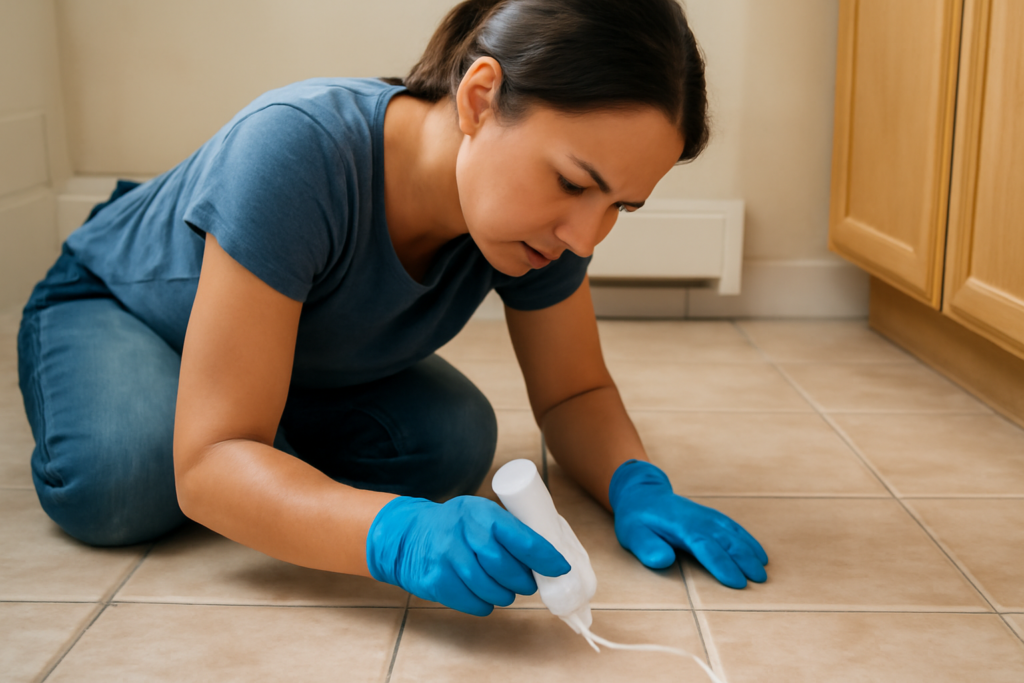
- Apply the color sealer to the grout lines with the applicator brush, working a small section at a time.
- Let it set for the time on the label, then wipe excess off the tile face with a damp sponge before it dries.
- Buff the tile clean and inspect the lines, applying a second coat if the maker recommends it.
Work methodically and keep the tile face clean as you go. Dried sealer haze on the tile is far harder to remove later.
Cost and Time
A DIY grout color sealing kit typically runs $20 to $40 and covers a small to medium room. Professional color sealing usually costs around $1 to $2 per linear foot of grout, or a few hundred dollars for an average bathroom. The job takes a few hours of active work, plus drying time before and after. Compared to regrouting or retiling, color sealing is fast and inexpensive.
Maintenance and Longevity
A properly applied color seal can last several years, often three to five or more depending on traffic and cleaning habits. Clean sealed grout with a neutral pH cleaner and avoid harsh acids or abrasive pads, which wear down the film. When the color begins to fade or the surface stops beading water, clean thoroughly and reapply a fresh coat to restore protection.
Choosing the Right Color
Color sealing gives you a chance to rethink your grout entirely. Matching the existing shade simply refreshes a dingy floor, while going a few tones darker hides future staining far better, which is why darker grout is popular for floors. Lighter grout brightens a space but demands more upkeep. For a dramatic change, you can recolor white grout to charcoal for a graphic look, or warm up cool tile with a beige tone. Test the sealer on a small hidden area first, since the cured color can look slightly different from the bottle.
Best Rooms for Color Sealing
Color sealing pays off most in high-use, moisture-prone areas. Kitchen floors and backsplashes collect grease and food splatter that discolor grout quickly, so the stain barrier is genuinely useful. Bathroom floors and shower walls benefit from the added water resistance and mildew protection. Entryways and mudrooms, where grit and tracked-in dirt darken grout fast, also see a big improvement. In low-traffic, dry rooms the benefit is more cosmetic, though a uniform color still makes tile look freshly installed.
Common Mistakes to Avoid
Applying sealer to damp or dirty grout is the top reason it peels or fails to bond. Letting excess sealer dry on the tile leaves a haze that takes serious effort to remove. And trying to color-seal epoxy grout simply will not work, since there is nothing porous for the sealer to grip. Confirm your grout type and prep meticulously, and the results will hold up.
DIY vs Hiring a Pro
Color sealing is achievable as a DIY project, especially on smaller areas like a backsplash or a modest bathroom floor, and a kit keeps costs low. The work is not technically hard, but it is tedious and unforgiving of sloppy edges, since dried sealer on the tile face is tough to remove. For large floors, intricate mosaic patterns, or textured tile where excess sealer hides in the surface, a professional often delivers cleaner, faster results and stands behind the work. Weigh your patience and the project size against the modest savings of doing it yourself.
Final Thoughts
Grout color sealing is one of the most cost-effective ways to make tile look new again. It erases stains, unifies color, and adds a tough, water-resistant barrier that keeps grout cleaner for years. With careful cleaning, patient prep, and a steady hand on the applicator, you can transform tired grout lines in an afternoon and protect them for the long haul.