A reliable gutter installation cost calculator starts with one number—your home’s total linear feet of roofline—and multiplies it by a per-foot rate that depends on material, home height, and regional labor. Before you call a contractor, you can build a solid estimate yourself and walk into quotes knowing whether you’re being fairly priced. This guide gives you the formulas, real per-foot ranges, and the factors that push a gutter job cheaper or more expensive so you can calculate your own number with confidence.
Part of our Roofing guide — explore the full guide →
- The Basic Calculation
- Cost Per Foot by Material
- Seamless vs. Sectional Gutters
- Don’t Forget Downspouts
- A Sample Calculation
- Factors That Raise Your Cost
- Factors That Lower Your Cost
- DIY vs. Professional Installation
- Getting Accurate Quotes
- Sizing Gutters for Your Roof and Rainfall
- Common Add-On Costs to Budget For
The Basic Calculation
Every gutter estimate boils down to a simple formula:
Total cost = (Linear feet of gutter × cost per foot) + downspouts + accessories + labor factors
The single most important input is linear feet—the total length of gutter needed to line your roof’s eaves. To find it, measure the length of each roof edge that needs a gutter and add them together. A typical single-story home has 150 to 200 linear feet; a larger two-story home can have 200 to 300 feet or more. If you can’t measure safely, you can estimate from your home’s footprint: the perimeter of the roofline is a close starting point.
Cost Per Foot by Material
The material you choose is the biggest driver of the per-foot rate. Here are typical installed prices (material plus labor):
- Vinyl: $3 to $6 per linear foot. Cheapest and DIY-friendly, but brittle in cold and shorter-lived.
- Aluminum (most common): $6 to $13 per linear foot installed. The default choice—rust-proof, lightweight, and available in seamless form.
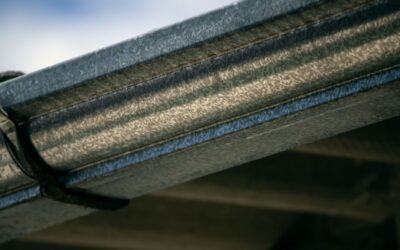
- Galvanized steel: $9 to $20 per linear foot. Stronger than aluminum but can rust over time.
- Copper: $25 to $45+ per linear foot. Premium, beautiful, and extremely long-lasting, but expensive and requiring skilled installation.
- Zinc: $25 to $50 per linear foot. High-end and durable, similar to copper in price.
For most homeowners, seamless aluminum at roughly $8 to $12 per foot installed is the sweet spot of cost, durability, and appearance.
Seamless vs. Sectional Gutters
Your calculator also needs to account for gutter type. Sectional gutters come in pre-cut lengths you join together and are cheaper and DIY-friendly. Seamless gutters are custom-formed on-site from a continuous coil to the exact length of your roofline, eliminating the seams where leaks start. Seamless costs about $2 to $5 more per foot than sectional but leaks far less and is the professional standard. Since seamless requires a special roll-forming machine, it’s essentially always a professional install.
Don’t Forget Downspouts
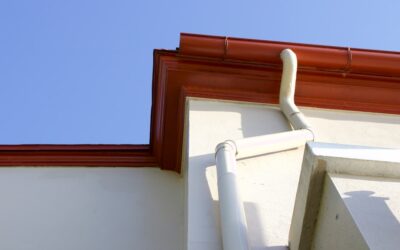
Downspouts—the vertical pipes carrying water to the ground—are priced separately, usually $5 to $15 per linear foot installed. A typical home needs a downspout every 30 to 40 feet of gutter, so plan on 4 to 8 downspouts. For a standard home, downspouts add roughly $150 to $600 to the total. Include their vertical length (from gutter to ground, plus any extensions) in your calculation.
A Sample Calculation
Let’s estimate a common single-story home:
- Linear feet of gutter: 180
- Material: seamless aluminum at $10/foot = $1,800
- Downspouts: 5 downspouts averaging 12 feet each = 60 feet at $9/foot = $540
- Accessories (hangers, end caps, corners): included or ~$100–$200
- Estimated total: roughly $2,300 to $2,600
For a two-story home with 250 linear feet, the same math lands around $3,000 to $4,500 because of the greater length and the height premium.
Factors That Raise Your Cost
- Home height: Two- and three-story homes require more ladder work, scaffolding, or safety equipment, often adding 20 to 50 percent to labor.
- Roof complexity: Many corners, dormers, steep pitches, and multiple rooflines mean more cuts, fittings, and time.
- Gutter size: Standard 5-inch K-style is baseline; upgrading to 6-inch gutters for better capacity adds cost but handles heavy rain and large roofs better.
- Removal of old gutters: Tearing off and disposing of existing gutters typically adds $0.50 to $2 per foot.
- Gutter guards: Adding leaf protection runs $2 to $40 per foot depending on type, a significant add-on.
- Fascia or soffit repair: Rotted fascia board behind old gutters must be repaired first, adding to the bill.
- Region and season: Labor rates vary widely by area, and peak fall demand can raise prices.
Factors That Lower Your Cost
- Single-story, simple roofline: Easy access and few corners keep labor minimal.
- Vinyl or sectional material: The budget materials cut per-foot cost, though at the expense of longevity.
- DIY installation: Doing it yourself with sectional vinyl or aluminum can cut costs to just material—roughly $3 to $6 per foot—but seamless and high roofs are best left to pros.
- Off-season scheduling: Booking in slower months can earn better pricing.
DIY vs. Professional Installation
Installing sectional gutters on a single-story home is a realistic DIY project that can save 40 to 60 percent on labor. You’ll need a good ladder, level, and helper, and precise slope (about 1/4 inch of fall per 10 feet toward downspouts) is critical to avoid standing water. However, seamless gutters require professional roll-forming equipment, and two-story or steep-roof work carries real fall risk. For those situations, professional installation is worth every dollar—and pros guarantee their work and proper slope.
Getting Accurate Quotes
Use your self-calculated estimate as a benchmark, then get at least three written quotes. Make sure each specifies material, gutter size, seamless vs. sectional, number of downspouts, old-gutter removal, and any fascia repair, so you’re comparing apples to apples. Beware of bids far below the others—they may skimp on hanger spacing, use thinner aluminum, or exclude removal and disposal. A quote in the range your calculation produced, from a licensed and insured installer offering a workmanship warranty, is the sign of fair pricing.
Sizing Gutters for Your Roof and Rainfall
Your calculator should account for gutter size, because bigger is not always better and too small can cause overflow. The standard residential gutter is 5-inch K-style, which handles most homes and moderate rainfall. Homes with large roof areas, steep pitches, or in regions with heavy downpours benefit from upgrading to 6-inch gutters, which carry roughly 40 percent more water and resist overflow during intense storms. The 6-inch size costs about $1 to $3 more per foot but prevents the water damage that comes from undersized gutters spilling over. A quick rule: calculate your roof’s drainage area (roof footprint adjusted for pitch), and if it is large or your area sees frequent heavy rain, size up. Downspout size matters too—3×4-inch downspouts drain far more than the older 2×3-inch, clog less, and are worth specifying on any new install.
Common Add-On Costs to Budget For
Beyond the base gutter and downspout math, several add-ons frequently appear on real quotes, and building them into your estimate avoids surprises. Splash blocks or downspout extensions to carry water away from the foundation run $10 to $40 each. Underground drainage to route downspouts to a dry well or the street can add $500 to $2,000 depending on trenching. Gutter guards, if you want them, are a major line item at $2 to $40 per foot. Fascia and soffit repair behind old gutters, discovered during tear-off, can add several hundred dollars. Heated gutter cables to prevent ice dams in snowy climates add cost too. Ask each contractor to itemize these so your self-calculated base figure plus the add-ons you actually want gives a realistic total rather than a lowball base price that balloons on the final invoice.
Armed with your linear-foot measurement, a per-foot material rate, downspout count, and the height and complexity of your home, you can run your own gutter installation cost calculator in minutes and know exactly what your project should cost—turning contractor quotes from a guessing game into a straightforward comparison.