A hailstorm can look like nothing from the ground and still shorten your roof’s life by a decade. Hail damage to roof shingles often shows up as small bruises and missing granules rather than obvious holes, which is exactly why so many homeowners miss it — and miss the insurance claim window along with it. The damage quietly exposes the asphalt to UV and water until leaks appear years later. Knowing what to look for, how to document it, and when to file a claim can save you thousands.
Part of our Roofing guide — explore the full guide →
- How Hail Actually Damages Shingles
- What Hail Damage Looks Like
- Signs to Look for From the Ground
- Get an Inspection Before You Climb
- Filing an Insurance Claim
- Repair or Replace?
- What Roof Replacement Costs
- Protecting Your Roof Going Forward
- What Happens If You Ignore Hail Damage
- Frequently Asked Questions
How Hail Actually Damages Shingles
Asphalt shingles have a protective layer of mineral granules over an asphalt-saturated mat. When hail strikes, the impact knocks those granules loose and bruises or fractures the mat underneath. The bruise itself may not leak right away, but with the granule armor gone, the sun cooks the exposed asphalt and the shingle deteriorates far faster than it should.
Stones as small as one inch across can damage an aging roof, and larger stones — 1.5 inches and up — can crack even newer shingles. Wind driving the hail sideways concentrates the damage on the storm-facing slopes, which is why an inspection has to cover every side of the roof, not just one.
What Hail Damage Looks Like
Distinguishing real hail damage from ordinary wear is the whole game, because insurers only pay for storm damage. Genuine hail hits share a set of traits:
- Random pattern with no consistent spacing — unlike manufacturing defects or foot traffic, which follow lines.
- Dark spots where granules are missing and the black asphalt shows through.
- Soft bruises that feel spongy when you press them, like a bruise on an apple.
- Circular marks often accompanied by matching dents on soft metal — gutters, downspouts, vents, and flashing.
Check those metal surfaces first. Dented gutters and vent caps are the clearest, easiest-to-verify evidence that a storm was severe enough to damage the shingles.
Signs to Look for From the Ground
You do not have to climb up to get a first read. From the yard, look for granules washed into the gutters and at the bottom of downspouts — a pile of black sandy grit after a storm is a red flag. Scan for shingles that look pockmarked or shiny in spots, and inspect the metal roof accessories with binoculars. Inside, check the attic and ceilings for any new water stains. If any of these show up, get a professional roof inspection before deciding what to do.
Get an Inspection Before You Climb
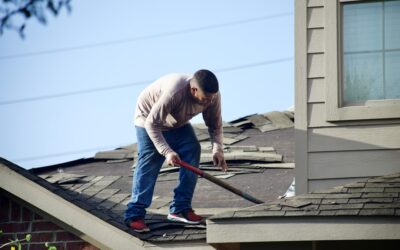
Walking a damaged roof is dangerous and can void a claim if you disturb the evidence. A reputable roofing contractor will inspect for free after a storm, chalk-mark the hits, photograph everything, and give you a written report. Choose a local, established company over storm-chasing crews that appear door-to-door after every hailstorm — some inflate or even fabricate damage. Ask for their license, local references, and proof of insurance before letting anyone on your roof.
Filing an Insurance Claim
Most homeowners policies cover hail damage, but the clock is ticking — many require you to file within 6 to 12 months of the storm date. Move promptly and follow these steps:
- Note the exact date of the hailstorm; your insurer can verify it against weather records.
- Document everything with dated photos of shingles, gutters, vents, and any interior leaks.
- Get a written inspection report and repair estimate from a licensed roofer.
- File the claim and let the insurance adjuster inspect — ideally with your roofer present to point out the damage.
- Review the settlement carefully; you can request a re-inspection if the adjuster misses damage.
Understand your policy first. Replacement cost coverage pays to fully replace the roof, while actual cash value policies subtract depreciation and leave you covering more of the bill.
Repair or Replace?
The extent of the damage and the age of the roof drive this decision. Scattered damage on a few slopes of a newer roof can sometimes be spot-repaired, though matching old shingles is often difficult. Widespread bruising, an older roof near the end of its life, or damage across most slopes usually points to full replacement — and if insurance is paying, replacement is frequently the better long-term value. A patched roof with mismatched shingles can also hurt resale.
What Roof Replacement Costs
If you replace, a new asphalt shingle roof typically runs $4.50 to $8.00 per square foot installed, or roughly $9,000 to $20,000 for an average home, before your insurance contribution. Impact-resistant Class 4 shingles cost 10 to 25 percent more but stand up far better to future hail — and many insurers offer a premium discount for installing them, which can pay back the upgrade over time. In hail-prone regions like Texas, Colorado, and the Midwest, that upgrade is worth serious consideration.
Protecting Your Roof Going Forward
You cannot stop hail, but you can limit its cost. Install Class 4 impact-resistant shingles at your next replacement, keep trees trimmed back so limbs do not add to the damage, and inspect the roof after any significant storm rather than waiting for a leak. Photograph your roof while it is in good condition so you have a clear before-and-after baseline for any future claim. Catching hail damage to roof shingles early — and documenting it while the claim window is open — is the difference between a covered repair and an expensive surprise years down the road.
What Happens If You Ignore Hail Damage
The danger of hail damage is that it is patient. A bruised shingle with its granules knocked off may not leak for a year or two, so it is tempting to do nothing when there is no water coming in. But the exposed asphalt weathers fast under UV, and the bruise becomes a crack, and the crack becomes a leak — usually after the insurance claim window has closed. At that point the same damage that would have been a covered claim becomes an out-of-pocket repair, plus any interior damage the leak caused.
Delayed damage also compounds. Water that gets past a failed shingle can rot the decking, soak the insulation, and feed mold in the attic. What began as a cosmetic granule loss turns into a structural and air-quality problem. Filing promptly after a storm, even when nothing is leaking yet, is the whole point of catching hail damage early.
Frequently Asked Questions
How do I know if my roof has hail damage?
Look for granules washed into gutters and downspouts, dark spots on shingles where the black asphalt shows, soft bruises that feel spongy, and dents on soft metal like gutters, vents, and flashing. Those metal dents are the clearest proof a storm was severe enough to damage shingles.
Will insurance cover hail damage to my roof?
Most homeowners policies do, but many require you to file within 6 to 12 months of the storm. Replacement cost policies pay to fully replace the roof; actual cash value policies subtract depreciation, leaving you to cover more of the bill.
Should I repair or replace a hail-damaged roof?
Scattered damage on a newer roof can sometimes be spot-repaired, though matching old shingles is difficult. Widespread bruising or an older roof usually calls for full replacement — and if insurance is paying, replacement is often the better long-term value.