
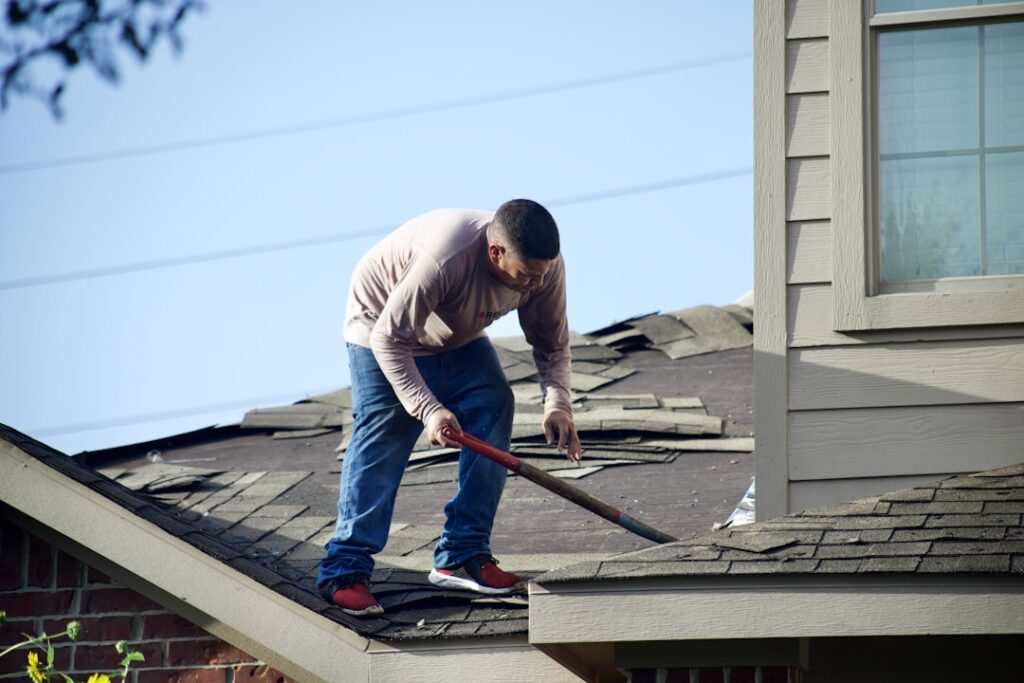
Hail causes $10 billion or more in US property damage in a typical year, and the roof takes most of it — yet the majority of hail-damaged roofs never get claimed, because the damage is nearly invisible from the ground and does not leak right away. Hail damage roof repair is unlike any other roof problem: it is as much an insurance process as a construction project, and the order in which you inspect, document, and file determines whether you get a full roof replacement or a denied claim. Here is the sequence that works.
Part of our Roofing guide — explore the full guide →
What Hail Damage Actually Looks Like
Forget holes. On asphalt shingles, a hail hit is a “bruise” — a dark, roughly circular spot where granules were knocked loose, often with a soft, crushed feel underneath, like a bruised apple. The real damage is below the surface: the impact fractures the fiberglass mat, which lets water in over the following one to three years as the exposed asphalt weathers. Hail of 1 inch (quarter size) can damage aging 3-tab shingles; 1.25-inch hail damages most shingles; 1.5-inch and up damages nearly everything, including metal.
Distinguish true hail bruises from lookalikes insurers use to deny claims: blistering (raised pops with granules intact in the crater), normal granule loss in gutter runoff, and foot scuffing. Real hail damage is randomly distributed, concentrated on the storm-facing slopes, and consistent in size.
Do the Ground-Level Inspection First
You do not need to climb the roof to build a case — check the “soft metals,” which dent at hail sizes too small to hurt shingles and prove the storm hit your property:
- Gutters, downspouts, and gutter screens (dents and dings)
- AC condenser fins (crushed fin patterns are textbook evidence)
- Window screens, wraps, and aluminum fascia
- Roof vents, flashing, and the soft aluminum of ridge vents
- Painted deck rails, mailboxes, and grills (chipped paint dots)
Photograph everything with a coin for scale, note the storm date (save a local news screenshot or NOAA storm report for your ZIP code), and check splatter marks — dark clean spots on oxidized surfaces that fade within weeks, so shoot them early.
Get a Contractor Inspection Before You File
Call a reputable local roofer for a documented inspection before calling your insurer. A good inspector chalks test squares — a 10-by-10-foot area on each slope — and counts hits; eight or more hits per square on two or more slopes generally supports full replacement rather than patch repair. You want this evidence in hand first because a claim filed and denied still counts as a claim on your CLUE report, and an inspection that finds no damage saves you from filing at all.
Vet the roofer harder than the damage. After every major hailstorm, out-of-state “storm chasers” canvass neighborhoods, and they write shoddy contracts and vanish before warranty calls. Rules of thumb: local physical address older than the storm, state license and liability insurance you verify, no pressure to sign an assignment-of-benefits agreement at the door, and never pay anything before your claim is approved.
Filing the Claim and Meeting the Adjuster
Most homeowner policies require claims within one year of the storm date — some states and policies allow two, some as little as six months — so do not sit on suspected damage. When you file, give the carrier the storm date, your photo documentation, and your contractor’s inspection report. The insurer then sends an adjuster to inspect.
Have your roofer present at the adjuster meeting. This is standard practice, not confrontational: your contractor walks the roof with the adjuster, points out every chalked hit, and argues scope on the spot — slope by slope, plus gutters, screens, and AC fins. Claims with contractor representation routinely capture 20 to 40 percent more scope than homeowner-only inspections, simply because damage gets missed otherwise. If the adjuster denies or lowballs a roof your contractor documented thoroughly, request a second adjuster inspection or invoke the appraisal clause in your policy; roughly half of disputed hail claims improve on re-inspection.
ACV, RCV, and Your Deductible
Read your policy for two acronyms. RCV (replacement cost value) coverage pays the full cost of a new roof: you receive an initial check minus depreciation and your deductible, then recover the depreciation after the work is completed. ACV (actual cash value) coverage pays only the depreciated value — on a 15-year-old roof, that might be 40 percent of replacement cost — and many carriers have quietly moved roofs to ACV or percentage deductibles (1 to 2 percent of dwelling coverage, so $4,000 to $8,000 on a $400,000 home).
One hard legal line: any contractor who offers to “cover,” “waive,” or rebate your deductible is proposing insurance fraud, which is a crime for both of you in most states. Walk away.
The Actual Repairs
Scope follows the damage density. Isolated hits on one slope may warrant shingle-level fixes — replacing individual damaged shingles runs $150 to $700 per repair visit, along with new pipe boots and vents, which is ordinary roof repair work. Widespread bruising means full replacement of the damaged slopes or the entire roof; a typical claim-funded replacement runs $10,000 to $25,000, in line with standard new roof pricing. If hail opened active leaks, get tarping or emergency leak repair done immediately — your policy requires you to mitigate further damage, and the carrier reimburses reasonable emergency costs.
When replacing in hail country, ask about Class 4 impact-resistant shingles (UL 2218 rated), such as CertainTeed ClimateFlex or GAF ArmorShield II. They add $10 to $25 per square in material cost, and many insurers discount premiums 5 to 25 percent for them — though some policies then exclude future cosmetic hail damage, so read the endorsement.
Claim Mistakes That Cost Homeowners Money
The same handful of errors sink hail claims year after year. Waiting too long is the biggest — damage discovered during a sale inspection three years after the storm is usually uncollectable. Signing a door-knocker’s contingency agreement before any inspection legally ties you to that contractor if the claim pays, whatever their workmanship turns out to be; get the inspection first, sign after approval. Making permanent repairs before the adjuster visit destroys the evidence — tarp and document, but let the carrier see the damage. Accepting the first scope without review leaves money on the table, since first adjuster estimates commonly miss gutters, screens, painted surfaces, and code-required upgrades (drip edge, ice barrier) that your policy’s ordinance-and-law coverage should pay for. And forgetting to file for recoverable depreciation after the work is done forfeits the second check entirely — carriers do not chase you to pay it.
Keep a simple claim file: storm date and reports, all photos, the inspection report, every adjuster email, the scope sheet, the contract, and completion photos. Claims with organized documentation settle faster and re-open easier when supplements are needed.
Know your state’s rules, too. Hail-belt states regulate this industry specifically: Texas, Colorado, and Minnesota, among others, give homeowners a statutory right to cancel a roofing contract within 72 hours or so of a claim being denied, and several states bar contractors from acting as public adjusters. If a dispute hardens, a licensed public adjuster (fee: 5 to 15 percent of the settlement) or the appraisal process usually resolves it faster than a lawyer.
The Timeline at a Glance
Storm day: photograph soft-metal damage and save storm reports. Week one: contractor inspection with test squares. Week one or two: file the claim; meet the adjuster with your roofer. Weeks two through six: approval, scope negotiation, first check. Construction: usually one to three days for the roof itself. After completion: submit the certificate of completion to release recoverable depreciation. Handled in that order, a hail claim is a paperwork exercise with a new roof at the end — handled out of order, it is how homeowners end up eating five-figure repairs on damage their policy covered.


