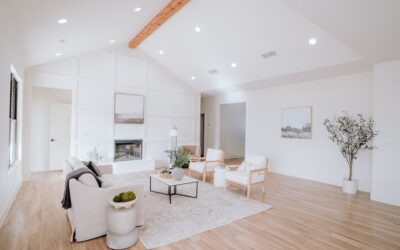
A wall-mounted television can either anchor a room beautifully or look like an afterthought stuck above a fireplace. The difference is planning. The best hanging tv on wall ideas solve three things at once: the right viewing height, a clean cord-free look, and a design that fits the wall instead of fighting it. Get those right and a 65-inch screen becomes part of the room rather than a black rectangle dominating it.
Get the Mounting Height Right First
Before any design, nail the ergonomics. The ideal center of the screen sits at eye level when you are seated, typically 42 to 48 inches from the floor to the middle of the TV. For a standard 65-inch set, that puts the bottom edge roughly 25 inches up.
Mount it too high, a common mistake above fireplaces, and you will crane your neck during every movie. If a fireplace forces a higher position, choose a tilting or full-motion mount so you can angle the screen down 10 to 15 degrees toward the seating.
Built-In and Recessed Designs
For the cleanest, most custom look, recess the TV into the wall or surround it with built-in cabinetry. A recessed niche, framed with trim and painted to match, makes the screen sit nearly flush and gives the installation an intentional, architectural feel.
Floor-to-ceiling built-ins with open shelving and closed cabinets flanking the TV hide components and add storage. Budget $1,500 to $4,000 for custom millwork, or replicate the look with stock cabinets and floating shelves for a few hundred dollars. Either way, run an electrical outlet and a recessed cable plate inside the niche so nothing shows.
The Gallery Wall Approach
One of the smartest ways to disguise a TV is to make it part of a gallery wall. Surround the screen with framed art in similar tones and matching frames so the black rectangle reads as just another piece. When the TV is off, the whole arrangement looks like curated artwork.
Frame-style TVs like the Samsung Frame take this further by displaying art when idle, sitting flush with a magnetic bezel that mimics a real picture frame. Pair one with surrounding prints in identical frames and most guests will not realize which one is the screen.
Accent Walls That Make the TV Pop
Instead of hiding the TV, lean into it with a feature wall. A dark paint color such as charcoal or navy lets the screen blend in when off and feels intentional. Textured options elevate the look even more.
- Shiplap or board-and-batten: adds farmhouse or transitional character for $2 to $5 per sq ft in materials.
- Stone or brick veneer: creates a bold focal point, ideal around a fireplace.
- Wood slat paneling: warm, modern, and great at hiding cords behind the slats.
- Fluted or 3D wall panels: a contemporary upgrade that runs $4 to $10 per sq ft.
Hiding the Cords for a Clean Finish
Nothing ruins a mounted TV like dangling cables. The cleanest solution is an in-wall cable management kit, two recessed plates that let you run HDMI and power cords inside the wall cavity. A kit costs $25 to $60 and takes about an hour to install in standard drywall.
If you rent or cannot cut into the wall, a paintable cord raceway channel hides cables in a slim track you paint to match the wall. For components, a low-profile floating shelf or a media console below the TV keeps your soundbar, console, and streaming box tidy and within reach.
Choosing the Right Mount Type
The mount you pick shapes both function and look, so match it to the room and wall. There are three main categories, each with a clear use case.
- Fixed (low-profile) mount: holds the TV flat against the wall, just 1 to 2 inches off, for the cleanest look. Best when seating is directly in front at eye level. Costs $20 to $50.
- Tilting mount: angles the screen down 5 to 15 degrees, ideal for higher placements above a fireplace or in bedrooms. Runs $30 to $70.
- Full-motion (articulating) mount: swings out and pivots, great for corners or open-concept rooms where you watch from multiple angles. Costs $50 to $150.
Whatever you choose, check the VESA pattern (the bolt-hole spacing on the back of the TV) and the weight rating. A 65-inch TV typically uses a 400×400 VESA pattern and weighs 40 to 60 pounds, so the mount must exceed that.
Mounting Into the Right Wall Material
A secure mount depends entirely on what is behind the drywall. For standard wood-stud walls, drive the lag bolts directly into at least two studs, located 16 inches apart on center. Never rely on drywall anchors alone for a TV of any real size; they will eventually pull out.
Brick, concrete, or masonry walls require masonry anchors and a hammer drill with a carbide bit. Metal-stud walls, common in some apartments, need specialized toggle anchors rated for the load. If your studs do not line up with your desired position, mount a plywood backer board or a horizontal cleat across two studs first, then attach the bracket anywhere along it for full flexibility.
Matching the TV to Furniture Layout
Scale matters. Center the TV on the primary seating, not necessarily the wall, and keep proportion in mind: a 55-inch screen looks lost on a 12-foot wall but right at home on a media console of similar width. As a rule, the TV should be no wider than two-thirds of the furniture beneath it.
Leave breathing room. Mount the TV at least 8 to 12 inches above a console so the two do not feel cramped, and keep a comfortable viewing distance of roughly 1.5 to 2 times the screen’s diagonal, about 8 to 11 feet for a 65-inch set.
Whether you recess it into custom built-ins, blend it into a gallery wall, or showcase it on a bold accent wall, the strongest hanging tv on wall ideas all share the same fundamentals: correct height, hidden cords, and a design that suits the space. Plan those three elements and your TV wall will look polished for years.