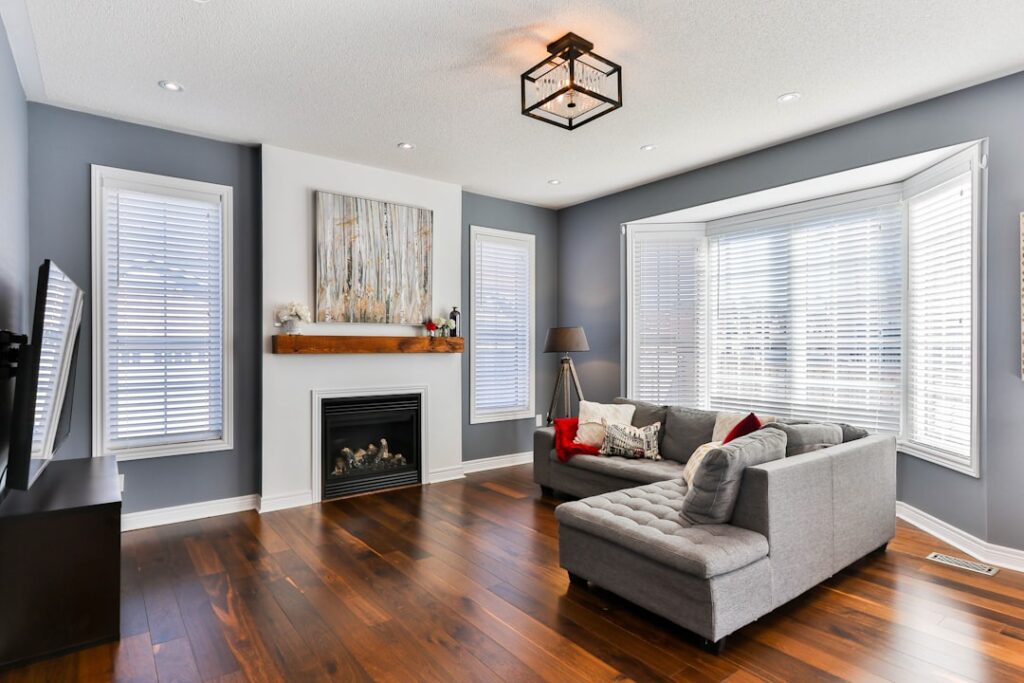
Two oak floors sanded identically in the same week, finished with different products, will look different in three years and dramatically different in fifteen. The finish coat is doing more work than most homeowners realize: it protects against abrasion, ultraviolet light, moisture, chemicals, and the daily friction of furniture legs and pet claws. Hardwood floor coating selection is the single biggest determinant of how a floor ages, and the gap between a budget oil-modified urethane and a premium waterborne polyurethane is the difference between recoating in 4 years versus 12.
- The Four Main Coating Chemistries
- Waterborne Polyurethane Specifications
- Oil-Modified Urethane Still Has a Place
- Conversion Varnish for Commercial Durability
- Hardwax Oil: The European Alternative
- Cost Per Square Foot Installed
- Cure Time and Lifestyle Disruption
- Sheen Level Selection
- Application Technique That Separates Good From Great
- What to Tell Your Contractor
The Four Main Coating Chemistries
- Waterborne polyurethane — Bona Traffic HD, Loba Easy Finish, Pallmann Pall-X 333; low VOC, dries fast, doesn’t amber
- Oil-modified urethane (OMU) — Minwax Super Fast-Drying, DuraSeal Polyurethane; ambers warm, classic look, slow cure
- Conversion varnish / 2K polyurethane — Bona Traffic HD 2K, Loba 2K Supra, Glitsa Gold Seal; toughest residential option
- Hardwax oil / penetrating oil — Rubio Monocoat, Osmo Polyx, WOCA; oil look, easy spot repair
Waterborne Polyurethane Specifications
Bona Traffic HD is the residential and light commercial standard. The 2-component version mixes a part A waterborne urethane base with a part B crosslinker, achieving Taber abrasion resistance comparable to commercial conversion varnish but with VOCs below 250 g/L. Three coats deliver a 4 to 5 mil dry film thickness and a service life of 10 to 14 years before recoat. Bona Mega is the single-component sister product at a lower price point, suitable for residential traffic with an 8 to 10 year service life.
Oil-Modified Urethane Still Has a Place
OMU finishes from Minwax, DuraSeal, and Bona offer warm amber tones that waterborne products do not replicate. Red oak and white oak both benefit from the slight color shift; maple and birch turn unattractively orange. The cure time is the trade-off: 24 hours between coats, 7 days to walk in socks, 30 days for full chemical resistance. VOC content runs 350 to 550 g/L, which violates SCAQMD and most LEED protocols. Pricing is the upside at $40 to $55 per gallon versus $90 to $130 for premium waterborne.
Conversion Varnish for Commercial Durability
Glitsa Gold Seal (Swedish formula) and Bona Traffic HD 2K crosslinked waterbornes deliver the highest abrasion resistance available for site-finished hardwood. Used in sports floors, restaurants, and high-end residential entries that take serious traffic. The Glitsa product is solvent-based with very high VOCs (over 700 g/L) and requires permits and ventilation; many states have outlawed it for residential use. Modern 2K waterbornes match the durability without the solvent load.
Hardwax Oil: The European Alternative
Rubio Monocoat, Osmo Polyx, and WOCA penetrate the wood fiber rather than building a film on top. The result is a matte natural look that hides scratches because there is no glossy film to scratch through. Spot repair is genuinely easy — sand the scratch with 220 grit, recoat with a microfiber cloth, blend the edges. Trade-offs: less abrasion resistance than urethane (4 to 7 year service life under residential traffic), requires maintenance with Rubio Universal Soap, and offers less moisture barrier protection. Pricing runs $50 to $80 per liter, with one liter covering 500 to 800 sq ft.
Cost Per Square Foot Installed
Material cost is only 15 to 25 percent of total project. Labor dominates. A typical 3-coat refinish runs $3.50 to $6 per sq ft total for screen-prep refinish, $4.50 to $8 per sq ft for full sand-and-refinish, and $5 to $10 per sq ft for premium 2K Bona Traffic HD or Loba 2K Supra systems. Hardwax oil refinishing runs $4.50 to $7 per sq ft because application is faster but material is pricier and dwell time matters. Always specify the finish brand and number of coats in the contract; “polyurethane” without a brand could mean anything from $30 hardware-store product to $130 commercial-grade.
Cure Time and Lifestyle Disruption
Waterborne polyurethane lets you walk in socks at 6 hours, replace furniture at 24 hours, and replace rugs at 14 days. OMU pushes those windows to 24 hours, 7 days, and 30 days. Plan accordingly; many homeowners regret choosing OMU because they cannot live in the house during the cure window. Hardwax oil opens for foot traffic at 24 to 48 hours and full cure at 7 to 14 days. Verify ventilation requirements with your contractor; even low-VOC waterborne benefits from open windows and run fans during the cure.
Sheen Level Selection
Satin (35 to 45 percent reflectance) is the residential default, hiding micro-scratches and showing dust less than higher sheens. Semi-gloss (55 to 65 percent) reads more formal and emphasizes wood grain but reveals scratches and dust. Matte (under 25 percent) reads ultra-modern and pairs with wire-brushed wide plank but can look chalky to traditional eyes. Gloss (75-plus percent) is reserved for sports floors and is rare in residential use. Test sample boards in your own light before committing.
Application Technique That Separates Good From Great
Coating performance depends as much on application as on chemistry. Three-coat systems require uniform spread rate of 500 to 600 sq ft per gallon, applied with a 1/4 in nap T-bar applicator pad or 5/16 in lambskin roller. Inter-coat abrasion with 220 grit screen between coats removes raised grain and dust nibs. Skipping the abrasion step is the most common contractor shortcut and leaves a rough surface that wears prematurely. Temperature and humidity matter; finishes apply best at 65 to 75 degrees Fahrenheit and 35 to 55 percent RH. Outside that window, cure times extend dramatically and blushing or pinholing becomes common.
What to Tell Your Contractor
Specify three things in writing: brand and product name (e.g., Bona Traffic HD waterborne polyurethane), number of coats (three minimum for new sand work, two for screen-and-recoat), and sheen level. Confirm dust containment with a Festool or Lagler vacuum-attached sander and HEPA filtration. Ask how the contractor handles humidity above 65 percent during application; high RH slows cure and can cause blushing. The right hardwood floor coating installed properly is the cheapest insurance you can buy on a $10,000 to $30,000 hardwood floor.
Prefer to explore on your own?
See how new flooring looks in your actual room in seconds — free, no signup.
Try the free Floor Studio →