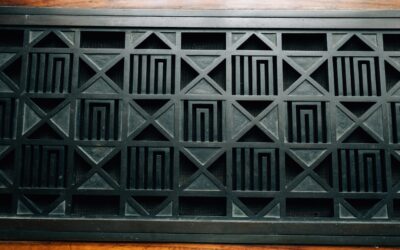
You spend thousands on a beautiful hardwood floor, then a cheap stamped-metal vent breaks up the view like a pothole in a freshly paved road. The fix is simpler than most homeowners realize: hardwood floor registers let your HVAC vents disappear into the floor by matching the wood, the grain direction, and even the finish of the surrounding planks. This guide covers the types available, how to size them to your ductwork, the finish options, and how to choose a register that looks built-in rather than bolted on.
- What a Hardwood Floor Register Is
- Flush Mount vs. Surface Mount
- Sizing the Register to Your Duct
- Matching Wood, Grain, and Finish
- Self-Rimmed vs. Frame-In Styles
- Installation and Practical Tips
- Return Air Grilles vs. Supply Registers
- Maintenance and Longevity
- Choosing the Right Register for Your Floor
What a Hardwood Floor Register Is
A floor register is the vent cover where conditioned air enters a room from the ducts below. A hardwood register replaces the standard metal grille with one made of real wood, ideally the same species as your floor, so it blends in instead of standing out. Most quality wood registers include an adjustable metal damper underneath that lets you open, close, or partially restrict airflow to each room.
The goal is visual continuity. When the wood, grain, and finish match, the vent reads as part of the floor rather than an interruption.
Flush Mount vs. Surface Mount
This is the single most important choice you will make, and it determines how seamless the result looks.
- Flush mount: The register sits perfectly level with the floor surface, dropped into a routed recess so there is no lip. This is the premium look and the safest for foot traffic, but it requires precise installation and is easiest to do during the original floor install.
- Surface mount (drop-in): The register has a flange that rests on top of the floor around the duct opening, sitting slightly proud of the surface. It is far easier to retrofit into an existing floor since no routing is needed, but the raised edge is visible and can catch toes.
If you are installing a new floor, plan for flush registers from the start. For a retrofit into a finished floor, surface mount is usually the practical choice unless you are willing to route the opening.
Sizing the Register to Your Duct
Getting the size right is where most homeowners stumble, because registers are sized by the hole in the floor (the duct opening), not by the overall footprint of the grille. A register listed as 4 by 10 inches fits a duct opening of 4 by 10 inches; its outer dimensions are larger because of the surrounding frame.
- Measure the actual duct opening in the floor, not the old grille.
- Order the register by that opening size, for example 4×10, 4×12, 6×10, or 6×12 inches.
- Confirm whether the listed dimension is the duct size or the overall size before buying.
An undersized register can choke airflow and unbalance your heating and cooling; an oversized one will not seat properly. When in doubt, measure twice.
Matching Wood, Grain, and Finish
The whole point of a wood register is to vanish into the floor, so matching matters. Buy a register in the same species as your flooring, oak with oak, hickory with hickory, walnut with walnut. Pay attention to grain direction, too; running the register’s grain parallel to the surrounding planks helps it blend, while a cross-grain vent draws the eye.
Finish is the trickiest part. Many homeowners buy registers unfinished and stain and seal them to match the floor exactly, since pre-finished registers rarely line up perfectly with an existing floor’s color. If you have a site-finished floor, finishing the register alongside it gives the best match.
Self-Rimmed vs. Frame-In Styles
Beyond mounting type, registers come in a couple of construction styles worth knowing:
- Self-rimmed: A single piece with an integral border that drops over the opening; simple and common.
- Frame-in / flush: Designed to be set into a routed recess so the top is dead level with the floor for the most seamless appearance.
For flush installs, the register thickness should match your flooring thickness so the surfaces align. Solid wood registers can typically be sanded slightly to fine-tune the fit.
Installation and Practical Tips
Surface-mount registers usually just drop into place over the existing duct opening, making them a quick weekend upgrade. Flush-mount registers require routing a recess the exact size of the register frame, which calls for care and is far easier before the floor finish goes down. A few practical pointers:
- Choose registers with an adjustable damper so you can balance airflow room by room.
- For high-traffic areas, prioritize flush mount to avoid a trip hazard.
- Vacuum out the duct opening before installing a new register.
- If finishing yourself, apply the same stain and topcoat you used on the floor for the closest match.
Return Air Grilles vs. Supply Registers
Not every floor vent does the same job, and confusing the two leads to airflow problems. Supply registers deliver conditioned air into the room and include an adjustable damper to control flow. Return air grilles pull air back into the system and should never have a damper, since restricting return airflow strains your HVAC equipment. Return grilles are typically larger to move more air, so if you are replacing a big floor vent, confirm whether it is a supply or a return before you order.
When buying wood grilles, choose the correct type for each opening. A return grille with louvers but no damper is right for the large vents that feed air back to the furnace, while smaller damper-equipped registers go at the supply points around the room’s perimeter. Matching the function keeps your system balanced and efficient.
Maintenance and Longevity
Wood registers last for decades with minimal care, but a few habits keep them looking and working their best. Vacuum the slots periodically to clear dust, and pull the register occasionally to clean out debris that collects in the duct opening below. Because they share the floor’s finish, wood registers wear at the same rate as the surrounding planks, so they age in step rather than standing out as they get older. If the finish dulls over time, you can lightly refresh it the same way you would touch up the floor. Avoid soaking wood registers with water during cleaning; a damp cloth and a dry follow-up is all they need.
Choosing the Right Register for Your Floor
The best hardwood floor register is the one you stop noticing. Decide first between flush and surface mount based on whether you are building new or retrofitting, measure your duct opening precisely, match the species and grain to your floor, and finish it to blend. Spend a little more on solid wood with an adjustable damper rather than a thin veneer cover, and your vents will read as a deliberate, integrated part of a high-end floor instead of an afterthought. Done right, the upgrade is inexpensive relative to the floor itself and makes the entire room look more finished.
Prefer to explore on your own?
See how new flooring looks in your actual room in seconds — free, no signup.
Try the free Floor Studio →