
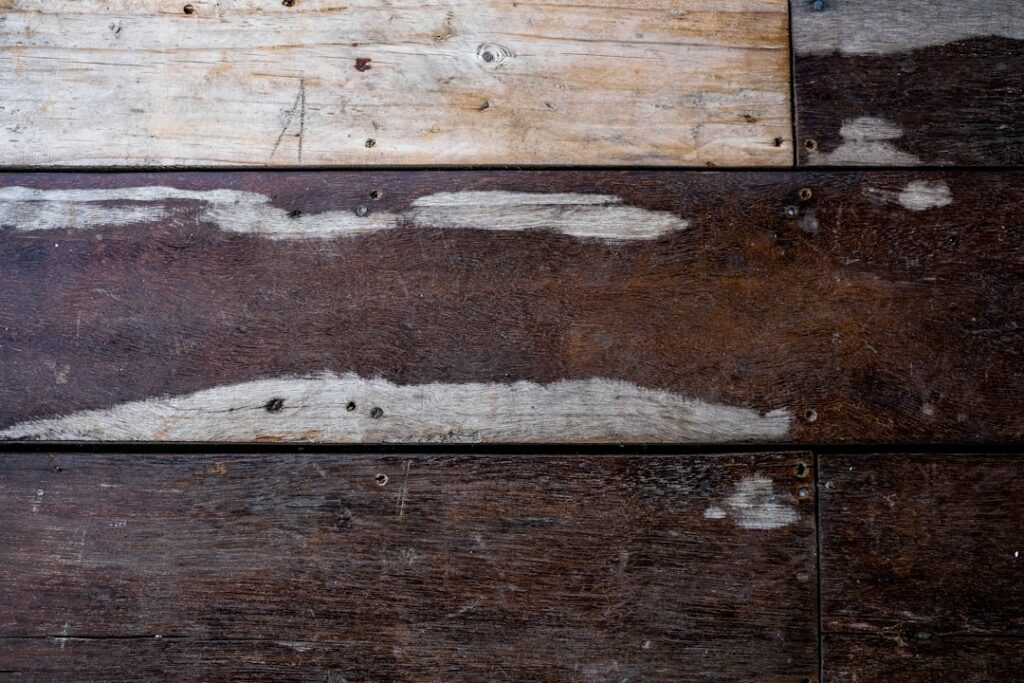
Water is the single greatest enemy of hardwood flooring. Whether it is a slow leak under the dishwasher or a burst pipe that floods an entire room, hardwood floor water damage repair demands fast action and the right approach. In our 30-plus years of flooring work, we have seen homeowners save thousands of dollars by catching problems early and using proven repair techniques.
The good news is that not every water-damaged floor needs to be torn out. Minor surface stains, light cupping, and small warped sections can often be restored without replacing a single plank. This guide walks you through every step, from assessing damage severity to completing the repair and preventing future problems.
- How to Assess Water Damage Severity
- Types of Hardwood Floor Water Damage
- Minor Water Damage Repairs
- Fixing Cupping and Buckling
- When to Replace Individual Planks
- When Full Floor Replacement Is Needed
- Hardwood Floor Water Damage Repair Costs
- Preventing Future Water Damage
- Frequently Asked Questions
- Can water-damaged hardwood floors be saved?
- How long does it take for hardwood floors to dry after water damage?
- Does homeowner’s insurance cover hardwood floor water damage?
- Should I repair water-damaged hardwood floors myself or hire a professional?
- How can I tell if water damage has reached the subfloor?
How to Assess Water Damage Severity
Before you begin any hardwood floor water damage repair, you need to understand exactly what you are dealing with. Damage severity depends on three factors: the amount of water, how long it sat on the floor, and whether it reached the subfloor.
Start by checking for visible signs. Surface staining and mild discoloration typically indicate minor damage. If the wood feels soft when you press on it, or if planks have lifted noticeably above their neighbors, you are dealing with moderate to severe damage.
Use a moisture meter to get an accurate reading. Healthy hardwood floors register between 6 and 9 percent moisture content. Readings above 16 percent indicate significant water absorption that may require professional intervention. Check the subfloor as well by removing a floor vent or testing at the edges of the room.
Document everything with photos before you start repairs. If you plan to file an insurance claim, detailed documentation of the initial damage is essential for getting full reimbursement.
Types of Hardwood Floor Water Damage
Understanding the specific type of damage helps you choose the right repair strategy. Here are the most common forms of water damage we encounter on hardwood floors.
Surface Staining
Dark spots or white haze on the finish are the mildest form of water damage. The water has penetrated the finish but has not deeply saturated the wood fibers. These stains can usually be removed with sanding and refinishing.
Cupping
Cupping happens when the bottom of a plank absorbs more moisture than the top, causing the edges to rise higher than the center. Each board develops a concave shape resembling a shallow trough. Mild cupping often reverses on its own once the moisture source is eliminated and the floor dries out.
Buckling
Buckling is severe cupping taken to the extreme. Planks pull away from the subfloor entirely and tent upward, sometimes several inches. This usually results from standing water or flooding and nearly always requires plank replacement.
Crowning
Crowning is the opposite of cupping. The center of each plank sits higher than the edges. This often happens when a cupped floor is sanded too soon, before the moisture has fully equalized. The top dries and shrinks while the bottom remains swollen.
Mold and Mildew
Prolonged moisture exposure creates ideal conditions for mold growth between planks and beneath the floor. Mold presents serious health risks and always requires professional remediation before any flooring repair begins.
Minor Water Damage Repairs
For surface-level damage where the wood structure remains sound, these DIY repairs are effective and affordable.
Removing white water stains: White marks indicate moisture trapped in the finish, not the wood itself. Apply a thin layer of mayonnaise or petroleum jelly over the stain and let it sit for several hours or overnight. The oils draw out the trapped moisture. Wipe clean and buff with a soft cloth. For stubborn stains, lightly sand the affected area with 150-grit sandpaper and apply a fresh coat of polyurethane.
Removing dark water stains: Dark stains mean water has penetrated into the wood grain. Sand the stained area down to bare wood using 100-grit paper, then switch to 150-grit for a smooth finish. Apply wood bleach or oxalic acid according to the product directions. Let it dry completely, neutralize with a vinegar-water solution, and refinish to match the surrounding floor.
Addressing minor swelling: If individual planks have swelled slightly but remain flat, eliminate the moisture source and run dehumidifiers in the room. Keep humidity between 35 and 55 percent. Most minor swelling resolves within two to four weeks as the wood reaches equilibrium.
Fixing Cupping and Buckling
Cupping and buckling are the most common structural issues in hardwood floor water damage repair. The approach depends on severity and whether the subfloor is also compromised.
Repairing Cupped Floors
First, find and fix the water source. This step is non-negotiable. Repairing cupped planks while water continues to seep in is a waste of time and money.
Once the source is eliminated, place fans and dehumidifiers in the room. Monitor moisture content weekly with a meter. Mild cupping often resolves completely within four to eight weeks as the wood dries evenly. Do not sand a cupped floor until moisture readings stabilize at normal levels for at least two consecutive weeks.
If cupping persists after thorough drying, the floor can be sanded flat and refinished. A professional floor sander with a drum or orbital sander can level the surface, but this removes wood material and can only be done a limited number of times depending on the thickness of your flooring.
Repairing Buckled Floors
Buckled planks that have completely separated from the subfloor rarely return to their original position. In some cases, you can dry the area, apply construction adhesive to the subfloor, and weight the planks down with heavy objects for 48 to 72 hours. This works best on engineered hardwood with minor buckling.
For solid hardwood with significant buckling, remove the damaged planks, dry the subfloor thoroughly, and install new planks. Make sure replacement wood acclimates to the room for at least five to seven days before installation.
When to Replace Individual Planks
Replacing individual damaged planks is often the most cost-effective approach when damage is limited to a small area. Here is how professionals handle it.
Step 1: Use a circular saw set to the depth of the flooring to cut along the center of the damaged plank. Make relief cuts every few inches. Be careful not to cut into the subfloor or neighboring tongue-and-groove joints.
Step 2: Use a chisel to pry out the cut pieces, starting from the center and working toward the edges. Remove all nails and adhesive residue from the subfloor.
Step 3: Check the subfloor for moisture damage. If the subfloor is soft, swollen, or shows mold, it must be repaired or replaced before installing new flooring.
Step 4: Cut the bottom lip of the groove side off the replacement plank so it can drop into place. Dry-fit the plank to confirm the fit.
Step 5: Apply construction adhesive to the subfloor and press the new plank into position. Weight it down for 24 hours. Sand and refinish to blend with the surrounding floor.
When Full Floor Replacement Is Needed
Sometimes hardwood floor water damage repair is not practical, and full replacement is the smarter investment. You should consider full replacement when more than 30 percent of the floor is damaged, when the subfloor has structural damage, when mold has spread extensively beneath the flooring, or when the floor has been sanded to its maximum number of times and cannot be refinished again.
Flood damage from natural disasters or major plumbing failures typically requires full replacement. Even if the wood appears to dry out, hidden moisture in the subfloor and between layers can cause problems for years. Insurance policies often cover flood-related replacement, so consult your adjuster before making decisions.
If your hardwood is original to a historic home, consult a flooring specialist before deciding on replacement. Salvage and restoration may preserve valuable original materials that cannot be replicated.
Hardwood Floor Water Damage Repair Costs
Costs for hardwood floor water damage repair vary significantly based on the extent of damage and your location. Here are typical ranges as of 2026.
Surface stain removal and spot refinishing: $3 to $5 per square foot. A 100-square-foot area runs $300 to $500.
Full-room sanding and refinishing: $4 to $8 per square foot. This is the standard treatment for widespread cupping that has resolved after drying. A typical 200-square-foot room costs $800 to $1,600.
Individual plank replacement: $10 to $25 per square foot including materials and labor. Matching the wood species, stain, and finish drives up cost. Expect $200 to $500 for a small repair area.
Full floor replacement: $8 to $15 per square foot for materials and installation. A 500-square-foot room runs $4,000 to $7,500 depending on the wood species selected.
Subfloor repair: $2 to $6 per square foot as an additional cost when the subfloor is compromised. Mold remediation adds $500 to $3,000 or more depending on the extent of contamination.
Professional water damage restoration companies charge $1,000 to $5,000 for drying services including equipment rental, moisture monitoring, and antimicrobial treatment.
Preventing Future Water Damage
Once you have invested in repairs, protecting your hardwood floors from future water damage is a priority. These preventive measures significantly reduce your risk.
Install water leak detectors near dishwashers, washing machines, water heaters, and under sinks. Smart leak detectors connect to your phone and alert you immediately, even when you are away from home. They cost $20 to $50 each and can save thousands in damage.
Maintain indoor humidity between 35 and 55 percent year-round. Use a humidifier in winter and a dehumidifier in summer. Rapid humidity swings stress hardwood flooring and make it more vulnerable to moisture intrusion.
Wipe up spills immediately. Even small amounts of water left sitting on hardwood can penetrate the finish over time, especially at seams between planks. Use mats near entryways, sinks, and the refrigerator water dispenser.
Inspect plumbing connections, supply lines, and appliance hoses annually. Replace rubber washing machine hoses with braided stainless steel. Check the base of toilets for slow seepage and recaulk as needed.
Apply a fresh coat of polyurethane every three to five years, or more frequently in high-traffic areas. A well-maintained finish is your floor’s first line of defense against moisture penetration.
Frequently Asked Questions
Can water-damaged hardwood floors be saved?
In many cases, yes. Floors with surface stains, mild cupping, or damage limited to a small area can be repaired successfully. The key is acting quickly to remove standing water, dry the area thoroughly, and address the moisture source. Floors that have buckled severely or developed widespread mold are more difficult to save and may require partial or full replacement.
How long does it take for hardwood floors to dry after water damage?
Drying time depends on the amount of water absorbed and the drying conditions. With professional-grade fans and dehumidifiers running continuously, most hardwood floors dry to normal moisture levels within two to four weeks. Severe flooding can take six weeks or longer. Never sand or refinish until moisture meter readings have been stable at 6 to 9 percent for at least two weeks.
Does homeowner’s insurance cover hardwood floor water damage?
Most homeowner’s policies cover sudden and accidental water damage, such as a burst pipe or appliance failure. Gradual damage from a slow leak that you should have noticed is typically not covered. Flood damage from natural events requires separate flood insurance. File your claim promptly and document all damage with photos before starting repairs.
Should I repair water-damaged hardwood floors myself or hire a professional?
Minor surface stains and small affected areas are reasonable DIY projects. However, cupping that does not resolve after drying, buckling, subfloor damage, or any suspected mold should be handled by a professional. Improper repair can void warranties and cause long-term structural problems that cost far more to fix later.
How can I tell if water damage has reached the subfloor?
Signs of subfloor damage include a spongy or soft feeling when you walk on the floor, visible mold or a musty smell coming from floor seams, and moisture meter readings that remain elevated even after the hardwood surface has dried. Remove a floor vent cover or a transition piece at a doorway to inspect the subfloor edge directly.
Prefer to explore on your own?
See how new flooring looks in your actual room in seconds — free, no signup.
Try the free Floor Studio →

