
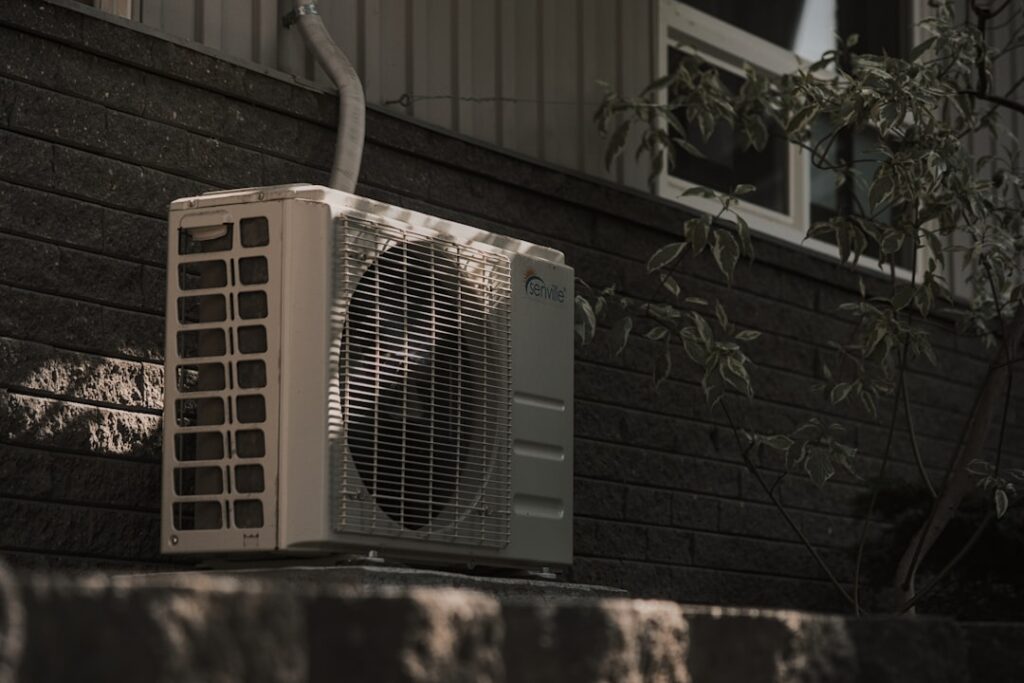
Plenty of homeowners assume a heat pump is a winter appliance and wonder how it handles July. Here’s the reality: heat pump cooling works exactly like a central air conditioner, because underneath the branding a heat pump is an air conditioner that can also run in reverse. If you’ve ever felt cold air from a heat pump vent in summer, you’ve felt the refrigeration cycle doing its job. Let me explain how it works and what to expect.
A heat pump and a straight AC share the same core parts: a compressor, a condenser coil outside, an evaporator coil inside, and refrigerant circulating between them. The one extra part a heat pump adds is a reversing valve, which lets it flip direction to heat in winter. In cooling season, that valve simply sits in the same position an AC would, and the machine cools like any other.
The Refrigeration Cycle at Work
Cooling is really the process of moving heat out of your house, not making cold. The refrigerant does the moving. Inside, the cold evaporator coil absorbs heat and humidity from your indoor air as the blower pushes air across it. That warmed refrigerant, now a low-pressure gas, travels outside.
At the outdoor unit, the compressor squeezes the refrigerant, raising its temperature well above the outdoor air. The condenser coil then releases that captured heat to the outside, and a fan blows it away. The refrigerant, now a cooler liquid, flows back inside through a metering device, expands, gets cold again, and the cycle repeats. Every cycle carries another load of heat out of your living space.
The Reversing Valve Is the Only Difference
People get hung up on this, so let me be direct. In cooling mode there is functionally no difference between a heat pump and an air conditioner. The reversing valve is a four-way solenoid that determines which coil is the evaporator and which is the condenser. In summer it routes refrigerant so the indoor coil is cold. In winter it flips so the indoor coil is hot.
Because the cooling hardware is identical, a heat pump delivers the same comfort, the same dehumidification, and the same air temperatures at the register, typically 55°F to 60°F supply air, as a comparable AC.
This is also why a heat pump and an AC use the same refrigerant, whether that’s the long-standing R-410A or the newer R-454B and R-32 blends phasing in under current EPA rules. The charge, the line sizes, and the metering devices are engineered around cooling performance first. The heating capability rides along for free thanks to that one extra valve, which is a remarkable bit of engineering value when you think about it.
Reading SEER2 Efficiency
Cooling efficiency is measured in SEER2, the seasonal energy efficiency ratio under the current test standard. The federal minimum for most of the country is 14.3 SEER2, and premium heat pumps reach into the high 20s. A higher SEER2 means lower summer electric bills for the same cooling.
- 14 to 16 SEER2: Entry-level, single-stage equipment.
- 17 to 20 SEER2: Two-stage systems with better comfort and humidity control.
- 21+ SEER2: Inverter-driven variable-speed units, the most efficient and quiet.
Variable-speed heat pumps earn their keep in cooling by running long, low, steady cycles that wring out humidity and hold the temperature within a degree, instead of the on-off blasting of a single-stage unit.
Setting Up the Thermostat
Thermostat setup for cooling is straightforward, but a couple of points trip people up. Set the mode to “Cool” and pick a setpoint; most families land around 74°F to 78°F. If you have a variable-speed system, avoid aggressive setbacks; these units run most efficiently holding a steady temperature rather than recovering from a big swing.
Make sure the fan is set to “Auto,” not “On.” Leaving the fan running continuously in humid weather can re-evaporate moisture off the coil and back into the house, undoing some of your dehumidification. A heat pump thermostat also has settings for auxiliary and emergency heat, but those never engage in cooling mode.
Heat Pump vs Furnace and AC
A common question is whether heat pump cooling beats a traditional furnace-plus-AC setup in summer. On the cooling side, they perform the same, because both use the same refrigeration cycle. The real advantage of a heat pump is year-round: one system heats and cools, so you maintain a single piece of equipment and skip the gas furnace entirely.
In a furnace-and-AC home, the AC does the summer work while the furnace sits idle. Swap in a heat pump and you get identical cooling plus efficient electric heat for most of the year, with the furnace or electric strips reserved for backup on the coldest days.
There’s also a maintenance and footprint argument. A furnace-and-AC pairing is two separate appliances to service, repair, and eventually replace. A heat pump consolidates both jobs into one outdoor condenser and one indoor coil, so you have fewer parts to worry about over the life of the system. For homeowners looking to electrify and drop natural gas entirely, that consolidation is a big part of the appeal, and it explains why heat pumps keep gaining ground in new construction.
Dehumidification Matters as Much as Temperature
Real comfort in summer is about humidity as much as raw temperature. A 76°F room at 45 percent relative humidity feels far more pleasant than the same 76°F at 65 percent. Heat pump cooling removes moisture the same way any AC does: warm, humid air passes over the cold evaporator coil, water vapor condenses on the fins, and it drains away.
Variable-speed and two-stage systems dehumidify best because they run longer, gentler cycles that give moisture more time to condense out. A grossly oversized single-stage unit does the opposite; it cools the air fast and shuts off before it has wrung out much water, leaving you cold and clammy. If your house feels damp even when the thermostat reads low, oversizing or a dirty coil is usually the reason.
Sizing for Proper Cooling
Sizing drives everything. Cooling capacity is measured in tons, where one ton equals 12,000 BTU per hour. A rough field average is 400 to 600 square feet per ton, but that’s only a starting point. A proper Manual J load calculation accounts for insulation, windows, ceiling height, and local climate.
Oversizing is the classic mistake. A unit that’s too big cools the air fast, satisfies the thermostat, and shuts off before it removes enough humidity, leaving the house cold and clammy. An undersized unit runs nonstop on the hottest days and never quite catches up. Getting the tonnage right is the difference between comfort and constant complaints.
Troubleshooting and Maintenance
When a heat pump cools poorly, the causes are usually simple. Before calling for service, check these:
- A dirty air filter choking airflow, the single most common culprit.
- A clogged or dirty outdoor condenser coil that can’t reject heat.
- Blocked airflow around the outdoor unit from shrubs or debris.
- A thermostat set to the wrong mode or fan setting.
If the basics check out and the air still isn’t cold, you may have low refrigerant from a leak or a stuck reversing valve, both of which need a licensed tech and gauges. A heat pump that suddenly starts blowing warm air in cooling mode sometimes has a reversing valve stuck in the heating position, a repair a technician can confirm quickly.
Most weak-cooling complaints, though, trace back to upkeep you can stay ahead of, and a little maintenance keeps summer bills down and comfort up. Change the air filter every 30 to 90 days, since a clogged filter is the top cause of weak airflow and frozen coils. Rinse the outdoor condenser coil each spring with a gentle hose stream to clear pollen and cottonwood fluff. Keep at least two feet of clearance around the outdoor unit so it can shed heat.
Schedule a professional tune-up once a year. The tech will verify refrigerant charge, check the capacitor and contactor, clean the coils, and confirm the reversing valve operates correctly in both modes. Neglect adds up: a coil caked in dirt or a charge that’s even 10 percent low can cut cooling capacity and spike your electric bill. Do the routine work, and your heat pump will cool the house every bit as well as any dedicated air conditioner, all summer long.


