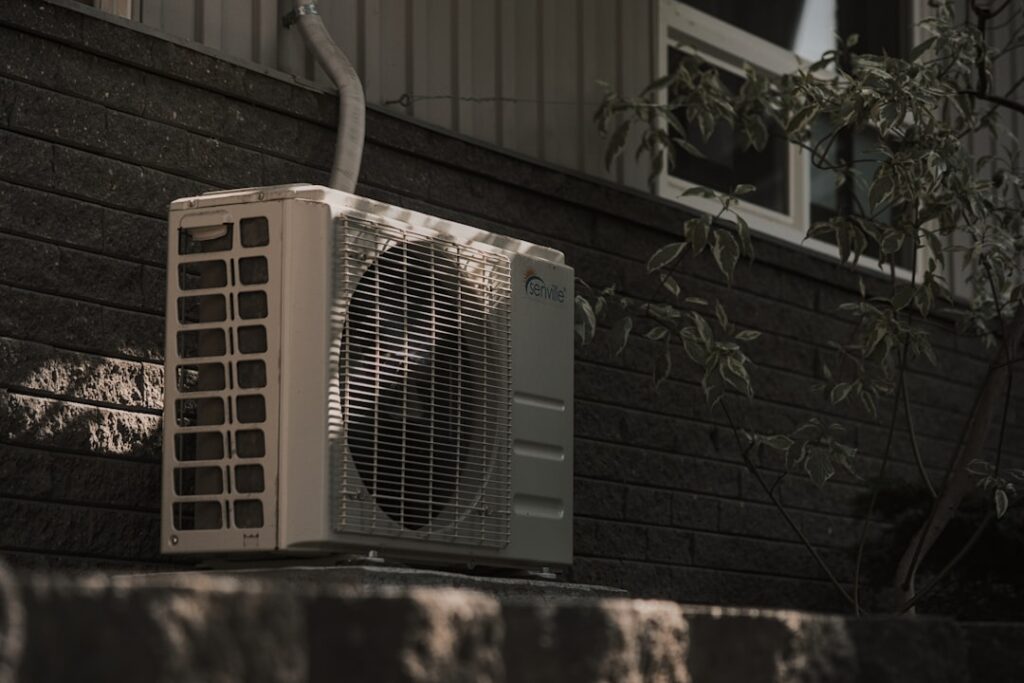
A heat pump window unit looks almost identical to the plain air conditioner sitting in your neighbor’s window, but it does something that box never could: it heats the room in the fall and spring instead of just cooling it in July. I have installed and serviced these for years, and the pitch is simple. One appliance, one plug, two seasons of comfort, and no ductwork. It moves heat rather than burning fuel, so on a 45°F morning it can pull warmth out of the outdoor air and push it into your bedroom for a fraction of what a resistance space heater would cost to run.
These units earn their keep in additions, sunrooms, garages, home offices, and older houses where extending the central system is a nightmare. This guide covers how the reversing valve makes heating possible, how to size the unit in BTU, what installation actually involves, and what you should expect to pay to buy and run one in 2026.
How a Reversing Valve Turns AC Into a Heater
Inside every heat pump window unit is the same refrigerant loop you find in a regular window AC: a compressor, two coils, and a metering device. The one part that changes everything is a small component called the reversing valve. In cooling mode, the indoor coil absorbs heat from your room and the outdoor coil dumps it outside, exactly like a normal AC. When you switch to heat, the valve flips the direction of the refrigerant flow. Now the outdoor coil pulls heat out of the cold outside air and the indoor coil releases it into your room.
That sounds impossible if you have ever stood in front of a 40°F breeze, but there is usable heat energy in air well below freezing. The refrigerant boils at a very low temperature, so it still absorbs warmth from that chilly air. Because you are moving existing heat instead of creating it from scratch, a window heat pump can deliver two to three units of heat for every unit of electricity it draws. A pure electric space heater is stuck at a flat one-to-one.
Where a Window Heat Pump Makes Sense
These are shoulder-season and mild-climate machines first. If you live in Georgia, the Carolinas, coastal California, or the Pacific Northwest, a window heat pump can carry a single room’s heating load through most of the year. In a northern winter it works as a supplement, taking the edge off during 40°F and 50°F stretches and handing off to your furnace when the real cold arrives.
I recommend them for spaces that are hard to condition any other way:
- A converted garage or bonus room with no ducts run to it.
- A sunroom or three-season porch you want to use in April and October.
- A home office over a garage that always runs cold.
- An apartment or rental where you cannot cut into walls or add a mini-split.
What they are not is a whole-house heating solution or a deep-winter primary heater in Minnesota. Most window heat pumps lose meaningful output below about 40°F, and many stop making useful heat around 20°F to 25°F. Read the spec sheet for the lowest rated heating temperature before you buy.
Sizing in BTU: Match the Unit to the Room
Window heat pumps are sold by cooling BTU: 8,000, 10,000, 12,000, and 14,000 are the common sizes, with heating output usually rated a bit lower than the cooling number. The old rule of roughly 20 BTU per square foot of floor area is a solid starting point for a reasonably insulated room with 8-foot ceilings.
- A 350 sq ft bedroom or office lands around 8,000 BTU.
- A 450 to 550 sq ft living space wants 10,000 to 12,000 BTU.
- A 600 to 700 sq ft open area needs about 14,000 BTU.
Add roughly 10 percent for a room that gets heavy afternoon sun or has high ceilings, and knock off a little for a well-shaded, tightly sealed space. Resist the urge to buy the biggest unit on the shelf. An oversized AC short-cycles, never runs long enough to wring humidity out of the air, and leaves the room clammy at 72°F. Undersizing is just as bad in reverse. Get the number close and the unit will run longer, quieter cycles that hold temperature and humidity steady.
Electrical Requirements You Cannot Ignore
This is where people get tripped up. Smaller window heat pumps up to about 12,000 BTU run on a standard 115-volt outlet and draw 10 to 12 amps, which is fine on a dedicated 15- or 20-amp circuit. The catch is that word “dedicated.” Plug a 12-amp unit into a bedroom circuit already loaded with lamps and a TV and you will trip the breaker or, worse, cook the outlet over time.
Larger 14,000 BTU units and some heating-focused models want a 230-volt circuit, which usually means a dedicated line and a specific receptacle. Check the plug configuration and the nameplate amperage against the outlet before you buy, not after. If the unit calls for 230 volts and you only have a standard outlet nearby, budget $150 to $350 for an electrician to run a new circuit.
Installing a Heat Pump Window Unit
Physical installation is a weekend DIY job if you are comfortable on a ladder and can lift 60 to 90 pounds safely. Have a helper. The unit must tilt slightly toward the outside, about a quarter inch of drop, so condensate drains out rather than pooling inside. Most kits include the side accordion panels and a mounting bracket or bottom rail.
- Confirm the window opening matches the unit’s minimum and maximum width, and that the sash can close down onto the top flange.
- Install the support bracket if one is included, leveled front to back with the slight outward tilt built in.
- Set the unit into the opening with a helper, center it, and lower the window sash onto the top rail.
- Extend the side panels to fill the gaps and screw them to the sash.
- Seal the perimeter and the gap above the raised sash with foam and weatherstripping. This step is what stops drafts and bugs, so do not rush it.
Because a window heat pump runs in winter, sealing matters more than it does for a summer-only AC. Every unsealed gap is a cold-air leak that fights the heat you are paying for.
What It Costs to Buy and Run
Expect to pay $450 to $900 for the unit itself in 2026, depending on capacity and brand. Budget models start around $400 for an 8,000 BTU size, while a 14,000 BTU 230-volt unit with a good HSPF and a real cold-weather rating runs $700 to $1,000. Add $150 to $350 if you need an electrician for a new circuit.
Running cost is where the heat pump shines against a space heater. In heating mode with a coefficient of performance around 2.5, the unit produces about two and a half times the heat of a resistance heater per kilowatt-hour. At the U.S. average of roughly 16 cents per kWh, running a 10,000 BTU unit a few hours a day in the shoulder season often costs $20 to $40 a month, versus far more for baseboard or a plug-in heater doing the same work. The efficiency edge shrinks as it gets colder, so track your own outdoor temperatures to know when to let the furnace take over.
Maintenance and Realistic Lifespan
These units are simple, and simple lasts. Pull and rinse the washable filter every three to four weeks during heavy use. Vacuum the coils once a season and keep leaves and lint off the outdoor half. In winter, watch for frost building on the outdoor coil. Most units run an automatic defrost cycle, briefly reversing to melt ice, but heavy frost that never clears points to a low charge or a failing defrost sensor.
Store the unit indoors over a hard winter if you are not using it, or buy an insulated exterior cover to stop cold air from pouring back through the machine. Treated well, a quality heat pump window unit lasts 8 to 12 years. When you weigh that against never having to haul in a separate space heater and paying resistance-heat prices, a single appliance that covers two seasons is an easy call for the right room.