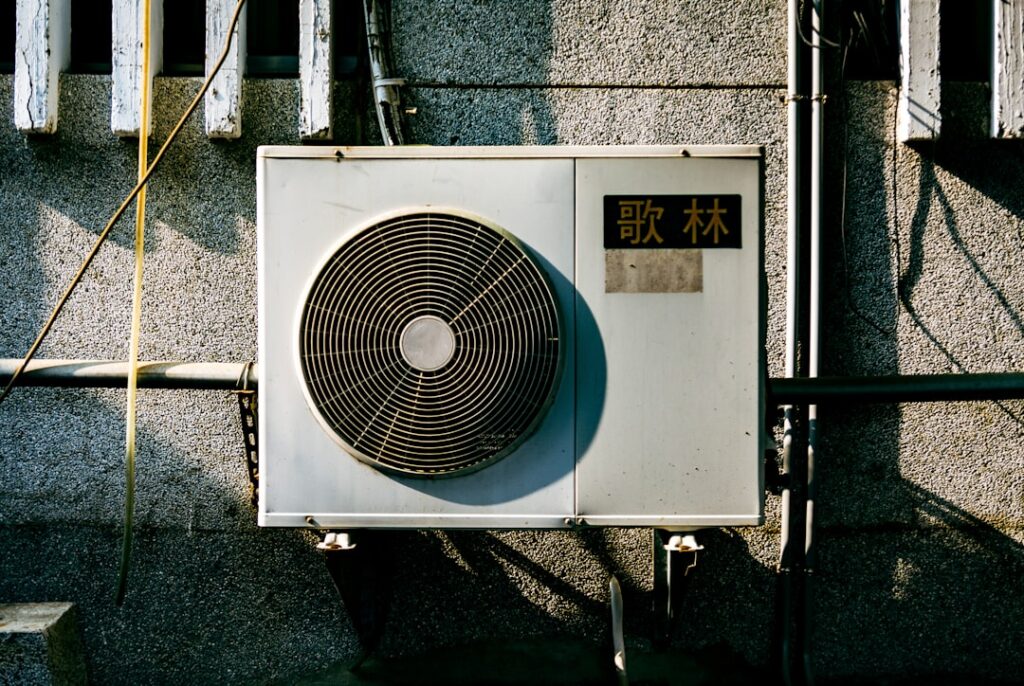
A through the wall heat pump gives you the two-season comfort of a window heat pump without ever blocking a window or wrestling a heavy box in and out with the seasons. It slides into a metal sleeve built into an exterior wall, vents through a grille outside, and stays put year-round. Contractors call these PTHP units, short for packaged terminal heat pump, and you have almost certainly stood next to one in a hotel room or a doctor’s office. They heat and cool a single zone, install without ductwork, and last a decade with basic care.
The trade-off is that a through-wall unit needs a real hole in your wall and, for larger models, a dedicated 230-volt circuit. This guide walks through how the unit works, how to size it, the sleeve and wiring specs that trip up first-timers, and what you should budget in 2026.
PTAC vs PTHP: Know What You Are Buying
The wall-sleeve world splits into two products that look identical from the outside. A PTAC is a packaged terminal air conditioner: it cools with a compressor and, when heating is needed, falls back to an electric resistance heat strip, which is expensive to run. A PTHP is a packaged terminal heat pump: it cools the same way but heats by running the refrigerant cycle in reverse, which is two to three times more efficient than a resistance strip in mild weather.
Most PTHP units keep a small backup heat strip for the coldest days, kicking it in when outdoor temperatures drop below roughly 25°F to 40°F and the heat pump can no longer keep up. That combination is exactly what you want: cheap heat-pump warmth most of the time, guaranteed backup heat when it turns bitter. If you are choosing between the two, the PTHP costs a little more up front and pays it back on the utility bill within a season or two.
How the Unit Handles Both Seasons
A through-wall heat pump is a self-contained refrigerant loop packed into one chassis. A single compressor, two coils, a fan on each side, and a reversing valve do all the work. In cooling mode the indoor coil pulls heat and humidity from the room and the outdoor coil rejects it through the exterior grille. In heating mode the reversing valve flips the flow so the outdoor coil absorbs warmth from the outside air and the indoor coil releases it into the room.
Because everything lives in one box mounted through the wall, there is no line set to run and no separate condenser to place. That is the appeal for a single room addition or a rental unit. The downside is noise: the compressor sits right there in the room, so a PTHP is louder than a mini-split with the compressor banished outside. For a bedroom, look for a unit rated around 50 decibels or lower on low fan.
Sizing a Through-Wall Heat Pump in BTU
PTHP units come in a tight range of capacities, typically 7,000, 9,000, 12,000, and 15,000 BTU for cooling, with heating output rated separately. Sizing follows the same logic as any single-room unit: about 20 to 25 BTU per square foot for a reasonably insulated space with 8-foot ceilings.
- A 300 sq ft room lands around 7,000 to 9,000 BTU.
- A 450 to 550 sq ft space wants 12,000 BTU.
- A 600 to 700 sq ft open area needs 15,000 BTU.
Bump the number up about 10 percent for heavy sun exposure, high ceilings, or a poorly insulated wall, and check the heating output at your local design temperature, not just the cooling BTU on the front of the box. An oversized PTHP short-cycles in cooling and leaves the room humid, so match the capacity to the load rather than padding it “to be safe.”
The Wall Sleeve and Rough Opening
The single most important part of a through-wall install is the sleeve, the galvanized steel box that carries the unit’s weight and ties into your wall. Standard PTAC and PTHP sleeves are built for a rough opening of about 42 inches wide by 16 inches tall, though you must confirm the exact dimensions for your specific brand before you cut anything. The sleeve must sit dead level side to side and pitch about a quarter inch toward the outside so condensate drains out.
Cutting the opening means removing a section of interior and exterior wall, and it often means notching or reframing a stud with a header above the opening to carry the load. This is the part of the job that pushes many homeowners toward a contractor. If the wall is load-bearing or you are unsure, get a pro to frame the opening and set the sleeve. Once the sleeve is in, sealed, flashed, and the exterior grille is installed, sliding the unit in and out is a two-minute job.
Electrical Requirements and Wiring
Small PTHP units in the 7,000 to 9,000 BTU range can run on a 208/230-volt 15-amp circuit, while 12,000 and 15,000 BTU models with heat strips typically need a 20- or 30-amp 230-volt circuit. Every serious PTHP is a 230-volt appliance, so plan on a dedicated line back to the panel. The exact receptacle style is dictated by the unit’s plug, commonly a NEMA 6-20 or 6-30, and the nameplate will spell out the minimum circuit ampacity and maximum breaker size.
Do not guess here. Match the breaker, wire gauge, and receptacle to the nameplate exactly. A 20-amp circuit wants 12-gauge copper; a 30-amp circuit wants 10-gauge. Running a new 230-volt circuit typically costs $200 to $500 with an electrician, depending on the distance to the panel and whether you have a free double-pole breaker slot.
Step-by-Step Installation Overview
- Locate the wall section, confirm it is not hiding plumbing or wiring, and mark the rough opening from the sleeve’s spec sheet.
- Frame the opening: cut the studs, add a header, and build the sides so the sleeve fits snug and square.
- Set the sleeve level side to side with the required outward pitch, fasten it to the framing, and cut the exterior siding to match.
- Flash and seal the exterior perimeter, then install the outdoor grille.
- Run and terminate the dedicated 230-volt circuit and receptacle, or have an electrician do it.
- Slide the unit into the sleeve, plug it in, and seal the interior trim gap with foam and molding.
Seal every gap. Because the unit heats in winter, an unsealed sleeve is a permanent draft you will feel and pay for.
What a Through-Wall Heat Pump Costs in 2026
The unit itself runs $700 to $1,400 in 2026, with the sleeve and exterior grille adding $120 to $250 if they are not bundled. A quality 12,000 BTU PTHP with a decent heating COP lands around $1,000 to $1,300. Installation is the variable. A straightforward drop into an existing sleeve is nearly free if you do it yourself. Cutting and framing a new opening, plus running a 230-volt circuit, typically brings a professional install to $1,500 to $3,500 all in.
Weigh that against a ductless mini-split, which runs quieter and more efficiently but costs $3,500 to $5,500 installed for a single zone. The through-wall heat pump wins on simplicity, replaceability, and up-front price. The mini-split wins on noise and long-term efficiency. For a hotel-style room, a rental, or an addition where you want a unit any handyman can swap in ten minutes, the PTHP is the practical choice.
Maintenance and Realistic Lifespan
A through-wall heat pump is a simple machine, and simple machines last when you keep them clean. The single most important task is the filter. Most PTHP units use a washable or reusable filter that slides out from the front grille, and it should be pulled and rinsed every three to four weeks during heavy use. A clogged filter starves the coil of airflow, which drops output, drives up the electric draw, and can freeze the indoor coil in cooling mode. It is the number one cause of service calls on these units, and it costs nothing to prevent.
Beyond the filter, vacuum the indoor and outdoor coils once or twice a year and keep leaves, mulch, and lint away from the exterior grille so the unit can reject heat. Check the condensate path each season, because a blocked drain leaves water pooling in the base pan, which corrodes the chassis and can drip inside. In winter, watch for heavy frost on the outdoor coil that never clears; the unit runs an automatic defrost cycle, briefly reversing to melt ice, but persistent frost points to a low refrigerant charge or a failing defrost sensor and warrants a service call.
Treated this way, a quality PTHP lasts 8 to 12 years, and because it slides out of the sleeve in a couple of minutes, replacing a dead unit is one of the easiest swaps in HVAC. That serviceability is a real advantage in a rental or a hotel, where a maintenance tech can drop in a fresh chassis without touching the wall, the sleeve, or the wiring. Keep the filter clean, keep the coils clear, and the unit will quietly heat and cool a single room for a decade.