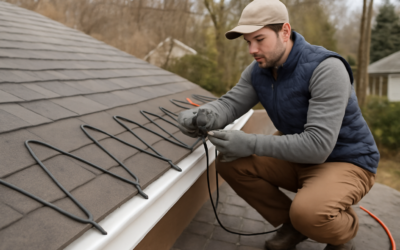
A frozen water line inside the house is an inconvenience. A frozen line between the well and the pressure tank, or the only supply to a barn full of livestock, is an emergency. Long exposed runs lose heat along their entire length, and a single cold spot can stop the flow. A waterline heating cable, often called heat tape or heat trace, keeps those runs liquid by adding a small, controlled amount of heat right where it is needed.
The key is knowing where the cable must run. Buried pipe below the frost line rarely needs help. The trouble spots are where the line rises out of the ground, passes through an unheated shed or well house, crosses a crawl space, or connects to an RV or cabin. Those transitions are where you put heat trace, backed by insulation and powered from a GFCI-protected outdoor circuit.
- Where a Waterline Heating Cable Must Run
- Choosing Heat Trace: Self-Regulating vs Constant Wattage
- Power Supply, GFCI and Electrical Safety
- How to Install Heat Tape on an Exposed Water Line
- Special Notes for Wells, Barns and RVs
- Troubleshooting a Heat-Traced Line
- Cost and When to Call a Licensed Professional
- Frequently Asked Questions
This guide covers long exterior and outbuilding service lines. Indoor or crawl-space household pipes are a slightly different job with shorter runs and different power access.
Where a Waterline Heating Cable Must Run
Heat trace water line systems work best when you focus on exposure, not total length. Map the line from source to use and mark every point where it leaves the ground or enters an unheated space.
- Well pitless adapter and riser: The section of pipe from the pitless adapter up to the well house or into the home is often shallow and exposed to frost.
- Pressure tank and well house piping: Tanks, switches and short pipe runs in an unheated well house freeze easily; the pressure switch tube is a common failure point.
- Barn and stock-tank supply: Hydrants, above-ground runs along walls, and the last few feet feeding a stock tank or automatic waterer.
- RV and cabin service lines: The hose or pipe from the spigot to the RV inlet, plus the spigot itself and the riser coming out of the ground.
- Frost-line transitions: Any point where buried pipe comes up, especially the first 2 to 3 feet below grade if soil frost reaches it.
Trenching deeper is the permanent fix for lines that sit above the frost line. If you do dig, call 811 before digging so underground utilities are marked first.
Choosing Heat Trace: Self-Regulating vs Constant Wattage
Self-regulating cable is the best match for long water lines. Its output rises as the pipe cools and falls as it warms, so it can be cut to length in the field, overlapped at valves, and covered with insulation without hot spots. Pair it with a thermostat or controller so it shuts down in mild weather. A heat trace cable with thermostat built in or added at the power end is the most practical setup for a well line or barn supply.
Constant-wattage cable puts out a fixed output per foot. It is cheaper but comes in fixed lengths, must never overlap or touch itself, and can overheat if covered with the wrong insulation. It suits short, simple runs better than long service lines.
Some sellers market high heat cable for industrial use. These higher-temperature products are designed for process piping and are generally unnecessary, and sometimes unsafe, on residential plastic lines. Choose a cable rated for the pipe material you have, whether PEX, PVC, polyethylene or metal, and listed by a recognized lab such as UL or ETL.
Power Supply, GFCI and Electrical Safety
Heat trace on water lines is line-voltage equipment, usually 120-volt and sometimes 240-volt on long commercial-style runs. It is not low-voltage wiring, and it sits next to water, so ground-fault protection is mandatory. Plug-in cable must go into a GFCI-protected outdoor outlet with a weatherproof in-use cover. Hardwired systems need ground-fault equipment protection at the breaker or controller.
- Before working on any hardwired connection, turn off the breaker and confirm power is off with a non-contact voltage tester.
- Never power heat trace with an indoor extension cord or power strip. Size any outdoor cord to the cable’s load if the maker allows one at all.
- Size the circuit and power supply for the total cable load with headroom; long runs add up quickly.
- Use the maker’s end-seal and power-connection kits; exposed cable ends are a shock and fire hazard.
- Keep cable away from hay, straw and bedding, and protect it from animals chewing or rubbing it.
If a well house or barn has no outdoor-rated GFCI outlet, or the run requires a new circuit, a licensed electrician needs to install it.
How to Install Heat Tape on an Exposed Water Line
- Plan and measure. Measure every exposed section, adding length for valves, fittings, the pressure switch and any hydrant. Confirm the cable is rated for your pipe material.
- Shut off the power and water as needed. Turn off the pump breaker before working around the pressure tank. Relieve pressure if you must open fittings, and leave any plumbing changes to a licensed plumber if you are unsure.
- Attach the cable. Run it along the bottom of the pipe, where water freezes first, or spiral it as the maker directs. Secure it every 12 inches or so with the specified glass or aluminum tape; aluminum tape over plastic pipe helps spread heat.
- Cover valves and fittings. Add extra loops around valve bodies and the pressure switch with self-regulating cable, following the maker’s allowance.
- Place the thermostat sensor. Position it on the most exposed section so it senses the coldest temperature.
- Insulate. Cover everything with closed-cell foam or a weatherproof insulation jacket approved for the cable, and seal joints with UV-resistant tape. Above-ground outdoor runs benefit from a PVC or metal outer jacket to protect against sun and animals.
- Connect and test. Plug into the GFCI outlet, press the GFCI test button to confirm it trips, reset it, and check that the cable warms on the first cold night.
Special Notes for Wells, Barns and RVs
Wells. A waterline heating cable on the riser and tank piping is the first line of defense. Many well houses are too cold for a pressure tank without supplemental help. Heat trace on the pipes plus an insulated enclosure often suffices; a thermostatically controlled, enclosed heater rated for damp locations can add margin, but never use an open-element space heater near a wellhead.
Barns. Livestock depend on this water. Consider a heated stock tank or heated waterer for the final delivery point, since heat trace keeps the pipe open but not the tank surface. Check cables weekly in winter for rodent or livestock damage.
RVs and cabins. A pre-heated RV water hose or a water line heat wrap on a standard hose is a simple option for seasonal sites. Protect the spigot and riser as well; a heated hose on a frozen spigot still leaves you dry.
Troubleshooting a Heat-Traced Line
- Line froze anyway: Look for bare spots at fittings, a gap where the pipe enters the ground, or insulation soaked with water.
- GFCI trips repeatedly: Moisture has reached a splice or the jacket is damaged. Unplug and inspect or replace the cable; never bypass the GFCI.
- Cable never warms: Check the thermostat set point, outlet power and any controller; a failed thermostat is common after several seasons.
- Discolored or melted insulation: Shut off power and replace the damaged section; this indicates overheating or an incompatible cable.
Cost and When to Call a Licensed Professional
A plug-in waterline heating cable kit for a short RV or well riser section is an affordable purchase; long barn runs with controller, insulation and jacketing cost considerably more. Hiring an electrician for a new GFCI outdoor circuit adds labor, and trenching a line below the frost line is the largest expense but eliminates the need for heat altogether.
Call a licensed electrician for new circuits, outdoor outlets, hardwired controllers or any run longer than a single plug-in kit can serve. Call a licensed plumber or well contractor for pitless adapter work, pressure tank relocation, burst line repairs and deeper trenching. Local codes and permits apply to both. Done right, heat trace combined with good insulation keeps well, barn and cabin water flowing through the hardest winters.
Frequently Asked Questions
Can heat tape be buried with a water line?
Only if the cable is specifically rated for direct burial or installed in approved conduit. Most plug-in heat tapes are not rated for burial, so check the label before trenching it in.
How long can a run of waterline heating cable be?
Maximum circuit length depends on the cable’s wattage and the breaker size. The maker publishes a maximum length per circuit; exceed it and the breaker trips on cold starts.
Do I need insulation over heat trace?
Yes. Without insulation, most of the heat escapes to the air and the line can still freeze in severe cold. Use insulation the cable maker approves.
Is heat tape safe on PEX or poly well pipe?
Many self-regulating cables are approved for plastic pipe when installed with aluminum tape. Confirm the rating before buying.
Should heat tape stay on all winter?
With a thermostat or self-regulating cable, yes. It only draws meaningful power when temperatures fall toward freezing. Inspect it every fall before plugging it in.