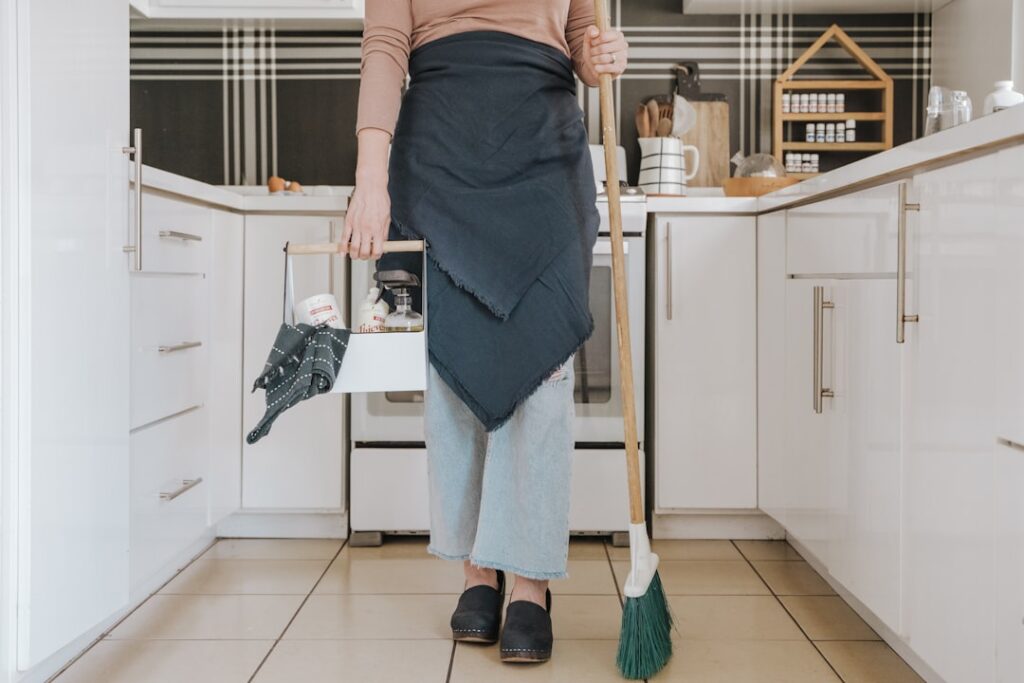
A gallon of name-brand floor cleaner runs $6 to $10, yet you can mix a better one for under 40 cents using vinegar and water you already have. A good homemade floor cleaner for mopping cleans just as well as the commercial stuff on most floors, and it skips the sticky residue that cheap concentrates leave behind. The trick is matching the recipe to your flooring, because the vinegar that shines vinyl will slowly etch natural stone and dull a polyurethane hardwood finish.
From tile to old pine, the same three or four ingredients handle almost all of it. Here’s what actually works, with exact ratios.
- The All-Purpose Vinegar Recipe
- What Vinegar Will Ruin
- Best Recipe for Hardwood Floors
- Best Recipe for Laminate and Vinyl Plank
- Best Recipe for Tile and Grout
- A Rubbing Alcohol Recipe for Streak-Free Shine
- Tips That Make DIY Cleaners Work Better
- When to Skip DIY and Buy the Bottle
- Storing and Labeling Your Cleaner
- Common Mistakes That Ruin DIY Cleaning
- Frequently Asked Questions
The All-Purpose Vinegar Recipe
For sealed tile, ceramic, porcelain, and most vinyl and laminate, start with this base. It’s cheap, it evaporates clean, and it kills odors.
- 1 gallon of warm water (not hot, which flash-evaporates before you can wipe)
- 1/2 cup of white distilled vinegar (5% acidity)
- 1 to 2 drops of Dawn dish soap
- 5 to 10 drops of essential oil, optional, for scent
Keep the dish soap to a literal drop or two. More than that and you’ll leave a film that attracts dirt, which is the number-one mistake people make with DIY cleaners. If your floor feels tacky after it dries, you used too much soap.
What Vinegar Will Ruin
Vinegar is acidic at roughly pH 2.5, and that acidity is a problem on three surfaces. Never mop these with the recipe above:
- Natural stone — marble, travertine, limestone, and slate etch and lose their polish. The damage is permanent.
- Unsealed grout — repeated acid exposure eats the cement and speeds up crumbling.
- Hardwood with a wax or oil finish — vinegar strips the protective layer and can leave a cloudy haze.
For those floors, drop the acid entirely and use one of the neutral recipes below.
Best Recipe for Hardwood Floors
Polyurethane-finished hardwood needs a pH-neutral cleaner and as little water as possible. Wood and standing water are enemies; a soaking-wet mop swells the boards and opens the seams. Wring your mop until it’s barely damp.
Mix 1 gallon of warm water with 1/4 cup of dish soap-free castile soap, or simply use a few drops of Dawn in a full gallon. Skip the vinegar. If you want a little shine, add 1 tablespoon of olive oil, but test it in a closet first because oil can make some finishes slick. Mop along the grain, then follow within a minute or two with a dry microfiber pad to pull up the moisture.
Best Recipe for Laminate and Vinyl Plank
Laminate hates water even more than hardwood does, because moisture seeps into the seams and swells the fiberboard core, which never recovers. Luxury vinyl plank is waterproof, so you have more room, but the residue rules still apply.
Use 1 gallon of warm water, 1/4 cup of white vinegar, and one drop of Dawn. On laminate, spray the solution onto a microfiber pad rather than pouring it on the floor, or mist the floor lightly and mop immediately. A spray mop like the Bona or an O-Cedar ProMist works perfectly here because it controls exactly how much liquid hits the surface.
Best Recipe for Tile and Grout
Ceramic and porcelain tile take abuse, so you can go stronger. For everyday mopping, the all-purpose vinegar recipe is plenty. When the grout looks dingy, mix a thicker attack:
- Combine 1/2 cup baking soda with enough water to form a paste.
- Scrub it into the grout lines with an old toothbrush or a stiff grout brush.
- Spray with a 50/50 vinegar-water mix and let it fizz for two to three minutes.
- Scrub again, then mop the whole floor with clean water.
Never combine baking soda and vinegar in a sealed bottle or bucket ahead of time. The reaction neutralizes both ingredients, so mix them on the floor where the fizzing does the work.
A Rubbing Alcohol Recipe for Streak-Free Shine
Dark tile and glossy vinyl show every streak. For a fast-drying, streak-free finish, blend 1 gallon of water, 1/4 cup rubbing alcohol (isopropyl), 1 tablespoon vinegar, and a drop of dish soap. The alcohol evaporates in seconds and takes the water spots with it. This one is the go-to for high-gloss floors that catch the light from a window.
Tips That Make DIY Cleaners Work Better
- Sweep or vacuum first. Mopping over grit just grinds it into the finish. This step matters more than the recipe.
- Use two buckets. One for clean solution, one to rinse the dirty mop. A single bucket redistributes filthy water across the floor.
- Change your water when it turns gray. Dirty mop water leaves a dull film no matter how good your cleaner is.
- Mix only what you’ll use that day. Vinegar solutions keep, but soap-and-water mixes grow cloudy and lose punch after a week.
- Label the bottle. A clear spray bottle of vinegar cleaner looks identical to a dozen other liquids under the sink.
When to Skip DIY and Buy the Bottle
Homemade cleaners handle routine dirt beautifully, but they have limits. For heavy grease near a stove, a commercial degreaser cuts through faster. For a factory-finished hardwood under warranty, the manufacturer may require a specific product like Bona or Bruce to keep coverage valid, so read the fine print before you freelance with vinegar. And for disinfecting during flu season, vinegar is a mild sanitizer at best; an EPA-registered disinfectant is the safer call.
For the other 90% of your mopping, a homemade floor cleaner saves real money and gives you full control over what touches your floors. Start with the all-purpose vinegar recipe, adjust for your specific flooring, and keep the dish soap to a drop or two. Do that, and your floors will look better than they ever did with the store-bought stuff.
Storing and Labeling Your Cleaner
Mix vinegar-based cleaners in a clean spray bottle or a gallon jug and they’ll keep for weeks, since vinegar is a natural preservative. Soap-and-water blends are different; they cloud and grow film after about a week, so mix those in smaller batches. Always label the bottle clearly, because a clear spray bottle of vinegar solution looks identical to a dozen other liquids under the sink, and you don’t want anyone confusing it with something dangerous. Store cleaners out of reach of kids and pets, and never mix vinegar with bleach, which produces toxic chlorine gas.
Common Mistakes That Ruin DIY Cleaning
Even a perfect recipe fails if you make these errors. Too much soap tops the list; a tacky film that attracts dirt means you overdid the Dawn. Using hot water instead of warm causes flash-evaporation and streaking on tile and vinyl. Skipping the sweep step grinds grit into the finish no matter how good your cleaner is. And soaking wood or laminate with a dripping mop is the fastest way to swell the boards and open the seams. Wring the mop until it’s barely damp, work in small sections, and change the water the moment it turns gray.
Frequently Asked Questions
Is vinegar or hydrogen peroxide better for mopping laminate?
Diluted vinegar is the better routine choice for laminate: 1/4 cup white vinegar in a gallon of warm water, applied with a spray mop and minimal liquid. Plain 3 percent hydrogen peroxide works mainly as a sanitizer and can lighten some surfaces over time, so test it first. Never combine hydrogen peroxide and vinegar in one bottle or bucket.
What is the best homemade cleaner for linoleum floors?
Use a gentle, pH-neutral mix: a few drops of dish soap in a gallon of warm water, applied with a well-wrung mop. Real linoleum is made from linseed oil and natural materials and is damaged by ammonia, strong alkaline cleaners, and standing water. Dry the floor with a microfiber pad afterward, and reapply the manufacturer’s protective polish as recommended.
Can you use homemade cleaner in a spray mop?
Yes, a refillable spray mop is the easiest way to control moisture on laminate and wood. Fill it with the all-purpose vinegar recipe, or a few drops of dish soap in warm water for wood, and keep soap to a minimum so the nozzle does not clog or streak. Mops built around sealed disposable cartridges are not designed for refilling.
Prefer to explore on your own?
See how new flooring looks in your actual room in seconds — free, no signup.
Try the free Floor Studio →