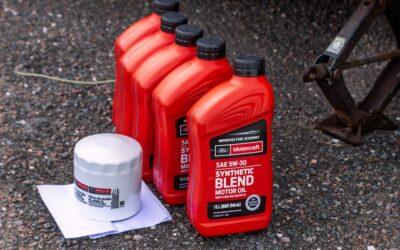
Honda’s GCV and GXV engines have a reputation for running well past a decade, but that longevity depends almost entirely on one thing owners routinely neglect. Using the correct Honda lawn mower oil and changing it on schedule is the single most important maintenance task for keeping that engine alive. Run it low, run it dirty, or pour in the wrong grade, and you can score the cylinder or seize the engine on a hot afternoon. This guide covers exactly which oil to use, how much your engine holds, when to change it, and the step-by-step process so you never have to think twice at the shelf.
- What Type of Oil Honda Engines Need
- Choosing the Right Viscosity Grade
- How Much Oil Your Engine Holds
- When to Change the Oil
- How to Change the Oil Step by Step
- Conventional vs. Synthetic: Is It Worth It?
- Checking Oil Between Changes
- Oil-Related Symptoms and What They Mean
- Disposing of Used Oil Responsibly
What Type of Oil Honda Engines Need
Most modern Honda walk-behind mowers use a four-stroke engine, which means oil goes in a separate crankcase, not mixed with the fuel like an old two-stroke. Honda specifically recommends a high-quality detergent oil rated for four-stroke engines that meets the API service classification SJ or later.
The standard recommendation for most climates is SAE 10W-30, which flows well across a wide temperature range. Honda’s own bottled 10W-30 is formulated for these engines, but any reputable 10W-30 that meets the API spec works fine. Do not use two-stroke oil, and do not use oil additives.
Regular passenger-car motor oil is perfectly acceptable here; there is nothing magic about oil sold in a small-engine bottle beyond the convenient quart or half-quart size. What matters is the API service rating on the bottle’s round API “donut” symbol and the SAE grade. Avoid the newer resource-conserving oils marked “energy conserving” only if your manual specifically warns against them; for a GCV mower, a standard SN or SP-rated 10W-30 is a safe pick off any auto parts shelf. Steer clear of aftermarket “engine treatment” additives, zinc boosters, and stop-leak products, none of which a healthy Honda engine needs and some of which can gum small oil passages.
Choosing the Right Viscosity Grade
Viscosity is temperature-dependent, so the best grade depends on when you mow. For year-round general use, 10W-30 is the safe default and what Honda prints in most GCV manuals.
- SAE 10W-30: the all-around choice, good from cold spring mornings to summer heat
- SAE 30: acceptable in warm weather above roughly 50°F, common in older recommendations
- Synthetic 5W-30 or 10W-30: excellent flow in cold starts and strong high-heat protection
Synthetic oil is not required, but it offers better protection at temperature extremes and can extend the interval slightly. For a homeowner mowing in typical spring-through-fall conditions, a quality conventional 10W-30 is entirely sufficient.
How Much Oil Your Engine Holds
Capacity is small and easy to overfill, which causes its own problems like smoking and fouled plugs. Most Honda GCV walk-behind engines hold a modest amount, and you should always confirm against your specific model’s manual.
As a general reference, the popular GCV160 and GCV170 engines hold roughly 12 to 15 fluid ounces (about 0.35 to 0.42 liters). Larger GXV engines on self-propelled and commercial mowers hold more. Because these are dipstick-checked, the right move is to add slowly and check often rather than dumping in a full bottle.
Here are typical capacities to plan your purchase, though the manual always wins:
- GCV160 / GCV170: about 13.5 fl oz (0.40 L), no oil filter
- GCV200: about 15 fl oz (0.44 L)
- GXV160 / GXV340: roughly 20 to 37 fl oz depending on displacement, some with a spin-on filter
Because a single quart bottle holds 32 fluid ounces, one bottle covers roughly two changes on a GCV mower, so buy one quart and keep the remainder sealed for the next season. Note that most walk-behind GCV engines have no oil filter at all; the entire crankcase volume is refreshed at each change, which is exactly why changing on schedule matters so much on these engines.
When to Change the Oil
Fresh out of the box, a new Honda mower needs its first oil change after the initial break-in period, typically the first 5 hours of use, to flush out fine metal particles from a new engine. Skipping this break-in change is a common mistake that shortens engine life.
After that, change the oil every 50 operating hours or once per mowing season, whichever comes first. For most homeowners that means once a year, ideally at the start or end of the season. If you mow a large property or cut in dusty, heavy conditions, change it more often.
How to Change the Oil Step by Step
An oil change on a Honda mower takes about 15 minutes and needs no special tools beyond a drain pan and a funnel.
- Run the engine a few minutes to warm the oil so it drains fully, then shut it off
- Disconnect the spark plug wire for safety
- Tilt the mower with the air filter and spark plug facing up, or use the drain plug, and drain the old oil into a pan
- Wipe the fill area clean, then add fresh 10W-30 slowly through the fill port
- Check the dipstick, adding a little at a time until it reads full, never above the upper mark
- Reconnect the spark plug wire and wipe up any spills
The most common error is overfilling. Add in small pours and recheck the dipstick each time, because too much oil causes smoking, hard starts, and can damage seals.
Two details make the tilt-drain method cleaner. First, empty or nearly empty the fuel tank before tilting, or fuel can weep out the carburetor vent and past the air filter when the mower goes on its side. Second, always tilt with the spark plug and air filter pointing up, never down, so oil does not flood the cylinder or soak the filter. If your GCV mower has a yellow-capped drain plug on the side of the crankcase, using it instead of tilting is tidier and avoids the fuel and air-filter risk entirely; just position a low pan under the plug and give the oil a few minutes to fully drain.
Conventional vs. Synthetic: Is It Worth It?
For a homeowner mowing a typical lawn from spring through fall, conventional 10W-30 does the job and costs the least, roughly $6 to $9 a quart. Full synthetic runs about $9 to $14 a quart and buys you real advantages in two situations: very cold spring starts, where its thinner cold-flow reaches the top of the engine faster, and hot, heavy commercial cutting, where it resists breaking down under sustained high temperatures.
Synthetic does not let you skip changes on a filterless GCV engine, because the oil still collects combustion soot and fine debris that only a drain removes. Think of synthetic as cheap insurance for temperature extremes rather than a way to stretch intervals. If you live where mowing season means 90°F afternoons or you push a self-propelled GXV hard, the upgrade pays for itself in engine longevity.
Checking Oil Between Changes
Do not wait for the annual change to look at the oil. Check the level before each mow, or at least monthly, by wiping the dipstick clean, reinserting it, and reading the level. Honda engines are small and hold little oil, so even a modest amount burned or leaked can drop them into a danger zone quickly.
Inspect the color too. Fresh oil is amber; oil that has gone black and thin has done its job and is due for a change. Milky or foamy oil signals water contamination and needs immediate attention.
Oil-Related Symptoms and What They Mean
Oil problems announce themselves through a few classic signs. Learning to read them saves an engine before real damage sets in.
- White or blue smoke from the exhaust: usually an overfilled crankcase or oil that reached the cylinder after the mower was tilted the wrong way; recheck the level first
- Hard starting and a fouled spark plug: often too much oil, or very old oil that has thinned out
- A knocking or rattling engine: possibly a dangerously low level; stop immediately and check the dipstick before running it further
- Oil that smells sharply of gasoline: fuel is diluting the oil, common on a mower that idles rich or has a stuck carburetor float, and it warrants a change plus a carburetor look
Honda’s GCV engines include a low-oil behavior on some models where the engine simply will not start or quickly dies if the level is critically low, a protective feature that has saved many a neglected mower. If yours cranks but refuses to keep running, check the oil before anything else.
Disposing of Used Oil Responsibly
Used motor oil is recyclable and should never go in the trash or down a drain. Pour the drained oil into a sealable container, an empty oil bottle works, and take it to an auto parts store, a service station, or a municipal recycling center. Most auto parts retailers accept used oil free of charge.
Stick to the right grade, respect the small capacity, change it on schedule, and check it often. Do that, and the correct Honda lawn mower oil routine will keep your GCV engine starting on the first or second pull for well over ten seasons.