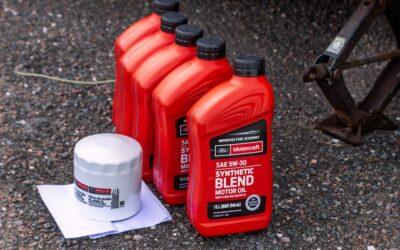
Choosing the right oil for a lawn mower is the single cheapest thing you can do to keep the engine running for a decade instead of three seasons. A quart costs $6 to $12, and a fresh fill of the correct grade protects bearings, the crankshaft, and cylinder walls from the heat and grit that shorten a mower’s life. Skip it, and you invite scored cylinders and a seized engine that costs more to replace than a new mower.
- What Kind of Oil Does a Lawn Mower Take?
- How Much Oil Does a Lawn Mower Hold?
- Conventional vs. Synthetic
- Safety First: Disconnect the Spark Plug
- How to Change the Oil in a Lawn Mower
- Recycling the Old Oil
- How Often to Change Mower Oil
- Signs You Waited Too Long
- Checking the Oil Level Correctly
- Common Oil Mistakes to Avoid
- Does Synthetic Oil Void Warranties?
- Quick Reference by Temperature
What Kind of Oil Does a Lawn Mower Take?
Most small four-stroke engines from Briggs & Stratton, Honda, and Kohler use standard automotive-grade detergent oil that meets an API service rating of SJ or higher. The catch is which viscosity you pick, and that depends on the temperature you mow in.
- SAE 30 — the classic single-grade choice for warm-weather mowing (40°F and up). It’s what most push mowers ship with and the safest default for summer.
- 10W-30 — a multi-grade oil that flows in cooler spring and fall temperatures while still protecting at high heat. Good all-rounder if your seasons swing.
- 5W-30 — better cold-start protection, common in synthetic form for mowers used near freezing.
- Synthetic 5W-30 or 15W-50 — for zero-turns, riders, and commercial use that run hot for hours. Full synthetic resists breakdown far longer than conventional.
Two-stroke engines are a different animal entirely. They burn a gas-oil mixture, so you never pour oil into a separate sump. If your mower has only one fill cap and you add oil to the gasoline, use two-cycle oil at the ratio printed on the deck, usually 40:1 or 50:1.
How Much Oil Does a Lawn Mower Hold?
Capacity is small, which is why overfilling is such a common mistake. A typical walk-behind push mower holds roughly 15 to 20 ounces — about half a quart. Riding mowers and zero-turns hold far more, usually 48 to 64 ounces (1.5 to 2 quarts). Always fill to the dipstick line, not to a fixed volume, because a partial drain leaves residual oil behind. Overfilling causes smoking, foaming, and blown seals.
Conventional vs. Synthetic
Conventional oil is fine for a homeowner mowing a quarter-acre a few dozen times a year. Change it once each season and the engine will never know the difference. Synthetic earns its higher price in demanding conditions: long mowing sessions, hot climates, dusty lots, or commercial machines that run all day. Synthetic holds viscosity better at high temperatures and flows faster on cold starts, so it’s worth the extra $4 to $6 per quart if your mower works hard.
Safety First: Disconnect the Spark Plug
Before you touch anything under the deck or near the blade, pull the spark plug wire off the plug. A single accidental crank of the flywheel can spin the blade. On a battery mower, remove the battery pack entirely. This one habit prevents the most serious injuries in small-engine maintenance. Let the engine cool for at least 15 minutes if it was running, since warm oil drains better but hot components burn skin.
How to Change the Oil in a Lawn Mower
The whole job takes 15 to 20 minutes and needs only a socket wrench, a drain pan, a funnel, and a rag.
- Run the engine for two minutes to warm the oil so it drains cleanly, then shut it off and disconnect the spark plug.
- Close the fuel valve or run the tank near empty to prevent gas spilling when you tip the mower.
- Wipe around the fill cap and dipstick to keep grit out of the crankcase.
- Drain the old oil. Some mowers have a bottom drain plug; others require you to tip the mower with the air filter and carburetor side up so fuel and oil don’t flood them. Empty into a pan.
- If your mower has a filter (most riders do), replace it now and smear a film of fresh oil on the new gasket.
- Refill slowly through the fill tube, checking the dipstick often. Stop at the full mark. It’s easier to add than to remove.
- Reconnect the spark plug, start the engine, and check for leaks around the drain plug and filter.
Recycling the Old Oil
Never dump used oil on the ground, down a drain, or in the trash — a single quart can contaminate thousands of gallons of groundwater. Pour it into a sealable container and take it to an auto parts store, a quick-lube shop, or a municipal hazardous-waste site. Most accept used motor oil free of charge. Chain stores like AutoZone and O’Reilly take it at the counter.
How Often to Change Mower Oil
Change the oil after the first 5 hours on a brand-new engine to flush break-in metal, then every 25 to 50 hours or once per season, whichever comes first. For most homeowners that means one change every spring before the first cut. Riders and zero-turns that log more hours may need a mid-season change. Check the dipstick every few uses; dark, gritty oil or a level below the add mark means it’s time.
Signs You Waited Too Long
Blue or white exhaust smoke, knocking under load, hard starting, and a burnt smell all point to oil that’s broken down or run low. Oil that looks like coffee with milk in it means water or coolant intrusion. Metal flakes on the dipstick signal internal wear. Catch these early and a $10 oil change saves the engine; ignore them and you’re shopping for a new mower at $250 to $600.
Checking the Oil Level Correctly
Reading the dipstick sounds obvious, but a bad reading is why so many engines run low or overfilled. Park the mower on level ground — a slope throws the reading off by ounces, which matters in a sump this small. Wipe the dipstick clean, reinsert it fully (some thread in, some just rest), pull it out, and read the film. The oil should sit between the add and full marks. Check cold, before you start, so oil isn’t clinging to the upper crankcase. If the level is fine but the oil looks black and thin, it’s still time for a change; color and level are separate checks.
Common Oil Mistakes to Avoid
- Overfilling — the most frequent error. Excess oil foams as the crankshaft whips it, causing smoke, oil leaks past seals, and even a hydro-locked engine. Add slowly and check often.
- Using car oil with friction modifiers — most standard automotive oil is fine, but avoid energy-conserving oils with additives meant for automotive catalytic systems if your manual warns against them.
- Mixing viscosities — topping off SAE 30 with 10W-40 leftovers won’t destroy the engine, but stick to one grade for consistent protection.
- Putting oil in a two-stroke sump — a two-cycle mower has no separate oil reservoir; oil goes in the gas. Pouring straight oil into the fuel tank of a four-stroke, or gas-oil mix into a four-stroke, causes smoking and fouling.
- Ignoring the break-in change — skipping the first 5-hour change leaves grinding metal circulating through a brand-new engine.
Does Synthetic Oil Void Warranties?
No. Using a correct-grade synthetic that meets the API rating in your manual is fully compatible with Briggs & Stratton, Honda, and Kohler warranties. Some owners worry that switching an older engine from conventional to synthetic causes leaks; in practice, synthetic’s superior detergency can reveal a seal that was already marginal, but it doesn’t create the problem. For a new engine, you can run synthetic from the first change onward. The only rule the manufacturers care about is the right viscosity and service rating, changed on schedule.
Quick Reference by Temperature
- Above 40°F: SAE 30 or 10W-30
- Below 40°F: 5W-30 or synthetic 5W-30
- Hot, heavy commercial use: full synthetic 15W-50 or 5W-30 rated for high temps
Stick with the grade in your owner’s manual when in doubt, keep the sump filled to the dipstick line, and change the correct oil for a lawn mower once a season. That small ritual is the difference between an engine that dies young and one that outlasts several sets of blades.