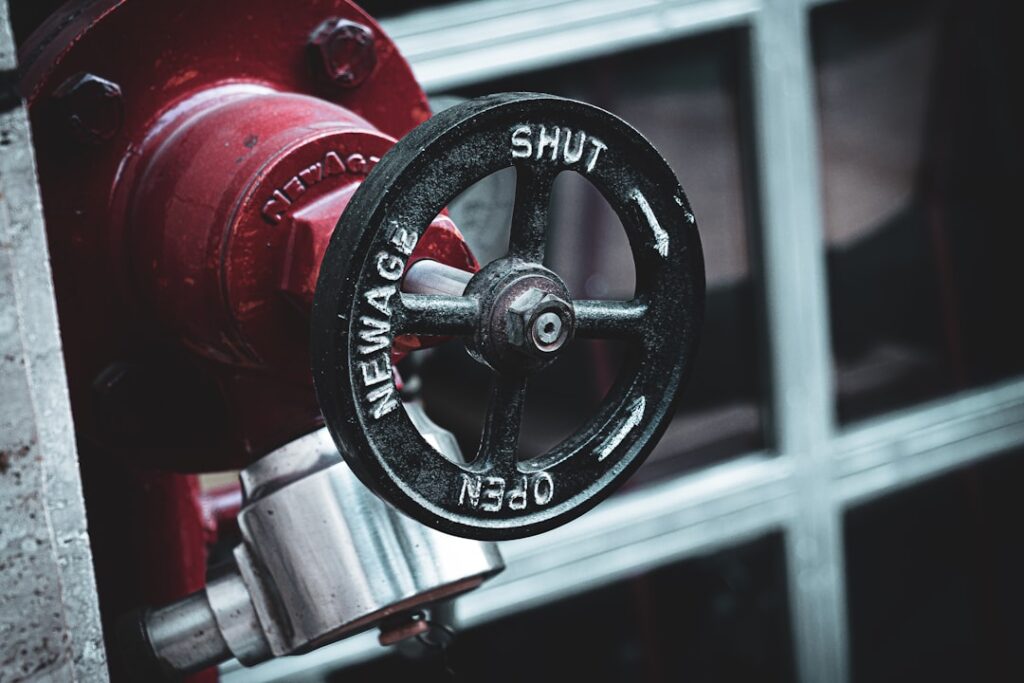
When a hot water line springs a leak, most homeowners run for the main house shutoff and kill water to everything — toilets, cold taps, the ice maker — when one valve could have isolated just the hot side. Knowing where each hot water shut off valve lives lets you stop a leaking water heater, a dripping faucet supply, or a burst hot line without shutting down the whole house. This guide covers the two kinds that matter: the cold-water inlet valve on top of your water heater, which controls all hot water in the home, and the small fixture stops under sinks and behind appliances that isolate a single tap. (Finding your main whole-house shutoff is a separate topic — here we are dealing strictly with the hot side.)
The Master Hot Water Shutoff Is on the COLD Line
This trips people up constantly, so let’s get it straight. The valve that shuts off hot water to your entire home sits on the cold water inlet pipe at the top of the water heater. Close it and no new water can enter the tank, which means no water can be pushed out of the tank into the hot lines. Within a few seconds of opening any hot tap, flow stops.
Look at the top of your water heater and you will see two pipes. The cold inlet is usually marked with a blue ring, a “C,” or a plastic collar, and it is the one with the valve — often a lever-handle ball valve on newer installs, or a round-handle gate valve on older ones. Some homes also have a valve on the hot outlet pipe, but code only requires the cold-side valve, and the cold side is the one you should close in an emergency. Never close a hot-side valve while leaving the burner or elements running with the cold side also closed; a fully isolated, heating tank builds dangerous pressure.
How to Shut Down Hot Water in an Emergency
If the water heater itself is leaking, or a hot line has burst somewhere you cannot isolate locally, work through this sequence:
- Kill the heat source first. Gas heater: turn the gas control dial to OFF or PILOT. Electric heater: flip its dedicated 30-amp double-pole breaker. Heating an emptying or sealed tank ruins elements and creates pressure risk.
- Close the cold inlet valve on top of the heater. Lever handle: quarter-turn until perpendicular to the pipe. Round handle: clockwise until snug — do not reef on a stuck gate valve with a wrench, because old stems snap.
- Open a hot tap at a nearby sink to relieve pressure and confirm flow has stopped.
- If the tank is leaking from the bottom, attach a garden hose to the drain valve and run it to a floor drain or outside before the leak finds your flooring.
Total elapsed time should be under two minutes — which is exactly why it is worth physically locating and testing this valve on a calm Saturday rather than during a flood.
Fixture-Level Hot Stops: The Little Valves Under the Sink
Every sink, and usually every washing machine and dishwasher, has individual supply stops so you can service one fixture without touching the rest of the house. Under a kitchen or bathroom sink you will find two small valves on the supply tubes: hot is on the left as you face the faucet, cold on the right, per US plumbing convention. Turn the oval or football-shaped handle clockwise to close.
These stops come in a few configurations: angle stops (pipe comes out of the wall, supply line goes up at 90 degrees), straight stops (pipe comes up through the floor), and quarter-turn ball-style stops, which have largely replaced the failure-prone multi-turn compression style. Washing machines get their own pair of hose bibb-style valves or a single-lever box valve that closes hot and cold together; dishwashers typically tee off the kitchen sink’s hot stop with a dual-outlet valve. Before replacing a faucet, always test the hot stop first — a stop that has not moved in 15 years may weep at the stem when disturbed, and you want to discover that while the main is easy to reach.
Valve Types You Will Encounter
- Ball valve: lever handle, quarter-turn, full flow, extremely reliable. The modern standard at water heaters. Replace old valves with these.
- Gate valve: round wheel handle, multi-turn. Common on pre-2000 installs. Prone to seizing and to stems breaking off; they also fail half-open internally.
- Multi-turn compression stop: the classic under-sink valve. Rubber washers harden over the years, so they often drip when finally used.
- Quarter-turn stop: ball-valve internals in an angle-stop body. The $8 to $12 upgrade worth making every time a compression stop fails.
- Push-to-connect stops (SharkBite style): install without soldering on copper, PEX, or CPVC — the fastest DIY replacement route, roughly $10 to $15 per valve.
Handle-color convention helps identification: red levers and handles generally mark hot lines, blue mark cold, though never trust color over position and testing in an older home.
Replacing a Failed Valve: Cost and Difficulty
A seized or weeping under-sink stop is a legitimate DIY job if you are comfortable working with the main water off. Shut off the house, drain pressure at a low faucet, then remove the old stop — compression-fitting stops unscrew from their brass ferrule (hold the valve body, turn the nut), threaded stops unscrew from a fitting, and soldered stops need to be cut off. A push-to-connect replacement goes on in seconds on a cleanly cut pipe. Budget $10 to $20 in parts and an hour including the trip to the store.
The water heater inlet valve is a bigger job because it often involves sweating copper near flammable framing or dealing with dielectric unions, and a mistake there floods the utility room. Plumbers charge roughly $150 to $350 to replace a heater shutoff with a quality full-port ball valve, often bundled with flexible connectors while they are in there. If your heater still has a 1990s gate valve with a wobbly wheel, that replacement is worth scheduling before it fails closed — or worse, fails open during an emergency.
Test Your Valves Twice a Year
Valves fail from disuse more than use. Twice a year — smoke-detector-battery weekend works — cycle every hot stop in the house: close it fully, open a tap to confirm it holds, then reopen. Exercise the water heater inlet valve the same way. Multi-turn valves that feel gritty or will not fully stop flow go on the replacement list. Label the heater’s cold inlet valve with a tag from the hardware store, and show every adult in the house where it is. Five minutes of maintenance means that when a hot supply line lets go at 2 a.m., you are turning one handle instead of bailing water while you hunt for it.
Quick Reference: Which Valve Do You Need?
Leaking water heater or unknown hot-side leak: kill the heat, then close the cold inlet valve at the heater. Dripping faucet or faucet replacement: close the hot stop under that sink (left side). Washing machine hose leak: close the laundry box valves. Dishwasher service: close the dual-outlet stop under the kitchen sink. And if any of those valves is stuck, broken, or missing, fall back to the main house shutoff and put valve replacement at the top of the to-do list. A working hot water shut off valve at every level of the system is cheap insurance against the most common category of home water damage.