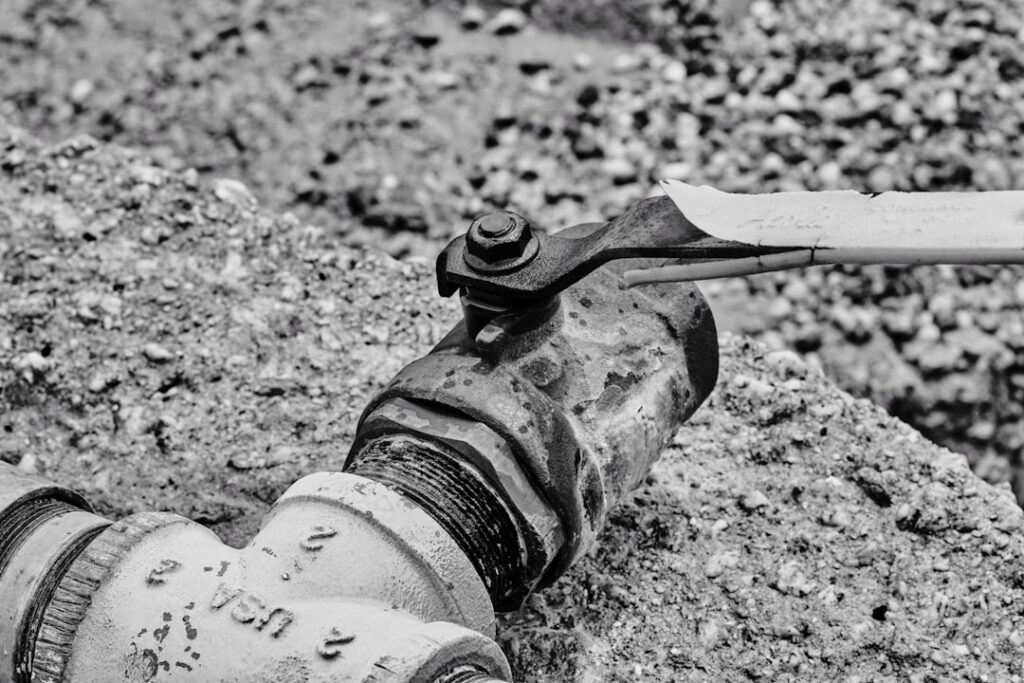
The water shut off valve outside your home is your fastest line of defense against a burst pipe, a flooding fixture, or a plumbing emergency, yet surveys suggest more than half of homeowners cannot locate or operate it before water is already pouring across the floor. Knowing where this valve sits and how to turn it can mean the difference between a quick fix and thousands of dollars in water damage. Most homes actually have two outdoor shutoffs to understand: the municipal curb stop near the street and the main shutoff where the line enters the property.
- The Two Outdoor Shutoffs You Should Know
- How to Find Your Outside Shut Off Valve
- Types of Outdoor Shutoff Valves
- How to Turn the Valve Off Correctly
- Protecting the Valve From Freezing
- Exercising and Maintaining the Valve
- When You Actually Need the Shutoff
- Garden Hose Shut Off Valve Options at the Spigot
- Final Thoughts
The Two Outdoor Shutoffs You Should Know
Outdoor water control usually involves a pair of valves with different owners and purposes.
- The curb stop: This valve sits inside a small underground box near the street or sidewalk, often under a round or rectangular metal lid labeled water. The utility owns it, and it shuts off all water to your property. Operating it usually requires a long T-shaped tool called a curb key.
- The main shutoff: In warmer climates without basements, the main valve is often outside near a hose bib, an exterior wall, or in an above-ground enclosure. This is the one you control directly and use most often.
In colder regions the main shutoff is more commonly indoors near the water meter to protect it from freezing, but a meter pit or curb stop still exists outside. Knowing your specific layout before an emergency is essential.
How to Find Your Outside Shut Off Valve
If you have never located your valve, set aside fifteen minutes on a dry day to track it down.
- Start at the meter. Find the water meter box near the curb. Lift the lid carefully, since insects and dirt collect inside. The main service line runs from here toward your house.
- Follow the line to the house. The shutoff is typically on the home side of the meter, sometimes in the same pit and sometimes in a separate box closer to the foundation.
- Check the perimeter. Walk the side of the house that faces the street and look for a valve near the foundation, often close to an exterior faucet.
- Review your property records. A home inspection report or plumbing diagram from your purchase often marks the location.
Once you find it, tag it brightly, take a photo, and make sure everyone in the household knows the spot. At D and G Flooring we have seen countless ruined floors that a thirty-second shutoff could have prevented.
Types of Outdoor Shutoff Valves
Outdoor valves come in a few common designs, and the type determines how you operate it.
- Ball valve: The most reliable modern type, with a straight lever handle. The water is on when the handle aligns with the pipe and off when it sits perpendicular. A quarter turn does the job.
- Gate valve: An older design with a round wheel handle that you turn clockwise many rotations to close. These can seize or fail after years of disuse.
- Curb stop: Found in the meter pit, this requires a curb key and a quarter to half turn. The slot or nut on top tells you orientation.
How to Turn the Valve Off Correctly
Turning a valve seems obvious until an old one fights back. Follow these steps to avoid breaking it:
- Identify the type. Lever means ball valve and a quarter turn. Wheel means gate valve and many turns clockwise.
- Turn slowly and steadily. Remember the old rule, righty-tighty, lefty-loosey. Do not yank hard on a stiff handle, because brittle metal can snap.
- Confirm the water is off. Open a faucet inside the house. The flow should sputter and stop within a minute.
- Use the curb key if needed. If your direct shutoff fails, the curb stop is your backup. Insert the key, seat it on the valve, and turn a quarter turn.
Protecting the Valve From Freezing
An outdoor valve is vulnerable to freezing temperatures, and a frozen valve can crack and leak the moment it thaws. In cold climates, take these precautions each fall. Insulate exposed valves and pipes with foam pipe sleeves or insulating wrap. Cover above-ground enclosures with an insulated pouch. For exterior faucets, disconnect garden hoses, drain the line, and install frost-proof hose bibs if you do not already have them. If your main shutoff truly sits outside in a freezing climate, ask a plumber whether relocating it indoors makes sense.
Exercising and Maintaining the Valve
Valves that never move tend to seize. Twice a year, gently open and close your main shutoff to keep it working freely, then return it to fully open. If you have a gate valve that is hard to turn or weeps water around the stem, replace it with a modern ball valve. A plumber can usually swap it for $150 to $400 depending on access and pipe material. Replacing an unreliable valve before a crisis is far cheaper than dealing with the aftermath of one that fails when you need it most.
When You Actually Need the Shutoff
Several situations call for shutting off the outside water immediately. A burst or leaking pipe demands an instant shutoff to stop the flood. Major plumbing repairs, like replacing a water heater or a main fixture, require it. Extended vacations are a smart time to shut off water entirely so no slow leak goes unnoticed for weeks. And if you ever see water bubbling up in your yard or a sudden spike in your water bill, the outside valve lets you stop the loss while you investigate.
Garden Hose Shut Off Valve Options at the Spigot
A garden hose shut off valve is a small fitting that screws onto the outdoor faucet or onto the hose itself and lets you stop the flow right where you are working. It is not the same as the interior shutoff that controls the pipe feeding the hose bib, and knowing which one to reach for saves both water and frustration. The hose end valve is for convenience during the day, while the interior shutoff is for repairs and winter protection.
Inline Hose Valves
An inline valve threads between the spigot and the hose, or between two lengths of hose, and has a small lever that turns a quarter turn to open or close. It lets you swap a nozzle, sprinkler or watering wand without walking back to the faucet, and it reduces wear on the spigot handle, which tends to leak at the stem when it is cranked open and shut many times a day. Metal bodies with a full ball inside last longer than thin plastic versions, which can crack after a few seasons in the sun or a single hard freeze. Look for a rubber washer seated in each female end so the connection does not drip.
Y Valves and Multi Port Splitters
A Y valve, sometimes called a two way splitter, turns one spigot into two outlets, each with its own lever. It is handy for running a soaker hose on one side and a hand hose on the other, or for keeping a drip line connected all season. Four way manifolds take the idea further for vegetable beds and timers. When you run more than one line at once, expect lower pressure at each outlet, so open only what you need. If you connect a hose to a timer or a splitter, a hose bib vacuum breaker helps keep garden water from siphoning back into the house plumbing, and some local codes require one on outdoor faucets.
The Interior Shutoff for the Hose Bib
Most homes have a separate valve inside, often in the basement, crawlspace or a utility area near where the outdoor faucet passes through the wall. This valve controls the pipe that feeds the spigot. Closing a hose end valve only stops flow at the hose; the spigot and the pipe behind it stay pressurized. If the outdoor faucet drips at the stem, needs a new washer or has split, the interior shutoff is the one that lets you work on it without shutting off water to the whole house. Frost free spigots use a long stem that closes the valve inside the heated wall, but they still benefit from an interior shutoff for repairs.
Winterizing Hose Valves and Spigots
Before the first hard freeze, remove every hose, inline valve and splitter from the spigot. A connected hose traps water in the faucet and can crack a frost free spigot from the inside. Drain the hose and valves, open the levers so trapped water can escape, and store them in a garage or shed. For a standard spigot, close the interior shutoff, then open the outdoor faucet to drain the line, and leave it open through winter. An insulated faucet cover adds extra protection in very cold areas.
Final Thoughts
The water shut off valve outside your home is a piece of infrastructure you hope to rarely use but absolutely must understand. Spend a few minutes locating both your main shutoff and your curb stop, learn which way each one turns, keep a curb key handy, and exercise the valves a couple of times a year. These simple habits turn a potential disaster into a minor inconvenience and protect your home, your belongings, and your flooring from the destructive power of uncontrolled water.