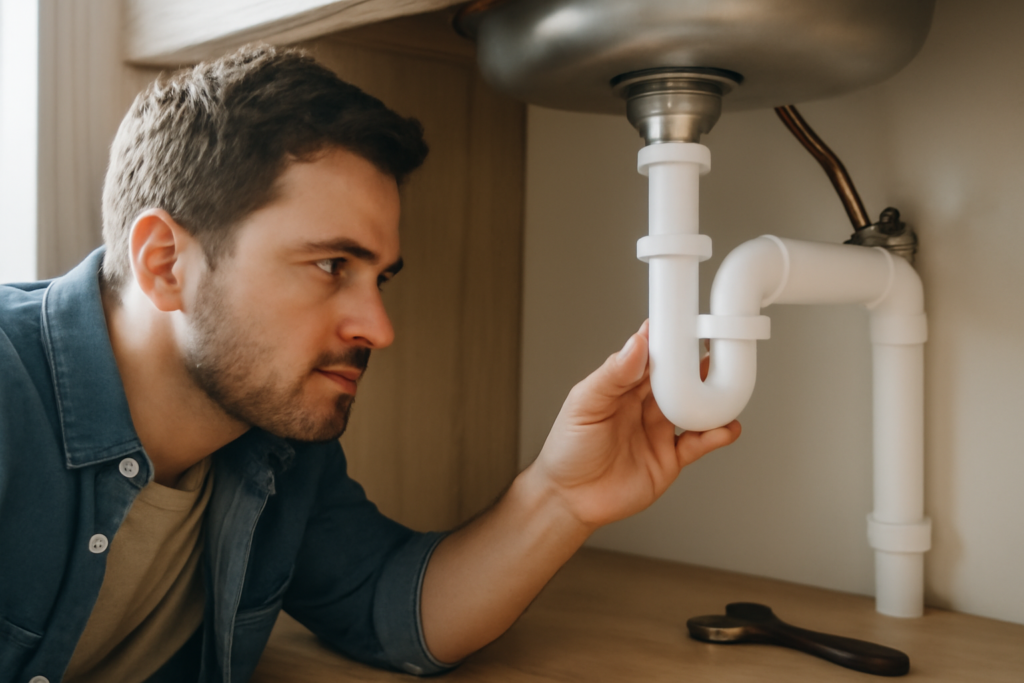
Hidden behind your walls and under your floors runs a network most homeowners never think about until something leaks, and knowing the basics of house pipe systems can save you money, prevent water damage, and help you talk intelligently with a plumber. Your home’s plumbing is really three connected systems: lines that bring fresh water in, lines that carry waste out, and vents that let the whole thing breathe. Understanding how these work, and what they are made of, turns plumbing from a mystery into something you can manage.
The Three Plumbing Systems in Every Home
All residential plumbing breaks down into three jobs. Supply lines deliver pressurized fresh water to your faucets, fixtures, and appliances, split between hot and cold. Drain lines, also called waste lines, use gravity to carry used water and waste away to the sewer or septic system. Vent pipes run up through the roof, allowing air into the drain system so water flows smoothly and sewer gases escape safely outside. When any of the three malfunctions, the others are affected, which is why slow drains and gurgling sounds often trace back to a venting issue.
Common House Pipe Materials
The pipes themselves come in several materials, and the type in your home depends on its age and local codes:
- PEX: Flexible plastic tubing that has become the modern standard for supply lines; easy to install, freeze-resistant, and affordable.
- Copper: Durable, long-lasting supply piping that resists bacteria but costs more and can corrode in acidic water.
- PVC: White rigid plastic used for drain, waste, and vent lines; inexpensive and corrosion-proof.
- ABS: Black plastic similar to PVC, also used for drains in many regions.
- Galvanized steel: Found in older homes; prone to internal corrosion and reduced flow over time.
- Cast iron: Old heavy drain piping, durable but can rust and crack with age.
If your home still has galvanized steel supply lines, low water pressure and rusty water are common signs they are nearing the end of their life.
How to Read Your Home’s Pipe Layout
Knowing where your main shutoff valve is located is the single most useful piece of plumbing knowledge you can have. In an emergency, shutting it off stops water to the whole house and limits damage. It is usually near where the main line enters the home, often in a basement, crawl space, or near the water meter. Individual fixtures also have local shutoff valves under sinks and behind toilets, letting you isolate one fixture without cutting water to the entire house.
Common House Pipe Problems
Several issues turn up again and again in homes. Leaks at joints and fittings are the most frequent and, if ignored, lead to mold and structural damage. Clogs build up in drain lines from grease, hair, and debris. Low water pressure can stem from corroded pipes, mineral buildup, or a partially closed valve. In cold climates, frozen pipes are a serious winter threat; water expands as it freezes and can burst a line, causing major flooding when it thaws. Knocking or banging sounds, called water hammer, occur when fast-closing valves send a pressure shock through the system.
Preventive Maintenance You Can Do
A little attention prevents most plumbing disasters. Periodically check under sinks and around fixtures for moisture or staining. Avoid pouring grease down drains and use strainers to catch hair and food. In winter, insulate pipes in unheated spaces and let faucets drip during deep freezes to keep water moving. Test your main shutoff valve once a year so it works when you need it. Address small drips promptly, since a minor leak left alone almost always becomes an expensive repair.
DIY vs. Calling a Plumber
Plenty of plumbing tasks are within reach of a confident homeowner: clearing a slow drain, replacing a faucet washer, or swapping a supply line under a sink. But some jobs belong to a licensed professional. Anything involving the main sewer line, gas piping, water heater connections, or work behind finished walls is best left to a pro. Major repiping, persistent leaks you cannot locate, and any situation involving sewage backup are clear signals to call for help rather than risk a costly mistake.
Understanding Water Pressure and Flow
Healthy household water pressure typically falls between 40 and 60 psi. Too low and your showers feel weak; too high, above about 80 psi, and you stress fittings, appliances, and joints, raising the risk of leaks. A pressure-reducing valve at the main line protects the system in homes fed by a high-pressure municipal supply. If pressure suddenly drops across the whole house, suspect a main line issue or a partially closed valve; if it drops at one fixture, the culprit is usually a clogged aerator or a corroded supply line you can clean or replace yourself.
Pipe Sizing Basics
Pipe diameter affects flow throughout the home. Main supply lines are commonly 3/4 inch or 1 inch, branching down to 1/2 inch lines that feed individual fixtures. Drain lines are larger: sink drains are often 1.5 inches, while toilet and main drain lines run 3 to 4 inches to handle solid waste. Undersized pipes cause pressure drops when multiple fixtures run at once, which is why you sometimes feel the shower weaken when someone flushes. If you are remodeling, sizing pipes correctly for the fixtures they serve prevents these annoyances and meets code.
When a Problem Becomes an Emergency
Certain situations demand immediate action. A burst pipe, a sewage backup, or water pouring where it should not be all call for shutting off the main valve and contacting a plumber right away. Knowing your shutoff location ahead of time can be the difference between a quick fix and thousands of dollars in water damage. Keep a licensed plumber’s number handy before you need it.
Final Thoughts
Getting comfortable with your house pipe system pays off in lower repair bills and faster responses to trouble. Learn your three systems, know your pipe materials, locate your main shutoff, and keep up with simple maintenance. Handle the easy fixes yourself, but call a licensed plumber for gas, sewer, or in-wall work. A little knowledge keeps the water flowing where it should and out of where it should not.