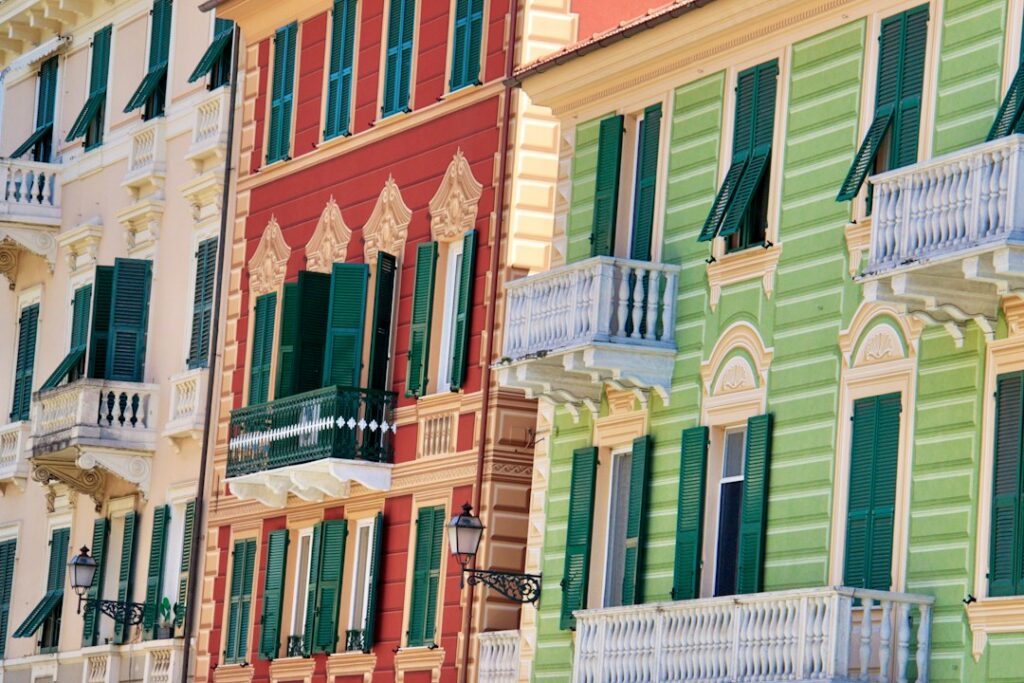
Shutters take up a small slice of your facade, yet they change curb appeal more than almost any other paint decision. Picking house shutter colors comes down to three things: the fixed colors you cannot easily change (roof, brick, stone), the main siding color, and how much contrast you want. Get those right and the house looks deliberate; get them wrong and the shutters either vanish or shout.
The short answer for most homes: go darker than the siding for classic contrast, pick a color that shares an undertone with the roof or masonry, and let the front door be the one place you take a bolder risk. White siding pairs with black, navy or deep green. Gray siding looks sharp with charcoal, black or crisp white. Beige and tan homes come alive with dark brown, olive, burgundy or slate blue. Red brick favors black, dark green or cream, and stucco suits earthy tones like bronze, sage and warm brown.
- How to Choose House Shutter Colors That Work
- Shutter Color Matrix by Siding Color
- Coordinating Shutters, Front Door and Trim
- Testing Shutter Paint Colors Before You Commit
- Painting vs Replacing Your Shutters
- Safety: Ladders, Lead Paint and Coatings
- Cost Ranges
- When to Call a Pro
- Colored Window Shutters: Where Red, Burgundy, Tan and Charcoal Gray Work
- Frequently Asked Questions
Below is a fuller matrix by siding color, advice on coordinating with the front door and trim, and a practical look at whether to paint the shutters you have or replace them.
How to Choose House Shutter Colors That Work
Start outside, not at the paint counter. Stand across the street at different times of day and note what stays put: roofing shingles, brick, stone veneer, gutters and window frames. Those elements set the undertone, warm or cool, that the shutters should respect. A cool gray roof with a warm yellow-green shutter rarely looks right, while a charcoal shutter echoes that roof and ties everything together.
Next, decide on contrast. High contrast, such as black on white, reads traditional and crisp. Low contrast, such as a slightly deeper gray on gray siding, reads modern and calm. Tonal schemes work best on homes with strong architecture; high contrast helps a plain facade gain definition.
Finally, limit the palette. A good rule is three exterior colors: body, trim and accent. Shutters are usually the accent, sometimes shared with the door. Adding a fourth color for the door is fine when it is deliberate, but avoid a different color on every element.
Shutter Color Matrix by Siding Color
| Siding or Facade | Classic Shutter Picks | Door Ideas |
|---|---|---|
| White | Black, navy, forest green | Red, black, bright blue |
| Light gray | Charcoal, black, white | Yellow, red, teal |
| Dark gray | White, black, cream | Orange, wood tone, red |
| Beige or tan | Dark brown, olive, burgundy, slate blue | Deep red, black, sage |
| Red brick | Black, dark green, cream | Black, navy, natural wood |
| Stucco | Bronze, sage, warm brown, terracotta | Wood tone, turquoise, black |
White Houses
White is the most forgiving canvas. Black shutters are the safe, timeless choice and suit farmhouse, colonial and modern homes alike. Navy softens the look slightly and pairs well near water. Deep green feels traditional and looks especially good against wooded lots. On a white house with a warm cream tint, choose a black with a hint of brown or a green-black rather than a stark blue-black.
Gray Houses
For light gray siding, charcoal shutters give contrast without harshness, and black adds more punch. White shutters on light gray create a soft, coastal effect. On dark gray or charcoal homes, white or cream shutters stand out beautifully, while black shutters give a moody tone-on-tone look that works on modern designs.
Beige and Tan Houses
Shutter colors for beige house exteriors should lean warm or at least neutral. Dark chocolate brown is the classic match. Olive and deep sage feel earthy and current. Burgundy suits traditional and Craftsman homes. Slate blue works when the beige has a grayish cast. Avoid pure bright white shutters on beige, which can make the siding look dingy by comparison; a soft cream is usually better.
Red Brick Homes
Brick has strong undertones, so look closely at the mortar and any dark or tan flecks. Black shutters work on almost every red brick. Dark hunter green is a classic Georgian pairing. Cream or off-white shutters brighten older brick and suit homes with white trim. Steer clear of red shutters on red brick, since two slightly different reds usually clash.
Stucco Homes
Stucco often comes in warm whites, sands and terracottas. Earth tones such as bronze, sage, warm brown and muted terracotta suit Spanish and Mediterranean styles. On a white stucco modern home, black or natural wood shutters look clean.
Coordinating Shutters, Front Door and Trim
House and shutter color combinations work best when the door either matches the shutters or deliberately contrasts with them. Matching gives a formal, unified look, common on colonials. A contrasting door, such as a red door with black shutters on a white house, draws the eye to the entry.
Trim usually stays white, cream or a shade matched to the window frames. If your windows have black or bronze frames, repeating that dark tone on the shutters keeps the facade cohesive. Garage doors should generally blend with the siding or trim rather than the shutters, so they do not dominate the view from the street.
Testing Shutter Paint Colors Before You Commit
Exterior color shifts dramatically in sunlight. Buy sample quarts of your top two or three shutter paint colors and paint large boards, at least 2 by 3 feet. Lean them against the house beside a window and check them in morning, midday and evening light. Look from the curb, not up close. Dark colors often read lighter outdoors, while saturated colors can appear much brighter than the chip.
If you are unsure, photograph the house, and use a free color visualizer app to preview combinations. Just remember screens distort color, so always confirm with physical samples.
Also think about how house shutter colors age. Very dark and very saturated colors fade faster in strong sun, especially on south- and west-facing walls, so a deep red may look pink in a few summers. Mid-tone and neutral shades hide fading and dust better. If you live in a hot, sunny climate, a slightly lighter version of your favorite shade often ages more gracefully.
Painting vs Replacing Your Shutters
Painting makes sense when the shutters are structurally sound. Wood shutters with minor checking, or vinyl shutters that are simply faded, can be refreshed for the cost of paint and a weekend. Replacing makes sense if wood shutters are rotted, if vinyl is cracked and brittle, or if the current shutters are the wrong size for the windows. Properly sized shutters should each be about half the window width, so a closed pair would cover the opening.
Exterior vinyl shutters are an affordable, low-maintenance replacement and come in many factory colors, which avoids repainting. Composite and wood shutters cost more but look more authentic, especially with working hinges and hardware.
How to Paint Shutters Well
- Remove shutters when possible and lay them on sawhorses. Painting on the ground is safer and cleaner than working on a ladder.
- Wash with mild detergent and let them dry completely.
- Scuff-sand glossy surfaces lightly, then prime bare wood.
- For vinyl, use a paint rated for vinyl with a light reflectance value that the maker approves; very dark colors can make vinyl warp in the sun unless the paint is formulated for it.
- Apply two thin coats of exterior acrylic, working into louvers with a small brush or a sprayer.
- Rehang with stainless or coated fasteners.
Safety: Ladders, Lead Paint and Coatings
Taking shutters down usually means ladder work. Set an extension ladder on firm, level ground at roughly a 1-to-4 angle, extend it 3 feet above the landing point, and keep three points of contact. Have a helper steady the ladder and hand shutters down. Shutters on second stories and higher are a job for a pro with proper equipment.
If your home was built before 1978, test the existing shutter and trim paint for lead before you scrape or sand. Use lead-safe practices, such as wet scraping, plastic sheeting and HEPA cleanup, or hire a lead-safe certified painter. Older homes may also have asbestos in some siding or caulk, so test before disturbing anything suspect.
When using primers, strippers or oil-based paints, work with good ventilation, wear gloves and eye protection, use a respirator per the product label, and never mix chemical products. Keep solvent-based products away from pilot lights and open flames.
Cost Ranges
Repainting existing shutters yourself usually costs little more than paint and supplies. Pro painting of shutters alone typically runs a few hundred dollars for an average home. New vinyl shutters are budget friendly per pair, while composite or custom wood shutters cost several times more, plus installation.
When to Call a Pro
Hire a painter or siding contractor for multi-story homes, lead-painted surfaces, shutters that must be anchored into masonry, or when you are coordinating a full exterior repaint. A color consultant can also help if your house shutter colors must satisfy HOA guidelines or a historic district.
Colored Window Shutters: Where Red, Burgundy, Tan and Charcoal Gray Work
Colored window shutters work when the color is pulled from something already on the house, such as the roof, brick, stone or front door, instead of being chosen on its own. Red and burgundy suit white, cream and beige siding; tan shutters suit white, cream and stucco homes that want a soft, low-contrast look; dark gray and charcoal gray shutters suit light gray, white and many brick homes. Start from the shutter color you like and check it against the fixed elements first.
| Shutter color | Best siding | Good roof match | Watch out for |
|---|---|---|---|
| Bright red | White, light gray | Black or charcoal shingles | Fades fastest in strong sun; avoid on red brick |
| Burgundy | Beige, tan, cream | Brown or weathered wood shingles | Can look brown on cool gray siding |
| Tan | White, cream, light stucco | Brown, tan or terracotta | Too close to beige siding and it disappears |
| Dark gray or charcoal gray | Light gray, white, red brick | Gray or black shingles | Looks flat next to warm yellow siding |
Red and Burgundy Window Shutters
Red house shutters give the most energy of any outdoor shutter color, which suits farmhouses, cottages and colonials with white siding. Pick a red with a slight brown or blue base rather than a pure fire-engine red, which tends to look cheap and turns pink as it fades. Burgundy window shutters are the quieter option: deeper, more traditional and easier to pair with beige and tan siding. Repeat the shade on the front door or in a planter so the color appears more than once.
Tan House Shutters
Tan shutters create a gentle, two-tone look rather than strong contrast. They work best when there is a clear value gap, so pair a mid or dark tan with white or cream siding, or a deeper sand with light stucco. Dark brown or bronze window frames help tan shutters look intentional.
Dark Gray and Charcoal Gray Shutters
Dark grey shutters are a softer alternative to black that still give definition. Charcoal gray shutters pair especially well with gray roofs, so the two read as a set. On red brick, choose a charcoal with a warm, slightly brown base so it does not look cold against the masonry. On vinyl shutters, use a paint rated for dark colors on vinyl to prevent warping.
Frequently Asked Questions
What is the most popular shutter color?
Black remains the most popular choice because it works with white, gray, beige and brick homes and suits most architectural styles.
Should shutters match the front door?
They can, for a formal unified look, but a contrasting door is equally valid. Pick one approach and make it look intentional.
Should shutters be lighter or darker than the house?
Darker shutters are the traditional choice and add definition. Lighter shutters work on dark siding or when you want a softer coastal look.
Can you paint vinyl shutters a dark color?
Yes, if you use a paint formulated for vinyl in dark colors. Standard dark paint can absorb enough heat to warp vinyl.