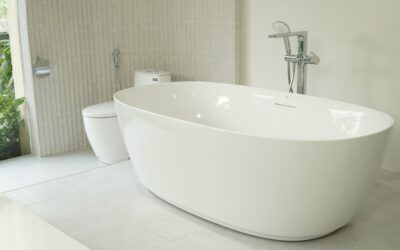
A standard 60-inch alcove tub holds roughly 40 to 50 gallons when filled to the overflow drain, but a typical bath uses closer to 25 to 35 gallons once you leave room for the person in it. So the honest answer to how many gallons does a bathtub hold? It depends on two things: the tub’s shape and depth, and how full you actually fill it. Deep soaking tubs, freestanding clawfoot tubs and jetted tubs can hold far more, sometimes over 100 gallons.
Part of our Bathroom Remodeling & Flooring guide — explore the full guide →
That number matters for more than curiosity. It decides whether your water heater can fill the tub with hot water, whether an upper floor can carry the load, and how much water and energy each bath costs you. A bigger tub with an undersized water heater is one of the most common disappointments in bathroom remodels.
The capacity table and fill math that follow let you estimate your own tub in a few minutes.
How Many Gallons Does a Bathtub Hold by Type
| Tub type | Common size (L x W) | Capacity to overflow | Typical bath fill |
|---|---|---|---|
| Standard alcove | 60 x 30 in | About 40 to 50 gal | About 25 to 35 gal |
| Deep alcove soaker | 60 x 32 in, 20+ in deep | About 55 to 75 gal | About 40 to 55 gal |
| Freestanding soaking | 60 to 72 x 30 to 36 in | About 55 to 100 gal | About 40 to 70 gal |
| Clawfoot | 54 to 72 x 30 in | About 40 to 70 gal | About 30 to 50 gal |
| Corner | 60 x 60 in | About 60 to 110 gal | About 45 to 80 gal |
| Jetted or air tub | 60 to 72 x 36 to 42 in | About 60 to 120 gal | Must cover jets, about 45 to 80 gal |
| Japanese-style deep soaker | 40 to 48 x 30 in, 24+ in deep | About 50 to 80 gal | About 40 to 60 gal |
These are general ranges. Manufacturers usually publish an exact gallon figure to the overflow on the spec sheet, and that is the number to use when planning a water heater or checking floor loads.
The Fill-to-Overflow Math
When you cannot find a spec sheet, you can estimate the capacity of the bathtub with a tape measure and a calculator. One gallon equals 231 cubic inches, so the formula is:
Gallons = length x width x water depth (all in inches) / 231
The catch is that tubs are not boxes. The walls slope, the corners are rounded, and the floor is narrower than the rim. To get a realistic number:
- Measure the inside length and width at the rim and again at the floor of the tub.
- Average the two lengths and the two widths.
- Measure the water depth from the tub floor to the bottom of the overflow opening. This is the maximum usable depth, often 12 to 15 inches in a standard alcove tub and much more in a soaker.
- Multiply average length by average width by depth, then divide by 231.
- Subtract around 10 percent for curved corners and a sloped backrest.
Example: a standard alcove tub that averages 48 inches long and 20 inches wide, with 12 inches to the overflow, gives 48 x 20 x 12 = 11,520 cubic inches. Divide by 231 and you get about 50 gallons; subtract 10 percent for curves and the estimate lands near 45 gallons. A person displaces water too, roughly 1 gallon for every 8 pounds of body weight, so a 160-pound bather takes up about 20 gallons of that space. That is why a typical bath fill is so much lower than the full capacity.
Prefer a hands-on method? Put the plug in, run the tub faucet into a 5-gallon bucket and time how long it takes to fill, then time how long the tub takes to reach your normal fill line. Divide and multiply to get the volume.
Sizing a Water Heater for Your Tub
Bath water is a blend of hot and cold. A comfortable bath is usually around 100 to 104°F. With the water heater set to 120°F and cold water coming in at about 55°F, roughly three-quarters of the bath needs to come from the hot side. A tank heater also delivers only around 70 percent of its rated size as fully hot water before the incoming cold dilutes it.
| Bath fill | Hot water needed (approx.) | Suggested tank size |
|---|---|---|
| 30 gallons | About 22 gal | 40 gallon tank is usually enough |
| 45 gallons | About 34 gal | 50 gallon tank |
| 60 gallons | About 45 gal | 65 to 75 gallon tank |
| 80 gallons | About 60 gal | 80+ gallon tank or a large tankless unit |
A commonly quoted rule of thumb is simpler: the water heater should be at least two-thirds of the tub’s capacity. Treat that as a bare minimum that assumes you never fill to the overflow; the math gives you a more realistic target, especially in winter when incoming water is colder.
Tankless heaters never run out, but they are limited by flow rate. A tub filler can draw 4 to 7 gallons per minute or more, so check that the unit can deliver that flow at your required temperature rise in cold weather. Undersized tankless units slow the fill or deliver lukewarm water.
Scald Safety and Water Heater Settings
Turning the water heater up to stretch the hot water supply is tempting, but hotter water raises the risk of scald burns, especially for children and older adults. A setting of about 120°F is a widely recommended balance. If you need more hot water for a large tub, consider a bigger tank, a mixing valve or a tankless unit rather than a higher setting.
- Install a thermostatic or pressure-balancing valve, or an anti-scald mixing valve at the heater, so the water at the spout stays at a safe temperature.
- Run cold water first, then add hot, and mix well before anyone gets in.
- Check the water with a bath thermometer rather than your hand; aim for no higher than about 100 to 104°F for adults and lower for young children.
- Never leave a child alone in or near a filling tub.
- Before servicing a water heater, turn off the power at the breaker (electric) or set the gas control to pilot or off, shut the cold supply, and let the water cool before draining. Relieve pressure by opening a hot tap.
- Gas water heater work, new circuits for electric heaters and any change to supply plumbing belong to licensed professionals, with permits where your jurisdiction requires them. If you ever smell gas, leave the house and call the gas utility from outside.
Floor Load and Plumbing Considerations
Water weighs about 8.3 pounds per gallon. A 100-gallon soaking tub full of water, plus the tub itself and a bather, can easily exceed 1,000 pounds in a small footprint. Standard framing usually handles an alcove tub without trouble, but a large freestanding cast iron tub on an upper floor may need joist reinforcement. Ask a contractor or structural engineer to check before you buy.
Large tubs also drain slowly through a standard 1-1/2-inch drain. Some deep tubs and jetted models call for specific drain and overflow kits, and jetted tubs need a dedicated GFCI-protected circuit installed by a licensed electrician.
Water Use and Cost of a Bath
A 30-gallon bath uses about as much water as a 12- to 15-minute shower with a standard showerhead. Filling a big soaker to 60 or 70 gallons doubles that. The water itself is cheap in most areas, but heating it is not: a deep bath can cost noticeably more in electricity or gas than a short shower. General cost to upgrade a water heater for a large tub ranges from a few hundred dollars for a slightly larger tank swap to a few thousand for tankless conversions that need new venting, gas lines or electrical service.
Troubleshooting a Tub That Runs Cold
Water turns lukewarm halfway through filling. The tank is too small for the tub, or sediment buildup has reduced its usable capacity. Flushing the tank may help; otherwise, size up.
Tub takes forever to fill. The faucet or supply lines may be restricting flow, or a tankless unit is throttling to reach temperature. A dedicated tub filler with larger supply lines often helps.
Temperature swings while filling. A failing mixing valve cartridge or pressure changes elsewhere in the house can cause this. A thermostatic valve keeps temperature steady.
When to Call a Pro
Bring in a licensed plumber when replacing a water heater, adding a mixing valve, moving supply or drain lines, or installing a large tub on an upper floor. Use a licensed electrician for jetted tub circuits and electric water heater upgrades. If your only question is “how many gallons does a bathtub hold” for the tub you already own, the tape measure method is all you need.
Frequently Asked Questions
How many gallons is a standard bathtub?
A standard 60 by 30 inch alcove tub holds about 40 to 50 gallons to the overflow. A normal bath with a person in it uses about 25 to 35 gallons.
How many gallons does a soaking tub hold?
Soaking tubs typically hold about 55 to 100 gallons to the overflow, depending on length and depth. Check the manufacturer’s spec sheet for the exact figure.
What size water heater do I need for a 60 gallon tub?
For a 60-gallon fill, plan on a tank of roughly 65 to 75 gallons, or a tankless unit sized for the tub filler’s flow rate at your winter temperature rise.
How do I calculate bathtub capacity?
Multiply the average inside length, average width and depth to the overflow in inches, divide by 231, and subtract about 10 percent for curves.
How hot should bath water be?
Around 100 to 104°F is comfortable for most adults. Keep the water heater near 120°F and use a bath thermometer to check before getting in.