Scooping from a giant cardboard box has quietly cost American households millions in wasted detergent — and ruined more washing machines than any other laundry mistake. Figuring out how much powder detergent to use is not about following the blurry scoop line; it is about matching dose to load size, water hardness, and soil level. Get it right and you save money, protect your washer, and actually get cleaner clothes. Here is the breakdown that laundry-appliance techs wish every homeowner knew.
- Why the Box Label Almost Always Tells You to Use Too Much
- The Baseline Measurements by Load Size
- Adjust for Water Hardness
- HE Washers Versus Traditional Top-Loaders
- Soil Level Changes Everything
- Warning Signs You Are Using Too Much
- When Liquid or Pods Beat Powder
- Storage Tips That Protect Your Investment
- Your Dosing Cheat Sheet
Why the Box Label Almost Always Tells You to Use Too Much
Detergent manufacturers calibrate their “recommended” dose for the hardest water and dirtiest loads in the country. For the average household with medium-hard water and lightly soiled clothes, that scoop is 25 to 40% more than you need. A 2022 Consumer Reports teardown found that nearly 60% of consumers overdose powder detergent by at least one tablespoon per load.
Overdosing does not clean better. Excess powder leaves residue on dark fabrics, clogs the drain pump with slurry, and can cause the classic “suds lock” error code on HE washers.
The Baseline Measurements by Load Size
Assuming a standard concentrated powder detergent (Tide, Arm & Hammer, Persil, Gain) and medium-hard water (3 to 7 grains per gallon):
- Small load (4 to 6 lbs): 2 tablespoons (about 30 grams)
- Medium load (7 to 10 lbs): 3 tablespoons (about 45 grams)
- Large load (11 to 14 lbs): 4 tablespoons (about 60 grams)
- Extra-large or comforter (15+ lbs): 5 tablespoons (about 75 grams)
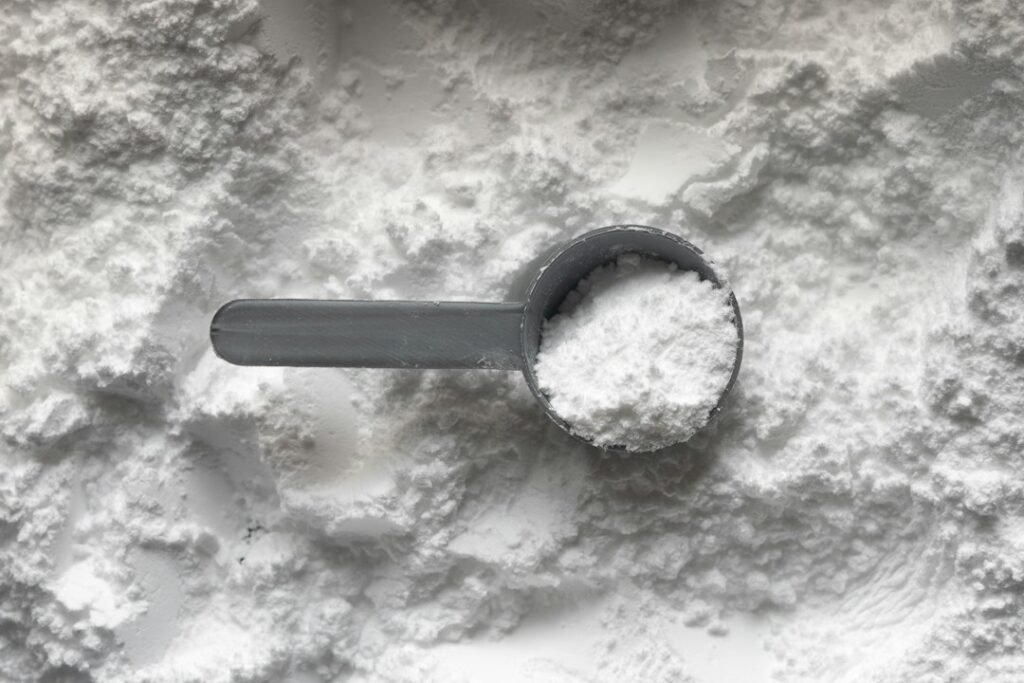
One tablespoon equals roughly half the small scoop that ships inside a standard 65 oz box. If your scoop has no gradations, weigh out a tablespoon of powder on a kitchen scale once — you will be shocked how compact the correct dose actually is.
Adjust for Water Hardness
Hard water binds with detergent surfactants before they reach your clothes, which is why soft-water users consistently overdose. Check your municipal report or use a $10 test strip from a hardware store.
- Soft water (0 to 3 grains/gallon): Reduce the baseline by 25%.
- Medium (3 to 7): Use the baseline above.
- Hard (7 to 10): Add 25% or a quarter-cup of washing soda booster.
- Very hard (10+): Add 50% or install a water softener — you are throwing money away otherwise.
A simple tell: if your glasses come out of the dishwasher spotty, your washer is fighting hard water too.
HE Washers Versus Traditional Top-Loaders
High-efficiency machines use 40 to 60% less water per cycle, which means detergent concentration climbs fast. Always buy a powder labeled “HE” and cut the dose by roughly one-third compared to the numbers above. A front-loader running a full 12 lb load rarely needs more than 2 tablespoons of quality HE powder.
Traditional agitator top-loaders fill with 18 to 25 gallons per cycle. The baseline measurements above apply directly. Pour the powder into the empty drum before you add clothes so it dissolves evenly — never dump it on top of a dry pile.
Soil Level Changes Everything
Kids’ grass-stained jeans and your office-shirt-and-jeans load should not get the same dose. Knock the baseline up or down based on how dirty things actually are.
- Lightly soiled: Cut the baseline by 1 tablespoon.
- Normally soiled: Use the baseline.
- Heavily soiled (work clothes, cloth diapers, gym gear): Add 1 tablespoon plus 1/4 cup oxygen bleach powder.
For mud, grease, or blood, pre-treat the fabric with a dab of detergent paste (powder plus a few drops of water) and let it sit 10 minutes before the wash. That is more effective than doubling the in-drum dose.
Warning Signs You Are Using Too Much
Powder overdose leaves subtle clues. Catch any of these early and recalibrate before you damage the machine.
- White or gray streaks on dark clothing after drying
- A chalky ring around the inside of the drum
- Musty smell from the drain pump or gasket
- Clothes feeling stiff or itchy despite a rinse cycle
- HE washer throwing “Sud” or “E Sd” error codes
If you see any of these, run an empty hot cycle with 2 cups of white vinegar, then reduce your dose by one tablespoon going forward.
When Liquid or Pods Beat Powder
Powder wins on price per load (about $0.12 versus $0.20 for pods) and stain fighting, thanks to built-in oxygen bleach. But in cold water below 60°F, powder struggles to dissolve. If you exclusively wash cold, either pre-dissolve the dose in a cup of warm tap water for 30 seconds or switch to liquid. Pods are fine for convenience but almost always overdose small loads because the dose is fixed at one pod per cycle.
Storage Tips That Protect Your Investment
A $22 box of powder becomes a rock-hard brick if you store it in a damp laundry room. Keep it sealed in an airtight plastic bin with a tight lid, preferably off the floor. Toss in a small silica packet if your basement humidity ever tops 60%. Well-stored powder holds its potency for 9 to 12 months.
Your Dosing Cheat Sheet
Remember the simple starting point: 2 to 3 tablespoons for most loads in an HE washer, 3 to 4 for traditional top-loaders, and adjust only when water hardness or soil level demands it. Knowing how much powder detergent to use is a five-minute calibration that pays off load after load — cleaner clothes, a longer-lasting machine, and a detergent box that lasts twice as long as your neighbor’s.