Epoxy floors are tough, chemical-resistant, and beautiful — but they are not self-cleaning. Knowing how to clean epoxy floor surfaces properly keeps them glossy for decades, while using the wrong products can dull the finish, leave sticky residue, or even break down the epoxy coating. The good news is that epoxy floor maintenance is straightforward once you understand the basics.
Part of our Epoxy, Concrete & Garage Floors guide — explore the full guide →
This guide covers daily, weekly, and deep cleaning routines plus stain-specific removal methods for tire marks, oil, chemicals, and other common garage and workshop contaminants. Whether you have a residential garage coating or a commercial epoxy system, these techniques apply.
Daily Cleaning Routine
Daily maintenance prevents grit from scratching the epoxy surface and stops small spills from becoming permanent stains. The daily routine takes five minutes or less.
Dust mop or sweep: Use a microfiber dust mop or soft-bristle broom to remove dust, dirt, sand, and debris from the floor surface. In a garage, sweep after each vehicle use to remove gravel and road salt tracked in on tires. In a workshop, sweep after each project session to remove sawdust, metal shavings, or other material.
Spot clean spills immediately: Epoxy resists most chemicals, but prolonged contact with acidic substances (battery acid, vinegar, citrus cleaners) or strong solvents can etch or discolor the surface. Wipe up any spills as soon as you notice them with a paper towel or shop rag.
Use walk-off mats: Place mats at entry points to trap grit before it reaches the epoxy surface. Rubber-backed mats work well for garages. This single step dramatically reduces scratching and keeps the floor cleaner between mopping sessions.
Weekly Cleaning Routine
Weekly mopping removes the film of fine dust and oils that daily sweeping misses. This is the core of how to clean epoxy floor surfaces effectively.
Recommended Cleaning Solutions
| Cleaning Solution | Mixing Ratio | Best For | Notes |
|---|---|---|---|
| Warm water + ammonia | 1/2 cup ammonia per gallon of water | General weekly cleaning | Evaporates clean, no residue |
| Simple Green (diluted) | Follow label directions | Grease and light oil | Rinse thoroughly after use |
| Warm water only | N/A | Lightly soiled floors | Sufficient for indoor epoxy |
| Isopropyl alcohol + water | 1:10 ratio | Sticky residue, adhesive | Evaporates quickly |
Mopping Technique
- Sweep or dust mop the entire floor first to remove loose debris.
- Fill a bucket with warm water and your chosen cleaning solution.
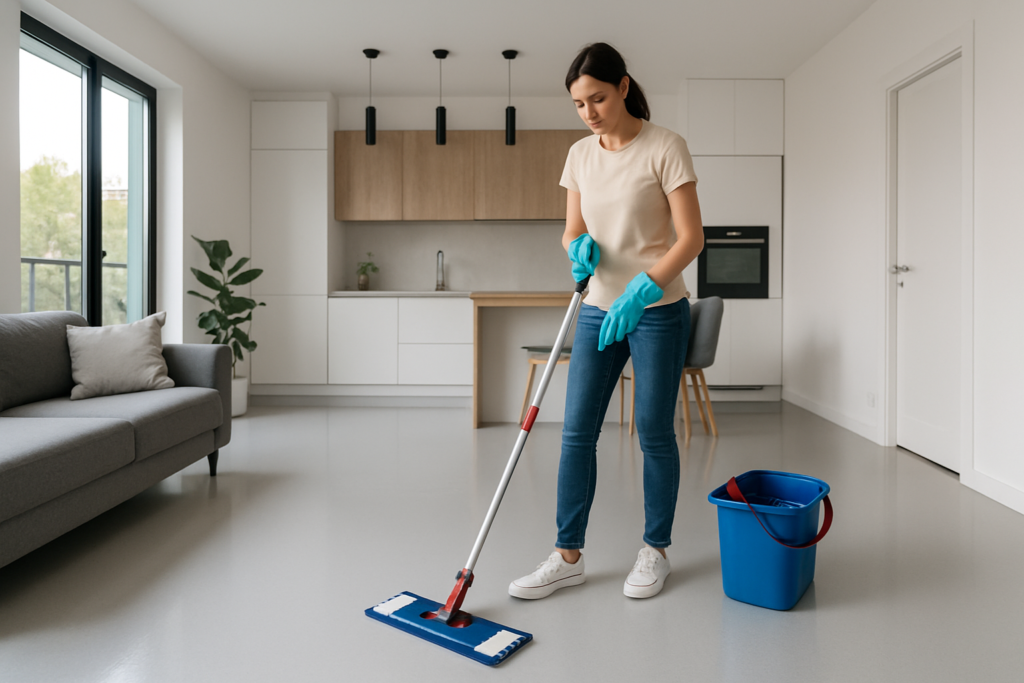
- Use a microfiber mop or soft foam mop — never a string mop, which can leave lint.
- Mop in sections, working from the far corner toward the exit.
- For lightly soiled floors, one pass is sufficient. For heavier soiling, make two passes.
- Allow the floor to air dry completely. Epoxy dries quickly due to its non-porous surface.
- For a streak-free finish, follow up with a dry microfiber mop to buff away any remaining moisture.
The ammonia-water solution is the gold standard for epoxy floor cleaning. Ammonia cuts grease, evaporates without residue, and does not damage the epoxy coating. For more information about epoxy floor care, visit our epoxy flooring guide.
Stain Removal Guide
Even the toughest epoxy coating encounters stains that regular mopping cannot handle. Here is how to tackle the most common culprits.
Tire Marks (Hot Tire Pickup)
Hot tires transfer rubber compounds onto epoxy floors, leaving black marks. This is one of the most common garage epoxy stains.
- Apply a degreaser (Simple Green, Purple Power, or a dedicated tire mark remover) directly to the marks.
- Let the degreaser sit for 5 to 10 minutes to break down the rubber compounds.
- Scrub with a stiff nylon-bristle brush or a white scrub pad. Never use steel wool or wire brushes.
- Rinse with clean water and mop up the residue.
- For stubborn marks, repeat the process or use a stronger solvent like mineral spirits applied with a soft cloth.
Prevention tip: Park on cardboard, carpet tiles, or rubber tire mats to prevent hot tire marks entirely. This is far easier than removing them.
Oil and Grease Stains
Fresh oil wipes up easily from epoxy. Dried or penetrated oil requires more effort.
- Absorb fresh oil with cat litter, sawdust, or a commercial oil absorbent. Let it sit for 30 minutes, then sweep up.
- Apply a concrete degreaser or Simple Green concentrate to the stained area.
- Scrub with a nylon brush and rinse thoroughly.
- For deeply set stains, make a paste of baking soda and water, apply it to the stain, cover with plastic wrap, and let it draw out the oil overnight.
Chemical Spills
Antifreeze, brake fluid, battery acid, and other automotive chemicals can stain or damage epoxy if left in contact too long.
Immediate response: Absorb the spill with paper towels or absorbent granules. Clean the area with your ammonia-water solution. Rinse with clean water. Most chemical stains come up completely if addressed within minutes.
Dried chemical stains: Use a non-abrasive commercial cleaner formulated for epoxy floors. Apply, let sit for 10 minutes, scrub gently, and rinse. If the stain has penetrated the clear coat, you may need to lightly sand and re-coat that area. Check out our garage floor epoxy page for recoating information.
Paint Drips and Splatters
Latex paint comes off epoxy easily with warm water if caught while still wet. Dried latex paint can be scraped off with a plastic putty knife — never a metal scraper. For oil-based paint, use mineral spirits on a soft cloth, then clean the area with your regular solution.
Rust Stains
Metal tools, car parts, and jack stands can leave rust rings on epoxy floors. Apply a commercial rust remover (CLR or a similar oxalic acid-based product) to the stain, scrub with a nylon pad, and rinse thoroughly. Prevent future rust stains by placing rubber mats under metal objects.
What to Avoid on Epoxy Floors
Using the wrong products is the fastest way to ruin an epoxy floor’s appearance. These are the most common mistakes people make when learning how to clean epoxy floor coatings.
Soap-Based Cleaners
Dish soap, Murphy’s Oil Soap, and similar soap-based products leave a film on epoxy that builds up over time. This film traps dirt, creates a hazy appearance, and makes the floor slippery. If you have been using soap-based cleaners, strip the buildup by mopping with a strong ammonia-water solution (1 cup ammonia per gallon) multiple times until the floor squeaks under your feet.
Abrasive Tools
Steel wool, wire brushes, and aggressive scrub pads scratch the epoxy clear coat. Once scratched, the surface dulls and becomes harder to clean because dirt fills the micro-scratches. Always use soft nylon brushes, microfiber cloths, or white/blue scrub pads.
Citrus Cleaners and Vinegar
Acidic cleaners gradually etch the epoxy surface, reducing gloss and creating dull spots. A single use will not cause visible damage, but repeated applications over months will noticeably dull the finish.
Pressure Washers (High Setting)
A pressure washer on a low setting (under 1,500 PSI) can clean an epoxy garage floor effectively. Above 2,000 PSI, you risk chipping edges, lifting peeling sections, and forcing water into micro-cracks. If you use a pressure washer, keep the nozzle at least 12 inches from the surface and use a wide fan tip.
Steam Mops
Excessive heat can cause epoxy to soften, discolor, or delaminate. Steam mops concentrate heat on small areas and should be avoided entirely on epoxy floors.
Keeping the Shine
A well-maintained epoxy floor retains its high-gloss finish for 10 to 20 years. Here is how to preserve that showroom shine.
Regular cleaning is 90% of the battle. Weekly mopping with the ammonia-water solution prevents the dirt film that causes dullness. Most “dull” epoxy floors are simply dirty — a thorough cleaning often restores the shine immediately.
Buff with a microfiber pad: After mopping and drying, run a clean, dry microfiber mop over the floor. This light buffing removes streaks and restores surface luster. For large areas, a commercial floor buffer with a soft pad works even better.
Apply a thin coat of epoxy floor wax (optional): A sacrificial wax layer adds extra gloss and protects the epoxy coating underneath. Use a product specifically designed for epoxy or polyurethane floors — not a general floor wax. Apply a thin, even coat with a microfiber applicator and allow 2 to 4 hours of drying time. Reapply every 6 to 12 months as the wax wears through. For a comprehensive look at garage flooring maintenance, see our detailed guide.
Seasonal and Annual Maintenance
Beyond daily and weekly routines, seasonal check-ups keep epoxy floors in peak condition year-round.
Spring / Post-Winter Cleanup
Winter brings road salt, sand, ice melt chemicals, and excess moisture into garages. After the last snow, perform a deep clean: sweep thoroughly, mop with ammonia-water solution twice, and inspect for any salt damage or delamination around edges and joints.
Summer Maintenance
Hot tires are most problematic in summer. Check for tire marks weekly and address them promptly before UV exposure and heat set them permanently. Consider installing tire mats if marks are a recurring issue.
Annual Inspection
Once a year, inspect the entire floor surface for chips, cracks, peeling edges, or thin spots in the coating. Small chips can be touched up with epoxy repair kits. Peeling edges indicate adhesion failure and may require professional attention. Catching problems early prevents them from spreading.
Annual wax application: If you choose to wax your epoxy floor, the annual inspection is a good time to strip the old wax and apply a fresh coat. Use a commercial wax stripper, mop the floor clean, let it dry completely, then apply new wax.
Commercial vs Residential Cleaning
The same basic principles apply to both commercial and residential epoxy floors, but the scale and frequency differ.
| Factor | Residential Garage | Commercial / Industrial |
|---|---|---|
| Sweeping frequency | Daily or as needed | Multiple times daily |
| Mopping frequency | Weekly | Daily |
| Deep cleaning | Quarterly | Monthly |
| Equipment | Microfiber mop, bucket | Auto scrubber, floor machine |
| Wax/recoat cycle | Annually (optional) | Every 3 – 6 months |
| Common stains | Tire marks, oil, paint | Chemicals, forklift marks, heavy oil |
Commercial facilities benefit from auto scrubbers that clean and dry the floor in a single pass. For residential garages, a quality microfiber mop and the right cleaning solution are all you need.
Frequently Asked Questions
What is the best cleaner for epoxy floors?
A solution of warm water and ammonia (1/2 cup per gallon) is the best everyday cleaner for epoxy floors. It cuts grease, evaporates without residue, and does not damage the epoxy coating. Simple Green diluted according to label directions is a good alternative for heavier soiling.
Can you use a Swiffer on epoxy floors?
Yes, a dry Swiffer works well for daily dust removal on epoxy floors. However, avoid Swiffer WetJet pads — the cleaning solution in the disposable pads may leave residue. Use the dry pads for dusting and mop separately with your ammonia-water solution for wet cleaning.
How often should you mop an epoxy floor?
Mop residential garage epoxy floors weekly. Mop commercial or high-traffic epoxy floors daily. In between mopping, sweep or dust mop as needed to prevent grit from scratching the surface.
Why is my epoxy floor dull?
The most common cause of dull epoxy is soap-based cleaner buildup. Switch to ammonia-water cleaning and mop multiple times to strip the residue. Other causes include micro-scratches from abrasive cleaning tools, UV degradation (in outdoor or sun-exposed areas), and chemical etching from acidic cleaners.
Can you pressure wash an epoxy floor?
Yes, but keep the pressure under 1,500 PSI and use a wide fan nozzle at least 12 inches from the surface. Higher pressure can chip edges, lift peeling sections, and force water into cracks. A regular mop does the job for most residential applications without the risk.
Does epoxy floor need to be waxed?
Waxing is optional. A well-maintained epoxy floor retains its gloss without wax. However, a sacrificial wax layer adds extra protection and makes cleaning easier. Apply epoxy-specific floor wax annually if you want maximum shine and protection.
Prefer to explore on your own?
See how new flooring looks in your actual room in seconds — free, no signup.
Try the free Floor Studio →