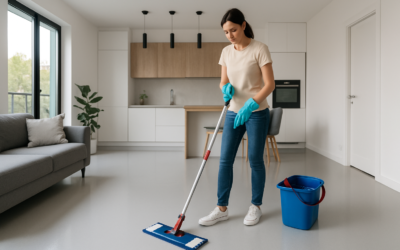
Epoxy floors are prized for their glossy appearance, extreme durability, and resistance to chemicals and stains. They are popular in garages, basements, commercial kitchens, warehouses, and increasingly in residential living spaces. While epoxy is one of the easiest flooring types to maintain, proper cleaning methods preserve the coating’s appearance and extend its lifespan.
Part of our Epoxy, Concrete & Garage Floors guide — explore the full guide →
This guide covers daily maintenance, deep cleaning techniques, stain removal, and tips for keeping your epoxy floor looking like new for years.
Why Proper Epoxy Floor Cleaning Matters
Epoxy creates a seamless, non-porous surface that naturally resists stains and bacteria. However, improper cleaning can damage the coating over time:
- Abrasive cleaners and tools scratch the surface, dulling the gloss.
- Harsh chemicals like citrus cleaners and vinegar can break down the epoxy resin.
- Sand and grit left on the surface act as sandpaper underfoot, wearing the coating prematurely.
- Neglecting spills allows certain chemicals (like battery acid or brake fluid in garages) to penetrate and stain.
The good news is that cleaning epoxy floors properly is simple and takes minimal time.
Daily and Weekly Maintenance
Daily: Sweep or Dust Mop
The single most important maintenance task is removing grit and debris before it gets ground into the surface by foot or vehicle traffic. Use a soft-bristle broom or a commercial dust mop to sweep the floor daily, especially in garages and commercial settings.
For residential epoxy floors, sweeping every two to three days is typically sufficient. Focus on entryways and high-traffic areas where grit accumulates.
Weekly: Damp Mop
Once a week, damp mop the floor with warm water and a small amount of clear, non-abrasive floor cleaner. A microfiber mop works best because it picks up fine dust that brooms miss without scratching the surface.
Recommended Cleaning Solution
Mix one of the following in a bucket of warm water:
- Option 1: 2 to 3 ounces of clear ammonia per gallon of warm water (ammonia is safe for epoxy and cuts grease effectively).
- Option 2: A few drops of pH-neutral dish soap per gallon of warm water.
- Option 3: A commercial epoxy floor cleaner following the manufacturer’s dilution instructions.
What to Avoid
- Vinegar and citrus-based cleaners: The acid can cloud and degrade the epoxy surface over time.
- Soap-based cleaners with heavy residue: These leave a film that dulls the gloss and attracts dirt.
- Abrasive cleaners and scrub pads: These scratch the epoxy surface.
- Steel wool: Never use steel wool on epoxy.
Deep Cleaning Epoxy Floors
Every one to three months (depending on traffic), give your epoxy floor a thorough deep clean.
Step-by-Step Deep Cleaning
- Clear the floor. Remove all movable items, mats, and equipment.
- Sweep thoroughly to remove all loose dirt and debris.
- Prepare the cleaning solution. Use ammonia-based cleaner or a commercial epoxy floor cleaner diluted per instructions.
- Apply the solution to the floor, working in sections of about 100 square feet.
- Scrub with a soft-bristle deck brush or floor scrubbing machine with a soft pad. Pay extra attention to corners, edges, and areas with visible grime buildup.
- Let the solution sit for 3 to 5 minutes to break down embedded grime.
- Mop up the dirty solution with a clean mop and bucket of fresh water. Change the rinse water as it becomes dirty.
- Rinse the entire floor with clean water to remove all cleaning solution residue.
- Squeegee or mop dry to prevent water spots and streaks, especially on high-gloss epoxy.
For Large Areas
In garages and commercial spaces, a garden hose can be used to rinse the floor toward a drain. For very large areas, an auto-scrubber with a soft pad makes deep cleaning significantly faster and more effective.
Removing Common Stains from Epoxy Floors
Oil and Grease
Common in garages and kitchens.
- Blot up excess oil with paper towels or shop rags.
- Sprinkle an absorbent (cat litter, baking soda, or sawdust) over the stain and let it sit for 15 to 30 minutes.
- Sweep up the absorbent.
- Scrub the area with a degreasing cleaner or ammonia solution and a soft brush.
- Rinse thoroughly.
Tire Marks
Hot tires leave black marks on garage epoxy floors.
- Apply a degreasing cleaner or ammonia solution directly to the tire marks.
- Let it sit for 5 minutes.
- Scrub with a deck brush or stiff nylon brush.
- Rinse and repeat if necessary.
- For stubborn tire marks, a melamine foam sponge (such as a Magic Eraser) can be effective without damaging the epoxy.
Rust Stains
- Apply a commercial rust remover safe for epoxy surfaces (check the label). Avoid acidic rust removers.
- Let it work for the recommended time.
- Scrub gently with a soft brush.
- Rinse thoroughly with clean water.
Paint Spills
- Wet paint: Wipe up immediately with a damp cloth. Epoxy’s non-porous surface makes fresh paint removal easy.
- Dried latex paint: Soak with warm water for 10 minutes, then scrape gently with a plastic scraper.
- Dried oil-based paint: Apply a small amount of acetone or paint thinner on a cloth and dab the paint. Test in an inconspicuous area first, as solvents can dull some epoxy finishes if left too long.
Chemical Spills
Epoxy resists most chemicals, but battery acid, brake fluid, and some solvents can damage the coating if left in contact too long.
- Wipe up chemical spills immediately with paper towels.
- Flush the area with clean water.
- Clean with a mild detergent solution.
- Inspect for any surface damage. Minor cloudiness may clear on its own; deeper damage may require re-coating.
Protecting Your Epoxy Floor
Use Mats Strategically
Place absorbent mats under vehicles to catch drips. Use walk-off mats at entrances to trap grit. In commercial kitchens, use anti-fatigue mats at workstations (these also protect the epoxy from dropped utensils).
Furniture Pads
Use felt or rubber pads under furniture legs, tool carts, and heavy equipment to prevent scratching and scuffing.
Avoid Dragging
Never drag heavy objects, equipment, or pallets across epoxy floors. Use wheeled dollies or lift items to move them.
Address Spills Promptly
While epoxy resists most substances, prompt cleanup prevents potential staining and reduces the risk of slip hazards.
Re-Coating
Over time, especially in high-traffic areas, the epoxy topcoat may begin to show wear, dullness, or minor scratches. A fresh clear coat can be applied over the existing epoxy to restore the glossy finish without redoing the entire floor. Most residential epoxy floors need re-coating every 5 to 10 years depending on use.
Seasonal Cleaning Tips
Winter
In cold climates, garage epoxy floors face extra challenges from road salt, sand, and ice-melt chemicals tracked in by vehicles and boots. Sweep and rinse the garage floor more frequently during winter months. Salt residue left on epoxy can leave white marks and dull the finish.
Spring
Spring is the ideal time for a thorough deep clean after winter’s accumulated grime. This is also a good time to inspect the epoxy for any chips, cracks, or adhesion issues that may have developed during the cold months.
Summer
UV exposure through open garage doors can cause some epoxy coatings to yellow over time. If yellowing is a concern, consider UV-stable polyurethane or polyaspartic topcoats when it is time to re-coat.
Frequently Asked Questions
Can I use a pressure washer on epoxy floors?
Yes, but use moderate pressure (under 2,000 PSI) and a wide-angle nozzle. High pressure at close range can damage the epoxy coating, especially at edges and any existing chips.
Can I use bleach on epoxy floors?
Diluted bleach (1/4 cup per gallon of water) is safe for occasional use to sanitize epoxy floors. Do not use concentrated bleach, and always rinse thoroughly after application.
Why is my epoxy floor cloudy?
Cloudiness is usually caused by soap residue buildup, use of incompatible cleaners (vinegar, citrus), or moisture trapped under the coating. For residue buildup, mop with clean ammonia solution and rinse thoroughly. For coating issues, professional evaluation may be needed.
How often should I deep clean my epoxy floor?
Every one to three months for garages and commercial spaces. Every three to six months for residential interiors with moderate traffic.
Final Thoughts
Epoxy floors are among the easiest flooring surfaces to maintain. Regular sweeping to remove grit, weekly damp mopping with an appropriate cleaner, and periodic deep cleaning are all it takes to keep your epoxy floor gleaming for years. Avoid acidic and abrasive products, address spills promptly, and your epoxy coating will maintain its showroom appearance far longer than most other flooring types.
For more information about epoxy flooring installation and options, visit our epoxy flooring guide.
Prefer to explore on your own?
See how new flooring looks in your actual room in seconds — free, no signup.
Try the free Floor Studio →