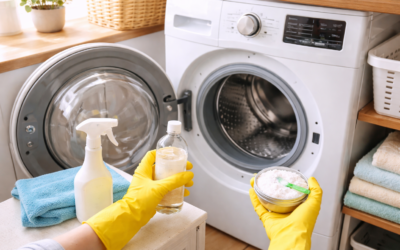
If your softener compartment is still full at the end of a cycle, or your towels come out with blue-gray smears, the dispenser is almost certainly clogged with old softener gel. Knowing how to clean a fabric softener dispenser fixes both problems in about 30 minutes, most of it soaking time. Liquid softener is thick and waxy by design, and every load leaves a thin film behind that hardens, traps lint and eventually grows black mold in the dark, damp corners.
The basic method works on every washer: remove the drawer or cup if it comes out, soak it in hot water with a little dish soap or white vinegar, scrub the siphon and channels with a small brush, clean the housing it sits in, and run a rinse. The details change depending on whether you have a front-load drawer, a top-load agitator cup or a fixed dispenser built into the lid or rim.
- How to Clean a Fabric Softener Dispenser: Types and Methods
- What You Need
- Step-by-Step: Removable Front-Load Drawer
- Step-by-Step: Top-Load Agitator Cup
- Cleaning a Fixed Dispenser in Place
- Dealing With Mold in the Dispenser
- Troubleshooting: Softener Not Dispensing
- How Often to Clean It and How to Prevent Buildup
- Costs and When to Call a Pro
- Frequently Asked Questions
How to Clean a Fabric Softener Dispenser: Types and Methods
Before you grab a brush, identify which style you have. Pulling hard on a fixed dispenser can snap tabs that are expensive to replace, while a removable one is easiest to clean at the sink.
| Dispenser type | Where it is | Removable? | Best cleaning method | Soak time |
|---|---|---|---|---|
| Front-load pull-out drawer | Top left or right of the washer front | Usually yes (press release tab) | Remove, soak, scrub siphon cap and channels, clean the drawer cavity | 15 to 30 minutes |
| Top-load agitator cup | Top of the center agitator | Usually lifts off | Remove cup, soak, flush agitator top with hot water | 15 to 30 minutes |
| Top-load rim or lid dispenser | Molded into the tub rim or lid | Often fixed; some have removable inserts | Hot water flush, brush and cotton swabs in place | 10 to 15 minutes (fill and wait) |
| Top-load high-efficiency (no agitator) dispenser | Along the rim, under the lid | Varies by model | Remove inserts if possible; otherwise clean in place and run a rinse | 10 to 20 minutes |
| Ball or cap-style removable dispenser | Dropped in the drum with clothes | Yes | Soak and scrub at the sink | 10 minutes |
Check your washer’s manual or the label inside the lid for the release tab location. Most front-load drawers have a colored tab or a “push” marking in the softener section that lets the drawer slide fully out.
What You Need
- Hot tap water (not boiling, which can warp plastic)
- Liquid dish soap
- Distilled white vinegar for mineral and residue buildup
- Baking soda for a gentle scrubbing paste
- An old toothbrush, a bottle brush or small detail brush
- Cotton swabs or pipe cleaners for narrow channels
- Microfiber cloths and paper towels
- Rubber gloves; an N95 mask if you see significant mold
- A bucket or a sink large enough to submerge the drawer
- Washing machine cleaner tablets or a cleaning cycle option, for the final rinse
Step-by-Step: Removable Front-Load Drawer
- Remove the drawer. Pull it out until it stops, press the release tab, and lift it free. Have a towel ready, since leftover water and softener will drip out.
- Take off the inserts. Most softener sections have a small siphon cap, often a different color, that pops off. Some drawers also have a removable liquid detergent insert. These caps are where most clogs start.
- Soak. Fill a sink with hot water, add a squirt of dish soap, and submerge the drawer and inserts for 15 to 30 minutes. For hardened, crusty residue, use one part white vinegar to two parts hot water instead.
- Scrub. Work every corner with a toothbrush, paying attention to the siphon tube and the underside of the drawer. Use a pipe cleaner to clear the siphon opening so it can drain freely.
- Clean the cavity. Shine a flashlight into the drawer housing. You will usually find slime and black spots on the ceiling where water sprays in. Scrub it with a brush dipped in warm soapy water, then wipe with a damp cloth.
- Rinse and dry. Rinse all parts under running water, then let them air dry or towel them off before reassembly.
- Run a rinse cycle. Reinstall the drawer and run an empty hot cycle or the washer’s cleaning cycle to flush any loosened debris from the internal hoses.
Step-by-Step: Top-Load Agitator Cup
- Lift off the cup. Most agitator dispensers pull straight up. Some twist slightly. Do not pry with a screwdriver.
- Soak it. Place the cup in hot soapy water or a vinegar and water mix for 15 to 30 minutes.
- Clean the agitator top. While the cup soaks, wipe and brush around the opening where the cup sits. Gummy softener often coats the inside of the agitator cap.
- Scrub and rinse. Brush the cup, inside and out, and rinse thoroughly.
- Reassemble and test. Put the cup back, pour a cup of water into it, and run a short rinse cycle to confirm it empties during the rinse.
Cleaning a Fixed Dispenser in Place
Built-in dispensers in the lid or tub rim cannot be soaked in a sink, so you bring the soak to them. Fill the dispenser with hot water and a few drops of dish soap, wait 10 to 15 minutes, then work a small brush and cotton swabs into the channels. Repeat with a 50/50 mix of white vinegar and hot water if residue remains. Finish by running an empty rinse or cleaning cycle so the loosened gunk flushes through the machine instead of onto your next load.
For stubborn spots, a paste of baking soda and a little water works as a gentle scrub. Apply it, brush, then rinse with plain water. Avoid scouring pads and metal tools, which scratch plastic and create grooves that hold even more residue.
Dealing With Mold in the Dispenser
Black or pink slime in the softener compartment is common. Dispensers stay damp between washes, and softener residue gives mold something to feed on. Clean small patches with hot soapy water and a brush, then wipe with a vinegar solution and let everything dry fully.
Two safety points matter here. First, never mix cleaning chemicals. Chlorine bleach combined with vinegar, ammonia or other acidic cleaners releases toxic gas. If you choose to use a diluted bleach solution on mold, use it alone, rinse thoroughly before switching to anything else, and follow the label. Second, work with ventilation (an open window or running fan), wear gloves and eye protection, and wear a mask if you are scrubbing a lot of growth.
Mold in the dispenser often signals moisture problems elsewhere. Leave the drawer slightly open and the door ajar between loads so the washer can dry out. If you find mold spreading behind the drawer cavity, inside door gaskets or on nearby walls and floors, fix the moisture source first. Growth covering more than about 10 square feet, or mold inside walls or subfloor near a leaking washer, is a job for a professional mold remediation company.
Troubleshooting: Softener Not Dispensing
- Compartment still full after the cycle: The siphon cap is clogged or missing. Remove it, clean the opening, and make sure it snaps back on firmly.
- Softener releases too early: The compartment was overfilled past the max line, or softener was poured into the wrong section. Fill only to the line.
- Residue or stains on clothes: Concentrated softener can stain if it contacts fabric before dilution. Thin thick softener with a little water (check the label) and clean the dispenser monthly.
- Water left in the compartment: A small amount of water in a siphon-style dispenser is normal. A full compartment of diluted softener is not.
- Dispenser won’t fill with water: Low water pressure, a kinked supply hose or a partly closed valve can stop the flush. If cleaning doesn’t help, a faulty dispenser valve may need a service technician.
How Often to Clean It and How to Prevent Buildup
Once you know how to clean a fabric softener dispenser, the routine takes only a few minutes. Plan on a quick rinse every two to four weeks if you use softener in most loads, and a full soak every couple of months. Homes with hard water may need a vinegar soak more often because minerals bind with softener residue.
- Measure softener instead of eyeballing it, and stay under the max fill line.
- Wipe the compartment with a damp cloth after filling to remove drips.
- Leave the drawer or lid open after washing so it can air dry.
- Run a monthly cleaning cycle with washing machine cleaner tablets or the method your manual recommends.
- Consider dryer sheets or wool dryer balls for some loads to reduce how much liquid softener goes through the machine.
Costs and When to Call a Pro
Cleaning costs almost nothing beyond vinegar, dish soap and a brush. Washer cleaner tablets are inexpensive and last several months. If a dispenser drawer is cracked or the siphon cap is lost, replacement parts are usually a modest cost when ordered by your washer’s model number.
Call an appliance repair technician when the dispenser never fills with water, when you see leaks around the drawer housing, or when the washer shows error codes related to water inlet. Those point to inlet valves, hoses or control issues, not residue. Always unplug the washer before removing panels or reaching into the drawer cavity beyond the drawer itself, and let a professional handle internal electrical and plumbing parts.
Frequently Asked Questions
Can I put vinegar in the fabric softener dispenser to clean it?
Yes. A mix of white vinegar and hot water poured into the compartment helps loosen residue, and running a rinse cycle flushes it out. Do not combine vinegar with bleach or other cleaners at the same time.
Why is my fabric softener not draining from the dispenser?
The most common cause is a clogged siphon cap or channel. Remove the drawer or cup, soak it in hot water, clear the siphon opening with a pipe cleaner and reinstall the cap firmly.
How do I get mold out of a washer softener dispenser?
Remove the drawer, soak it in hot soapy water, scrub with a brush and clean the cavity behind it. Wear gloves, ventilate the room and let everything dry fully. Keep the drawer open between loads to prevent regrowth.
Is it normal for water to stay in the softener compartment?
A small amount of clear water can remain in siphon-style dispensers. A compartment full of thick or blue softener after the cycle means the siphon is blocked and needs cleaning.
How often should I clean the fabric softener dispenser?
Rinse it every two to four weeks with regular use and give it a full soak every couple of months, or more often with hard water or heavy softener use.