Knowing how to clean real hardwood floors is mostly about knowing what not to do, because the fastest way to ruin genuine wood is to clean it like tile. Real hardwood is a natural, hygroscopic material, meaning it drinks up moisture and swells, so the steam mops, vinegar solutions, and sopping wet mops that work fine on porcelain will cloud the finish and cup the boards on solid oak or maple. The good news is that a proper routine takes less effort than the wrong one and keeps a floor looking new for decades. This guide walks through the right products, a weekly method that protects the finish, and the common mistakes that quietly destroy hardwood.
Know Your Finish First
Before you clean anything, identify how the floor is sealed, because it changes the rules. The vast majority of modern floors carry a surface finish, usually a polyurethane, that sits on top of the wood like a clear plastic shield. To test, rub a finger across the surface in an inconspicuous spot. If no smudge appears, you have a surface finish and cleaning simply means caring for that coating rather than the wood itself.
Older floors, and some high-end custom installs, may instead have a penetrating oil or wax finish that soaks into the grain. These need oil soaps or specialty products and must never be cleaned with water-based hardwood cleaners, which can leave white spots. When in doubt, treat the floor as a wax finish and avoid liquids until you confirm otherwise. Getting this one detail right prevents most of the damage homeowners accidentally cause.


The Daily and Weekly Routine
Grit is the real enemy of a wood floor. Every particle of sand and dirt acts like sandpaper underfoot, scratching the finish a little more with every step. That makes dry debris removal the single most important habit.
- Dust or sweep daily in high-traffic zones. Use a microfiber dust mop or a soft-bristle broom that traps fine grit instead of scattering it. In busy households, the kitchen and entry need this every day.
- Vacuum weekly with a hard-floor setting. Turn off the beater bar or use a floor-brush attachment so the spinning bristles cannot scratch the finish. Vacuuming pulls grit out of the seams between boards that a dust mop skips.
- Damp mop weekly with the right cleaner. This is where technique matters most, and it deserves its own section.
Between deep cleanings, wipe spills the moment they happen. Water left standing for even a few hours can seep into a seam and lift the finish, so a quick blot with a dry towel is cheap insurance.
The Right Way to Damp Mop
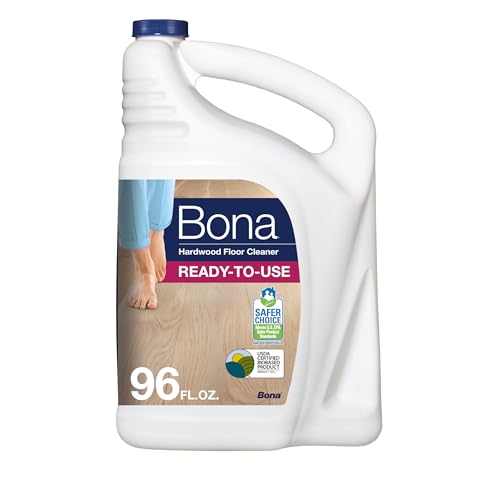
The word to remember is damp, never wet. Use a cleaner formulated specifically for hardwood, such as Bona Hardwood Floor Cleaner or a comparable pH-neutral product, applied to a barely moist microfiber pad. If you can see liquid streaking or pooling behind the mop, there is far too much water on the floor. A good practice is to spray the cleaner directly onto the pad or lightly onto a small section of floor rather than flooding the boards.
Work in the direction of the grain, following the length of the boards, and change or rinse the pad when it turns gray. Two lightly damp passes clean better and safer than one soaking pass. The floor should be dry to the touch within a minute or two; if it is still wet after that, you used too much liquid. This single method, a pH-neutral hardwood cleaner on a damp microfiber pad, is the core of how to clean real hardwood floors correctly, and it works on virtually every surface-finished floor.
Products to Use and Products to Avoid
Sticking to the right shortlist keeps you out of trouble. The safe products are pH-neutral hardwood-specific cleaners, plain microfiber pads, and for waxed floors, a proper wood soap.
- Skip vinegar and lemon. Acidic solutions slowly etch and dull polyurethane, and the streaky haze they leave is nearly impossible to remove.
- Skip steam mops. Forcing hot vapor into wood is the single most damaging thing you can do; it drives moisture past the finish and warps the boards.
- Skip ammonia, bleach, and all-purpose sprays. These strip the finish and leave a cloudy film.
- Skip oil soaps on polyurethane. They build up a residue that eventually makes recoating impossible without full sanding.
Also avoid the pledge-style furniture polishes marketed for floors, because they leave a slick, waxy layer that ruins traction and interferes with any future refinishing. Simpler is genuinely better with hardwood.
Tackling Scuffs, Stains, and Dull Spots
For a stubborn scuff, a tennis ball or a felt eraser pad rubbed by hand lifts most rubber marks without any liquid. Sticky residue, like dried syrup or pet mess, comes up with a cloth dampened in your hardwood cleaner and a little patience rather than scraping. Never use a scouring pad or a metal blade, which will gouge the finish instantly.
If the whole floor looks flat and lifeless even after cleaning, the finish itself may be worn thin. A polish or refresher product designed for polyurethane floors can restore sheen for a year or two, but do not confuse this with a fix for deep scratches. When the wear reaches the bare wood, a screen-and-recoat by a professional is the real solution.
Long-Term Protection
The best cleaning routine is the one you barely have to do, and prevention makes that possible. Place walk-off mats at every exterior door to catch grit before it lands on the wood, and add felt pads under every chair and table leg to stop scratches. Keep indoor humidity in the 35 to 55 percent range so the boards neither shrink and gap in winter nor swell in summer.
Trim pets’ nails, lift rather than drag heavy furniture, and use area rugs with a breathable pad in high-traffic paths. Do these small things and the actual work of how to clean real hardwood floors shrinks to a quick weekly damp mop, keeping genuine wood looking warm and polished for a generation.
Seasonal Deep Cleaning
A few times a year, give your floors a more thorough going-over than the weekly routine provides. Pull out lightweight furniture and area rugs, vacuum the exposed floor and the seams between boards where grit hides, and damp mop with your pH-neutral hardwood cleaner in the direction of the grain. This is also the moment to inspect for problem areas, dull traffic paths, worn spots near the kitchen sink, or the beginnings of gapping in dry winter months, so you can address them before they worsen.
Rotate the felt pads under furniture legs, since they wear down and can collect grit that scratches, and replace any that have flattened or fallen off. If the finish looks tired even after cleaning, a compatible hardwood floor refresher or polish can restore sheen and add a thin sacrificial layer that takes the daily wear instead of the finish itself. Just confirm the product matches your finish type and avoid wax-based polishes on polyurethane. This seasonal reset keeps the floor from slowly degrading unnoticed and extends the years between the expensive screen-and-recoat or full sanding that neglected floors eventually require, protecting your investment in real wood for the long haul.
Prefer to explore on your own?
See how new flooring looks in your actual room in seconds — free, no signup.
Try the free Floor Studio →