
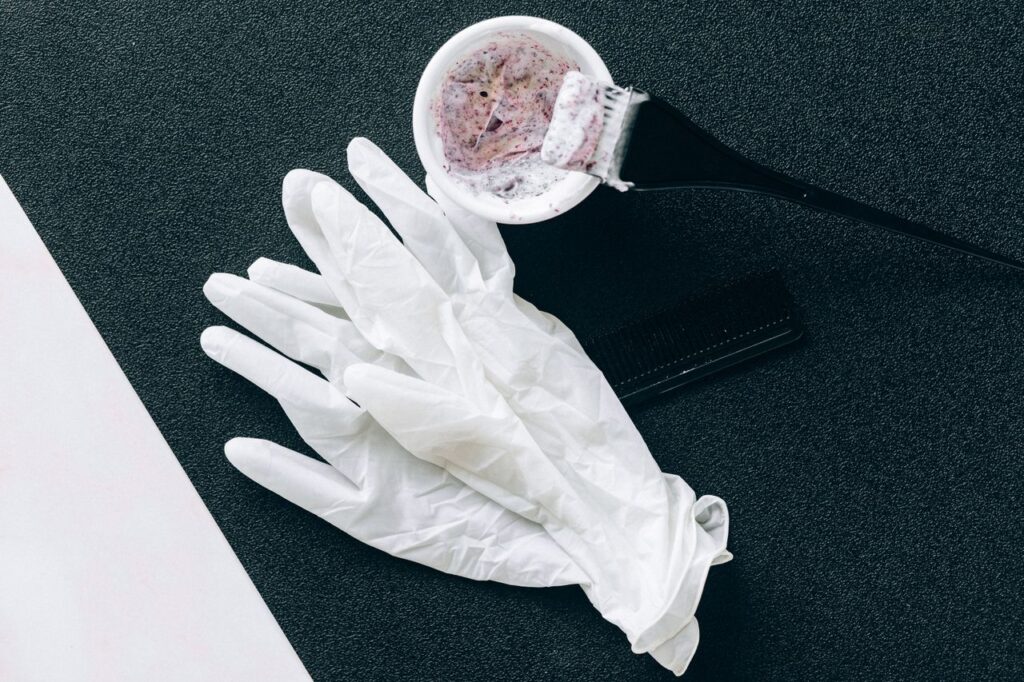
Hair dye splatter on a white shower surround looks permanent for about the first hour after you notice it, then it starts to set into porous surfaces and turns into a real project. Knowing how to get hair dye out of shower walls, floors, and grout comes down to matching the cleaner to the substrate. Fiberglass and acrylic shrug off the wrong chemical and develop permanent etch marks. Porcelain and glazed ceramic tile can take aggressive products that would destroy a cultured marble surround. The right approach lifts most fresh dye in 15 minutes and even week-old stains in a single afternoon, all with products you probably already own.
Part of our Bathroom Remodeling & Flooring guide — explore the full guide →
Why Hair Dye Sticks So Stubbornly
Permanent hair dye uses oxidation chemistry. Hydrogen peroxide opens the cuticle, paraphenylenediamine (PPD) penetrates, and oxidized dye molecules link into long polymer chains that bond inside the hair. The same chemistry happens on porous surfaces. Once dye soaks into grout pores, fiberglass micro-scratches, or aged caulk, it forms similar polymer chains that ordinary soap cannot dissolve.
Semi-permanent and demi-permanent dyes are far easier to remove because they sit on the surface rather than polymerizing. Box dyes from Clairol Nice’n Easy, L’Oreal Excellence, and Schwarzkopf Keratin Color all behave like permanents and need the same removal approach.
Fresh Splatter on Fiberglass or Acrylic
Time matters. If the splatter is less than an hour old, plain non-gel toothpaste (Crest Cavity Protection or Colgate Total) lifts it with no risk to the surface. Squeeze a quarter-size dab onto a wet microfiber cloth, work it into the stain in small circles for 60 seconds, rinse with warm water, and repeat once if needed. The mild abrasive plus surfactants pull dye out of micro-scratches without etching.
For splatter that resists toothpaste, move to baking soda paste at three parts baking soda to one part water. Spread it over the stain, let it sit for 10 minutes, then scrub with a soft nylon brush. Avoid Magic Erasers and any acetone-based product on fiberglass since both etch the gel coat permanently.
Set-In Stains on Acrylic
For dye that has set overnight, isopropyl alcohol at 70 percent concentration is the right next step. Saturate a cotton ball, hold it on the stain for two minutes, and wipe with a clean microfiber. The alcohol penetrates the polymer chains the dye has formed and breaks them apart without damaging the acrylic.
If alcohol is not enough, hairspray (the cheap kind with high alcohol content like Aqua Net or White Rain at $3 a can) works similarly. Spray directly on the stain, wait 60 seconds, scrub with a soft brush, and rinse. Test in a hidden corner first, since older yellowed acrylic can react unpredictably.
Porcelain Tile and Glazed Ceramic
Glazed surfaces handle aggressive chemistry. Soft Scrub with Bleach ($4 at any grocery store) lifts most hair dye stains in 5 to 10 minutes. Apply a thin layer with a sponge, let it dwell, and scrub with a nylon brush. Rinse thoroughly with hot water afterward to prevent bleach residue from yellowing surrounding caulk.
For deep stains, a hydrogen peroxide paste works even better. Mix three percent peroxide with cream of tartar to form a thick paste, apply to the stain, cover with plastic wrap to prevent drying, and leave it overnight. Morning rinse usually reveals clean tile. This method works on stains that have set for over a week.
Grout Lines (The Hardest Part)
Grout is the worst-case substrate for dye removal because it is essentially compressed sand and cement with thousands of micro-pores. Standard cleaning will not reach below the surface. Mix oxygen bleach (OxiClean or sodium percarbonate) at one tablespoon per cup of warm water and apply with a grout brush.
Scrub vigorously, let it sit for 15 minutes, then scrub again before rinsing. For grout that remains stained after two oxygen bleach treatments, the practical fix is a grout pen (Rust-Oleum Grout Renew at $13 covers about 50 feet of grout line) or full grout removal and replacement. Sealed grout from a recent install is much more forgiving and usually cleans completely.
Caulk and Silicone
Silicone caulk is functionally impossible to clean once hair dye sets in. The dye bonds to the surface and lives inside microscopic surface irregularities that no cleaner can fully reach. Knowing how to get hair dye out of shower caulk usually means removing and replacing it.
Cut out the old caulk with a utility knife, scrape residue with a plastic putty knife, clean the joint with rubbing alcohol, and apply new silicone (GE Silicone 2 Kitchen and Bath at $7 per tube). The whole job takes about 90 minutes and looks brand new. Skip this step for very minor staining you can live with, since fresh caulk yellows over a year or two and creates visible mismatch.
Prevention for Future Color Touch-Ups
Coat the shower surround with a thin layer of plain conditioner before dyeing. The conditioner forms a barrier that lets dye wipe off with water and a sponge. A $4 bottle of Suave Essentials lasts 20 touch-up sessions.
Wear vinyl gloves, lay an old dark towel on the shower floor, and rinse splatter immediately if it happens. Fresh dye that gets a 30-second rinse rarely sets into anything. Most permanent shower stains come from dye that sat for an hour or more before anyone noticed.
Skin and Surrounding Surface Cleanup
Dye on tile, glass, and chrome usually wipes off with the same products. For chrome fixtures, use Bar Keepers Friend ($3 per can) with a damp microfiber cloth. The oxalic acid lifts dye and brightens the chrome at the same time. Skip on brushed nickel or oil-rubbed bronze since the abrasive can damage softer finishes.
For dye on hands and arms, the fastest fix is a 50/50 mix of dish soap and baking soda, scrubbed in for 60 seconds before rinsing. Toothpaste with whitening works on stubborn fingernail staining. Vaseline applied around the hairline before coloring forms a barrier that lets dye wipe off skin afterward with a damp cloth, no scrubbing needed. The same trick works around the ears, where dye stains often go unnoticed during the application until they have already set.


