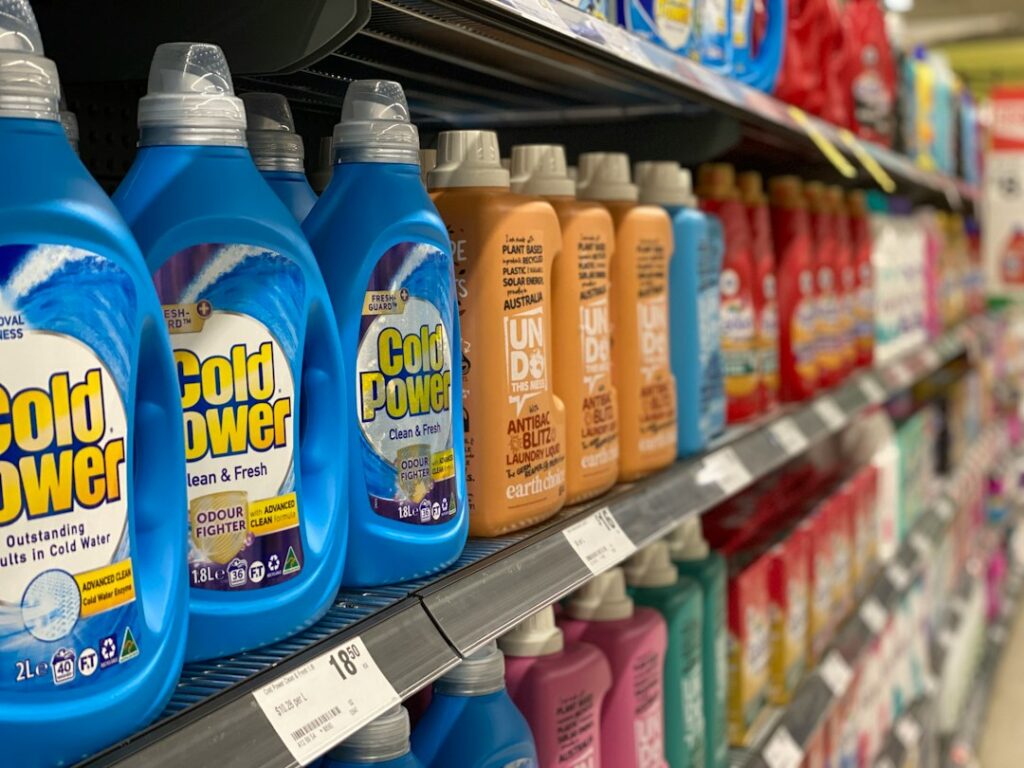
Commercial laundry detergent costs $0.15-$0.35 per load. Homemade detergent costs $0.02-$0.05 per load using three ingredients available at any grocery store. Learning how to make your own laundry detergent takes 15 minutes, produces enough to wash 100+ loads, and eliminates the fragrances, dyes, and optical brighteners that irritate sensitive skin. The trade-off is that homemade formulas work differently than commercial detergents — understanding the chemistry helps you decide if the switch makes sense for your household.
Powder Detergent Recipe (Best Overall)
This is the most popular and cost-effective homemade laundry formula:
- 1 bar Fels-Naptha soap, grated ($1-$2): The cleaning agent. Alternatively use Zote, Ivory, or any pure bar soap
- 1 cup washing soda ($0.50): Arm & Hammer Super Washing Soda — sodium carbonate. Softens water and boosts cleaning power
- 1 cup borax ($0.50): 20 Mule Team Borax — sodium tetraborate. Whitens, deodorizes, and helps remove stains
- Grate the bar soap using a cheese grater or food processor fitted with a grating disk. Fine grating dissolves better in cold water
- Mix the grated soap, washing soda, and borax in a large bowl or container. Stir thoroughly to distribute evenly
- Store in an airtight container. Use 1-2 tablespoons per load (1 tablespoon for HE machines, 2 tablespoons for standard top-loaders)
This batch produces approximately 3 cups of powder — enough for 48-96 loads depending on your machine type. Total cost: $2-$3. Cost per load: approximately $0.03. A comparable batch of Tide costs $15-$20 for the same number of loads.
Liquid Detergent Recipe
Some people prefer liquid detergent because it dissolves instantly, even in cold water, where grated soap flakes can leave residue.
- Grate 1 bar of Fels-Naptha soap finely
- Dissolve the grated soap in 4 cups of hot water on the stovetop over medium heat, stirring until fully melted (10-15 minutes)
- Pour the dissolved soap into a 5-gallon bucket. Add 1 cup washing soda and 1 cup borax. Stir until dissolved
- Fill the bucket with warm water to make approximately 4.5 gallons total. Stir well
- Let it sit overnight — the mixture will gel slightly to a thick liquid consistency
- Use 1/2 cup per standard load, 1/4 cup for HE machines
This 4.5-gallon batch provides approximately 128-256 loads. Total cost: $2-$3. Cost per load: approximately $0.02. The liquid version separates over time — stir or shake before each use.
Does Homemade Detergent Actually Work?
Homemade laundry detergent cleans everyday soil — body oils, light food stains, and general dirt — adequately for most households. The soap acts as a surfactant that lifts soil from fabric, the washing soda boosts pH for better grease cutting, and the borax provides additional cleaning and deodorizing power. For normal laundry loads, the difference between homemade and commercial detergent is minimal.
Where homemade formulas fall short is on heavy stains (grass, blood, motor oil), in cold water cycles (soap dissolves poorly below 60°F), and in hard water areas (soap reacts with minerals to form soap scum that deposits on clothing). If your water is hard (above 120 PPM), add an extra 1/2 cup of washing soda per load to compensate, or consider sticking with a commercial detergent formulated for hard water conditions.
The Soap vs. Detergent Distinction
Commercial laundry detergents are synthetic formulas designed to work in all water conditions without leaving residue. Homemade recipes use true soap (saponified fats), which behaves differently. Soap can leave residue on clothes over many washes — a gradual buildup that makes whites look gray and towels lose absorbency. Running an occasional hot cycle with just washing soda (no soap) strips this buildup and refreshes the fabric.
For HE washing machines specifically, homemade soap-based formulas can cause issues. HE machines use less water and rely on low-sudsing detergents. Soap produces more suds than synthetic detergent, which can trigger error codes and leave residue in the machine’s internal components. If using homemade detergent in an HE machine, use half the recommended amount and run a monthly machine cleaning cycle with hot water and vinegar to prevent soap buildup.
Adding Scent and Boosters
The basic recipe produces clean, unscented laundry. For fragrance, add 10-20 drops of essential oil per batch (lavender, lemon, and eucalyptus are popular choices). For extra whitening power, add 1/2 cup of oxygen bleach (sodium percarbonate, $8-$12 per 3-lb bag) to the recipe. For additional softening, add 1/2 cup of white vinegar to the rinse cycle — vinegar softens fabrics naturally and removes any soap residue from the wash cycle.
Is It Worth Making Your Own?
For households prioritizing cost savings, ingredient control, and fragrance-free laundry, homemade detergent delivers significant value — $150-$200 per year in savings for a family doing 8+ loads weekly. For households with hard water, heavy stain challenges, HE machines, or members with specific skin conditions (where dermatologist-recommended commercial products are necessary), store-bought detergent formulated for those conditions may be the better choice despite the higher cost per load.