Knowing how to remove stains from vinyl flooring can save you the $3 to $7 per square foot it would cost to replace a damaged plank. Vinyl is one of the most forgiving floors in any American home because its protective wear layer resists most spills for hours. The catch is that a few common substances, such as rubber, dye, and certain cleaners, can leave marks that a standard mop will not budge. The good news is that the vast majority of these blemishes lift with inexpensive supplies already sitting under your kitchen sink.
- Why Vinyl Stains in the First Place
- Build a Simple Stain-Removal Kit
- Step-by-Step for Everyday Food and Drink Stains
- Removing Ink, Marker, and Dye
- Scuff Marks and Rubber Heel Streaks
- Rust, Hard Water, and Mineral Stains
- Yellowing and Old Discoloration
- Test, Then Protect Your Floor
- When a Stain Will Not Come Out
- Final Thoughts
Why Vinyl Stains in the First Place
Modern luxury vinyl plank (LVP) and sheet vinyl both carry a clear wear layer measured in mils, usually between 6 and 20 mils thick. That layer is highly water resistant, but it is not chemically inert. Acidic foods, alkaline cleaners, plasticizers in rubber mats, and synthetic dyes can migrate into or react with the surface if left in place. Heat and direct sunlight speed the process, which is why a dropped tomato sauce jar that you wipe up immediately rarely leaves a trace, while the same spill left overnight in a sunny breakfast nook can yellow the floor.
Understanding the type of stain matters because the wrong product can make things worse. Abrasive powders scratch the wear layer, and solvents like acetone or paint thinner can soften and cloud the vinyl permanently. Start gentle, then escalate only if needed.
Build a Simple Stain-Removal Kit
Before you start scrubbing, gather a small set of supplies. Most homeowners already have everything on this list:
- A soft microfiber cloth and a non-abrasive nylon scrub pad
- Dish soap and a bucket of warm water
- Baking soda for a mild, safe paste
- Distilled white vinegar (diluted) for general grime
- Isopropyl (rubbing) alcohol, 70 percent, for ink and dye
- A pencil eraser or tennis ball for scuff marks
- WD-40 or a dab of mineral spirits for stubborn rubber marks
Keep steel wool, bleach at full strength, and any scouring powder away from vinyl. They remove the stain and the finish at the same time.
Step-by-Step for Everyday Food and Drink Stains
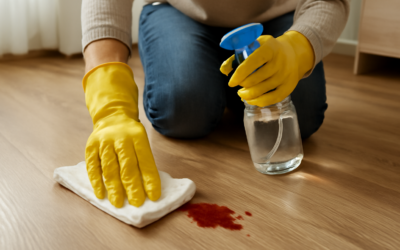
Coffee, wine, juice, and tomato-based sauces are the most frequent offenders. Work through these steps in order:
- Wipe up any liquid with a dry cloth so you are not spreading it further.
- Mix a few drops of dish soap into warm water and mop the area.
- If a shadow remains, make a paste of baking soda and water, spread it on the mark, and let it sit for 5 to 10 minutes.
- Rub gently with a damp microfiber cloth in small circles.
- Rinse with clean water and dry. Repeat once if a faint outline lingers.
Baking soda works because it is a mild abrasive and a base, so it neutralizes many acidic food stains without scratching. For a deeper coffee or wine stain, dampen the cloth with the baking soda paste and a splash of vinegar, but rinse quickly afterward so the acid does not sit on the surface.
Removing Ink, Marker, and Dye
Pen ink, permanent marker, and hair dye are solvent-based, so water alone will not touch them. Reach for 70 percent isopropyl alcohol instead. Dampen a cloth, do not soak the floor, and blot the stain rather than rubbing outward, which can enlarge the mark. Replace the cloth as it picks up color so you are always working with a clean section. For permanent marker, a tiny amount of nail polish remover with acetone can work, but test it in a closet or under an appliance first because acetone can dull some finishes. Rinse thoroughly with plain water when the color is gone.
Scuff Marks and Rubber Heel Streaks
Those black streaks from shoe soles and furniture feet are not stains at all. They are deposits of rubber sitting on top of the wear layer. A clean pencil eraser rubbed across the mark lifts most of them in seconds. For larger scuffs, slice a tennis ball, push it onto the end of a broom handle, and rub the area. If a streak still resists, spray a tiny amount of WD-40 onto a cloth and wipe, then clean the residue with dish soap so the floor is not left slippery.
Rust, Hard Water, and Mineral Stains
Rust spots from metal furniture legs or planters respond to acid. Apply a paste of cream of tartar and a few drops of lemon juice, let it sit for 5 minutes, then wipe and rinse. Hard water film around bathrooms and entryways usually clears with a 1-to-1 mix of white vinegar and water. Mop it on, wait a minute or two, and rinse with clean water so no vinegar haze remains.
Yellowing and Old Discoloration
Yellowing is trickier because it often comes from rubber-backed mats, sun exposure, or adhesive bleed-through, meaning the discoloration sits beneath the surface. A baking soda paste sometimes lightens it. If the yellow is from a rubber mat reacting with plasticizers, the stain may be permanent because it has chemically bonded with the vinyl. To prevent it going forward, use only mats labeled colorfast and vinyl-safe, and add a layer of felt under furniture.
Test, Then Protect Your Floor
Always patch-test any new cleaner in a hidden spot, such as inside a pantry or behind the refrigerator, and wait 15 minutes to confirm there is no dulling or color change. Once your floor is clean, a little prevention goes a long way. Place doormats at every entrance to catch grit, attach felt pads to chair and table legs, wipe spills within a few minutes, and skip wax or shine products unless the manufacturer recommends them, since they can build up and trap dirt.
When a Stain Will Not Come Out
If you have worked through gentle and then stronger methods and a mark still remains, the discoloration has likely penetrated the wear layer or reacted with the vinyl itself. With click-together LVP, the practical fix is to replace the single affected plank, which is far cheaper than redoing the room. For glued sheet vinyl, a strategically placed rug or furniture piece is often the simplest solution. The team at D and G Flooring generally recommends keeping two or three spare planks from your original installation precisely for this situation, so a permanent stain never means a full replacement.
Final Thoughts
Learning how to remove stains from vinyl flooring really comes down to matching the method to the mess and starting with the gentlest approach. Soapy water and baking soda handle most everyday spills, rubbing alcohol takes care of ink and dye, an eraser clears scuffs, and a mild acid lifts rust. Move up in strength only when needed, always test first, and rinse well. With a few dollars of common supplies and a few minutes of effort, your vinyl floor can look factory-fresh for many years.
Prefer to explore on your own?
See how new flooring looks in your actual room in seconds — free, no signup.
Try the free Floor Studio →