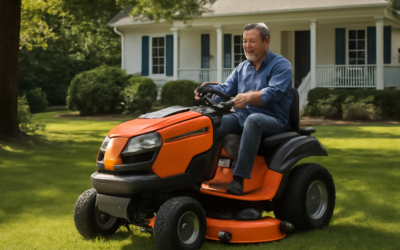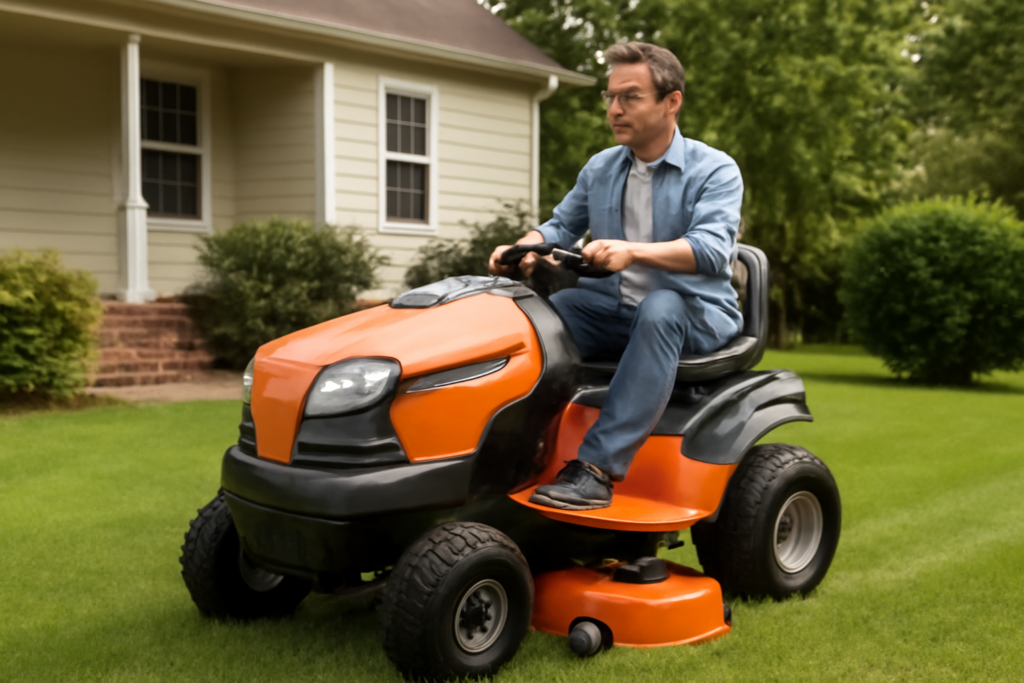
When homeowners graduate from a walk-behind to their first lawn tractor, the mid-size garden-tractor class is where many land, and the husqvarna ts 120 riding lawn mower sits right at the entry point of that tier. It pairs a robust 20-horsepower Briggs & Stratton V-twin with a 42-inch reinforced deck and a fabricated steel front axle, giving it more backbone than the flimsy budget riders sold at big-box stores. For a property in the half-acre to 2-acre range, the TS 120 hits a genuine sweet spot between capability and cost.
Where the TS 120 Fits in Husqvarna’s Lineup
Husqvarna splits its riders into series, and the TS line is the “Tractor Series,” a step above the basic YTH lawn tractors in build quality. Within TS, the numbers climb with capability: the TS 120 is near the accessible end, the TS 142 and TS 348 step up in deck size and power. What separates even the entry TS 120 from a bargain mower is its heavier-duty transmission and a cast-iron front axle that shrugs off the abuse that cracks lesser plastic axles.
Think of it as the machine for someone who wants a tractor that will genuinely last 12 to 15 years, not a disposable rider they will replace in five.
Key Specifications
Here is what defines the TS 120 on paper:
- Engine — Briggs & Stratton Intek V-twin, 20 hp, 656cc
- Cutting deck — 42-inch reinforced stamped steel, 3-blade
- Transmission — hydrostatic (pedal-operated, no shifting)
- Cutting heights — 6 positions, roughly 1.5 to 4 inches
- Front axle — cast iron for durability
- Fuel capacity — about 3 gallons
- Turning radius — approximately 6 inches (tight for a tractor)
The V-twin is the headline. Two cylinders run smoother and quieter than the single-cylinder engines in cheaper riders, and they handle tall spring grass and gentle slopes without the bogging that plagues underpowered machines.
Deck and Cutting Quality
The 42-inch deck uses three blades rather than the two found on many competitors’ 42-inch decks, and that extra blade improves cut quality and clipping dispersal. The stamped deck is reinforced at the stress points, and it rides on anti-scalp wheels that keep it from gouging low spots in uneven turf. Height changes happen through a single lever with six clear stops, so raising the deck for a shaggy first cut of the season takes two seconds.
Out of the box it side-discharges. Husqvarna sells a mulching kit for around $50 that recuts clippings into fine mulch, and a twin bagger runs roughly $350 to $400 if you want a spotless, clipping-free finish or need to vacuum up fall leaves.
The Hydrostatic Advantage
The TS 120 ships with a hydrostatic transmission as standard, which is a real selling point at this price. You control speed with a foot pedal, smoothly from a crawl up to about 5.5 mph forward, with no gears to shift. Around trees, flower beds, and swing sets, that seamless speed control is dramatically less tiring than a geared transmission where you stop to change speeds.
Reverse operation is equally simple, and the mower includes a reverse-mowing option so you can back up and keep cutting when you need to, a convenience missing on many budget riders.
What It Costs
The TS 120 typically retails in the following range, though seasonal sales move it:
- Regular price — $2,300 to $2,600
- Spring and holiday sales — often $2,000 to $2,200
- With bagger and mulch kit added — plan on another $400 to $450
That premium over a $1,700 big-box rider buys you the V-twin, the cast-iron axle, the three-blade deck, and a build that lasts. For a homeowner who mows one to two acres weekly for years, the extra upfront cost usually pays back in longevity and fewer repairs.
Maintenance Schedule
Like any lawn tractor, the TS 120 rewards seasonal care with a long life:
- Engine oil — change the SAE 30 or 10W-30 after the first 8 hours, then every 50 hours or annually; the Intek V-twin holds about 62 to 64 oz with a filter
- Oil filter — replace at each oil change
- Air filter — inspect every 25 hours, replace yearly
- Blades — sharpen each season; a dull blade tears grass and yellows the tips
- Battery — trickle charge over winter
- Fuel — stabilize or drain before storage to protect the carburetor
The V-twin has two spark plugs, so remember to change both, and keep the cooling fins clear of grass clippings to prevent overheating on hot summer days.
How It Compares
Against a Craftsman T140 or a John Deere S120, the TS 120 holds its own and often beats them on the front axle and deck construction. The John Deere carries a stronger dealer-service reputation but usually costs more, while the Craftsman undercuts on price but skimps on axle and deck materials. The TS 120 lands in the value middle: better built than the cheapest options, less expensive than the premium green machines.
Comfort and Operator Features
Spending 40 minutes to an hour in the seat every week makes ergonomics matter, and the TS 120 is designed for that duty. It carries a mid-back adjustable seat that slides forward and back to fit different operators, a soft-grip steering wheel, and a clear dash layout with the controls within easy reach. The pedal-operated cruise control on some configurations lets you set a mowing speed and rest your foot on longer straightaways.
Visibility to the deck edge is good, which helps you mow a clean line along beds and driveways without constant guesswork. The fender-mounted deck lift lever puts height changes at your fingertips, and the fuel tank fills easily from the side without leaning over hot components. These touches separate a tractor built for regular homeowner use from a stripped-down budget rider.
Deck Attachments and Accessories
Like most lawn tractors, the TS 120 accepts a range of accessories that expand its usefulness across the seasons:
- Twin bagger — collects clippings and leaves for a clean finish
- Mulch kit — recuts clippings into fine mulch that feeds the lawn
- Tow-behind cart — hauls soil, mulch, and firewood via the rear hitch
- Spreader and aerator — handle seasonal lawn care in a single pass
- Snow blade or chains — some regions add a front blade for light snow clearing
Confirm the specific accessory is rated for your model before buying, since deck and hitch compatibility varies across the TS series.
Storage and Seasonal Prep
A garden tractor needs a proper home and a little end-of-season attention. Plan for a footprint of roughly 6 feet by 3 feet in the garage or shed, plus room to maneuver the deck. Keep it out of standing water, which corrodes the deck and electrical connections over time.
Before winter storage, stabilize or drain the fuel, change the oil so contaminants do not sit in the crankcase for months, remove or trickle-charge the battery, and clean the deck of caked grass. Come spring, a fresh battery charge, a check of the tire pressures, and a sharp blade have the TS 120 ready for the first cut of the season with no drama.
Is the TS 120 Right for You?
For the homeowner with a half-acre to 2-acre lawn who wants a tractor built to last rather than a throwaway rider, the husqvarna ts 120 riding lawn mower is a smart, well-balanced pick. The 20-hp V-twin, three-blade 42-inch deck, hydrostatic drive, and cast-iron front axle add up to a machine that mows efficiently and endures. Keep the oil fresh, the blades sharp, and the cooling fins clean, and it will handle a decade-plus of weekend mowing without drama. If your lot is much larger, look at the TS 142 or a zero-turn; for the target property, the TS 120 is hard to beat.