Grab the wrong roll and your ductwork leaks again by spring — the gray cloth “duct tape” famously fails on actual ducts within months. Insulation tape is a catch-all term covering at least five different products: foil tapes for ductwork and foam board, foam weatherstripping tapes, self-adhesive pipe insulation wraps, sheathing tapes for rigid foam, and rubber or vinyl electrical tapes that insulate wiring. They are not interchangeable, and each has a temperature range and adhesive chemistry matched to one job. Sorting them out saves callbacks — whether the contractor is a pro or you.
- Foil Tape: The Duct and Foam Board Standard
- Foam Tape: Weatherstripping in a Roll
- Pipe Insulation Tape and Wraps
- Sheathing and House Wrap Tapes
- Electrical Insulation Tape
- Matching Tape to Job: Quick Reference
- Common Mistakes and Fixes
- Application Rules That Apply to Every Roll
- Buying Notes: Rolls, Widths, and Shelf Life
- Pipe Lagging Tape: What It Is and How to Wrap It Properly
- The Bottom Line
Foil Tape: The Duct and Foam Board Standard
Aluminum foil tape is the workhorse of the category. A 2.5 to 4 mil aluminum backing with acrylic or butyl adhesive handles temperatures from roughly -30°F to 260°F, reflects radiant heat, and — unlike cloth duct tape — its adhesive does not dry out and release on hot metal. For HVAC work, buy tape carrying a UL 181A-P or UL 181B-FX listing; inspectors look for the printed listing on the tape itself. Nashua 322 and 3M 3340 are the common pro picks at $8 to $15 for a 60-yard roll.
Uses that foil tape owns: sealing duct seams and joints (after mastic on big gaps), taping the seams of foil-faced polyiso board, sealing duct wrap insulation, and closing the facing on fiberglass duct board. One habit separates good jobs from failures — always rub the tape down hard with a plastic squeegee or the back of a screwdriver. Acrylic adhesive is pressure-activated, and lightly laid tape peels within a year.
Foam Tape: Weatherstripping in a Roll
Closed-cell foam tape — PVC, EPDM, or neoprene strips with adhesive on one side, sold in rolls from 1/8 to 1 inch thick — is compression sealing for gaps that open and close. Door stops, window sashes, attic hatch perimeters, AC window unit gaps, and rattling access panels are its territory. A $5 to $12 roll of high-density EPDM (Frost King and M-D dominate the shelf) lasts 3 to 5 years on a door; the cheap open-cell gray foam lasts one season and should be reserved for temporary jobs.
Sizing is the trick: measure the gap with the door or hatch closed and buy tape slightly thicker, so it compresses 30 to 50 percent. Too thick and the door will not latch; too thin and it seals nothing. An attic hatch ringed with 3/4-inch foam tape plus a latch to compress it is a ten-dollar fix for one of the biggest air leaks in most homes.
Pipe Insulation Tape and Wraps
Two different products share this name. Foam pipe wrap tape — 1/8-inch polyethylene foam, 2 inches wide, spiral-wrapped around hot or cold lines — adds about R-1 and mostly serves as condensation control on cold copper in humid basements. It costs $4 to $7 per 30-foot roll. Rubber insulation tape (Armaflex-style elastomeric, 1/8 inch thick) does the same job better on refrigerant lines and stays flexible below freezing.
Neither replaces real pipe sleeves: preformed foam sleeves at R-2 to R-3 outperform any wrap for freeze protection and hot water heat retention. Use the tapes for fittings, valves, and bends the sleeves cannot cover, and to seal sleeve seams. On heat tape (the electric freeze-protection cable), note the reverse rule — you tape the cable to the pipe with fiberglass or aluminum tape, never vinyl, and insulate over it only if the cable manufacturer allows it.
Sheathing and House Wrap Tapes
When rigid foam or house wrap acts as an air barrier, the tape becomes structural to the energy performance. Sheathing tapes — 3M All Weather 8067, Tyvek Tape, Zip System tape — use aggressive acrylic adhesives engineered to stick at low temperatures and stay stuck for decades behind siding. They run $12 to $25 per roll and are worth every cent; the bargain-bin substitute failing inside a wall is a defect no one finds until the sheathing rots. For taping foam board seams before drywall or under a slab, the same tapes apply, pressed hard onto dust-free board. Cold-weather installs below 20°F favor butyl-adhesive versions.
Electrical Insulation Tape
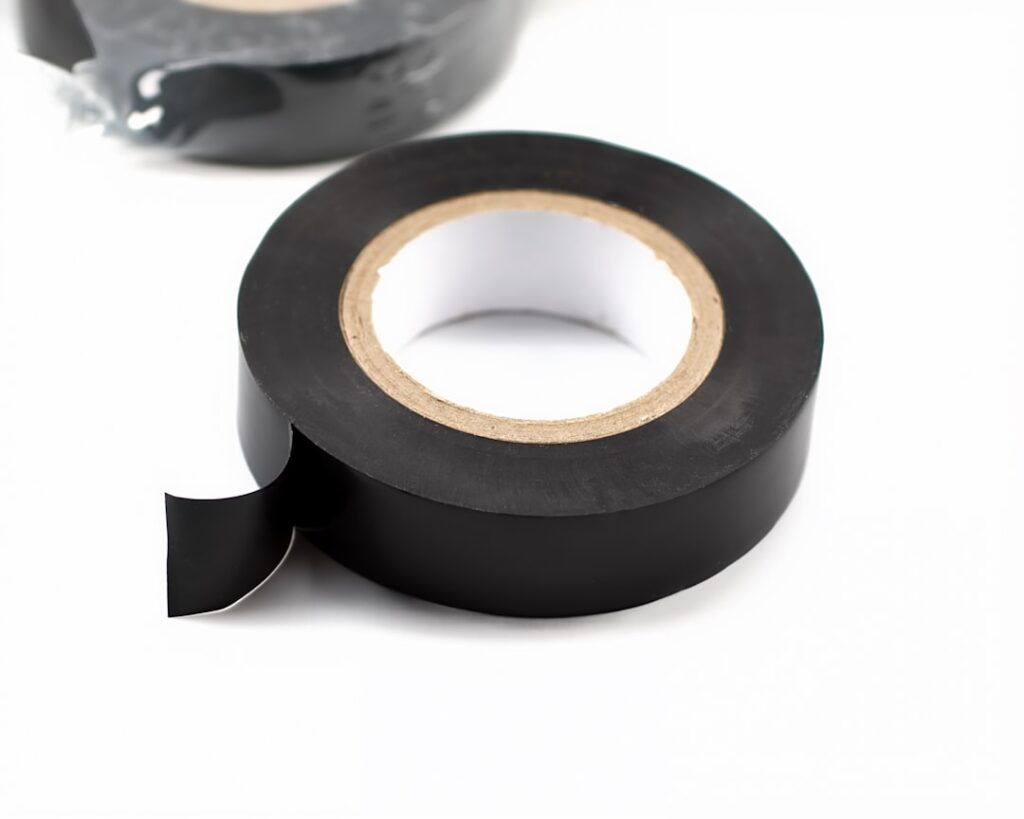
Vinyl electrical tape (Scotch Super 33+ is the pro standard, about $6 a roll) insulates to 600 volts and stretches around splices; rated -0°F to 220°F for the premium grades. It belongs on wire repairs and terminations — and, per code, not as the sole cover on permanent junctions, which need a box. Two specialty siblings matter for insulation-adjacent work: self-fusing silicone tape wraps into a solid waterproof sleeve for outdoor splices and plumbing emergencies, and glass cloth tape handles high-heat zones around furnaces up to 350°F and beyond. If a tape must touch a hot flue or heat cable junction, check its printed temperature rating rather than guessing; most failures are simply vinyl melting where foil or glass cloth belonged.
Matching Tape to Job: Quick Reference
- Duct seams and joints: UL 181 foil tape over mastic
- Foil-faced foam board seams: foil tape
- Unfaced XPS/EPS seams: acrylic sheathing tape
- Drafty door or attic hatch: EPDM foam tape
- Sweating cold water pipe: foam or rubber pipe wrap
- Refrigerant line splices: elastomeric rubber tape
- House wrap and window flashing: manufacturer-listed sheathing tape
- Wiring repairs: vinyl electrical tape; silicone self-fusing outdoors
Common Mistakes and Fixes
Field failures follow patterns worth naming. Cloth duct tape on ductwork tops the list — its rubber adhesive bakes out on warm metal and the tape drops off in 6 to 18 months, which is why every energy auditor finds gray tatters hanging in old furnace rooms; strip it and redo with mastic plus UL foil tape. Second is foil tape asked to bridge gaps: tape spans 1/8 inch reliably, but anything wider needs mastic or backer first, because unsupported tape flexes with duct pressure cycles and splits. Third is weatherstripping tape applied to the wrong plane — foam tape belongs where the door compresses it, on the stop face, not on the drywall the door merely passes.
Repairs are usually easier than the original job. Lifting tape edges re-press if warmed with a hair dryer while the adhesive still looks glossy; once the adhesive turns matte and dusty it is done, and the fix is a fresh strip over-lapping the old by an inch on all sides. Never layer tape more than twice — a third layer telegraphs every ridge and holds worst of all.
Application Rules That Apply to Every Roll
Adhesive tapes fail for the same four reasons regardless of type. Dirty surfaces — wipe metal and foam with a dry rag minimum, alcohol ideally. Cold application — most acrylics want 40°F or warmer unless labeled all-weather; warm the surface with a heat gun on winter jobs. No pressure — every tape in this article is pressure-sensitive, so squeegee it. And tension — tape stretched tight as it goes on will creep back and lift at the edges; lay it relaxed and press. Follow those and a $10 roll outlasts the siding. Skip them and the best tape made peels off inside a heating season.
Buying Notes: Rolls, Widths, and Shelf Life
Width is worth a moment’s thought at the register. For duct and foam-seam work, 2.5 or 3 inch foil tape halves the passes that 1.88 inch requires and centers more forgivingly on a joint; for sheathing tape, 3.75 inch versions exist for corner and sill work. Adhesive also ages in the package — acrylic tapes keep two to three years in a conditioned closet but degrade fast in a hot garage or truck box, so a bargain-bin roll of unknown vintage is no bargain. Date rolls with a marker when they enter the shop and toss anything whose adhesive has gone glassy or stringy.
Pipe Lagging Tape: What It Is and How to Wrap It Properly
Pipe lagging tape is the British and Irish name for what most US hardware stores shelve as pipe wrap or pipe insulation tape. “Lagging” is the older trade word for any insulating layer wrapped around a pipe or tank, so a search for lagging tape turns up the same family of products: thin foam, rubber, or foil-faced wraps sold in narrow rolls, plus the foil or cloth tapes used to close the seams of lagging sleeves. If you are following a UK guide or buying from an overseas seller, the terms are interchangeable; what matters is the material and its temperature rating printed on the roll.
When Tape Beats Sleeves or Fiberglass Wrap
Tape-style lagging earns its place on short runs, crowded joist bays, and awkward geometry where a split foam sleeve will not sit flat. Foam sleeves remain the better choice for long straight runs because they deliver more insulation per inch with less labor. Fiberglass wrap with a vapor-retarding jacket suits hot lines near heat sources and wide-diameter pipe, but it must be fully jacketed on cold lines or it soaks up condensation. Many good jobs combine all three: sleeves on the straights, tape on the fittings, and a jacketed wrap where heat is a concern.
Wrapping Technique That Actually Holds
- Clean and dry the pipe first. Wrapping over condensation traps moisture against the metal.
- Start a few inches onto an existing sleeve or a straight section so the joint between materials is covered.
- Spiral the tape with roughly half-width overlap on each pass so there is no bare line between wraps.
- At elbows, keep the overlap on the outside of the bend and add an extra pass on the inside curve, where gaps open up.
- Cover valve bodies fully but leave handles and any packing nut reachable so the valve can still be operated and serviced.
- Finish by sealing the tail and every sleeve seam with a strip of compatible tape pressed down firmly.
On cold lines the goal is a continuous vapor seal; a single gap lets humid air reach the pipe, and the drip simply moves to that spot. On hot lines the seal matters less than coverage, but confirm the tape’s rated maximum temperature exceeds the water heater setting. Wrapping over electric heat cable is a special case: do it only when the cable maker’s instructions permit insulation over that specific cable, and use the materials they list, since some cables can overheat when covered.
The Bottom Line
There is no single insulation tape — there is a right tape per substrate and temperature. Keep three rolls in the kit and you cover 90 percent of household jobs: UL-listed foil tape for anything duct- or foil-faced, EPDM foam tape for anything that closes against a frame, and a quality sheathing tape for foam board and wrap seams. Buy name-brand adhesive, prep the surface, press hard, and the tape becomes the cheapest permanent component in the whole insulation system rather than the first thing to fail.