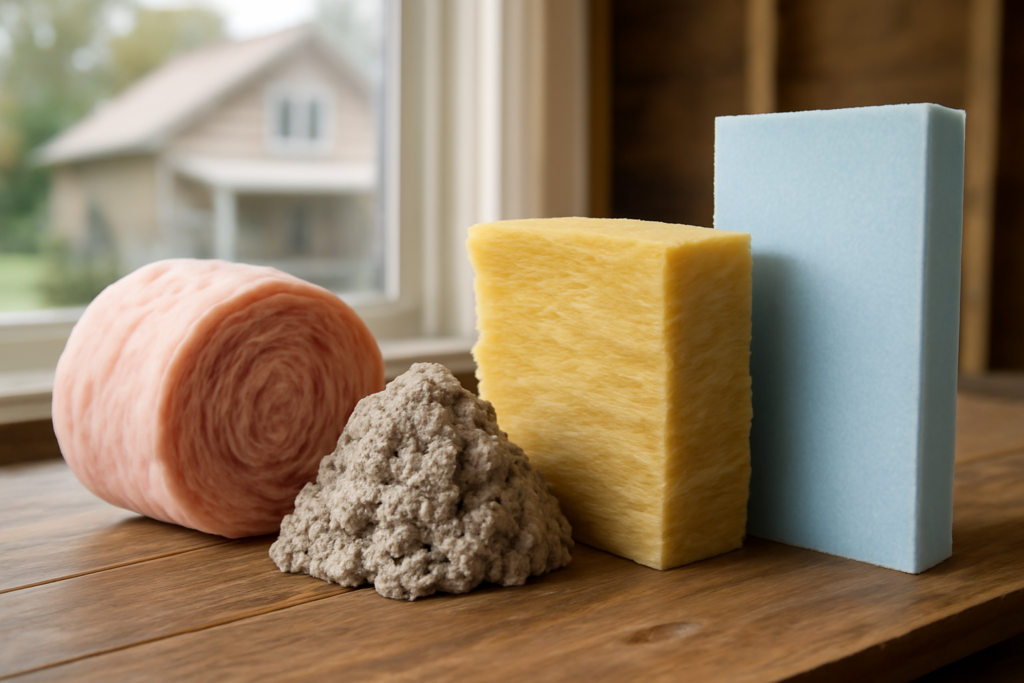
The pink fluff in your attic started as sand and crushed recycled bottles, melted at 2,700°F and spun into fibers finer than human hair. Ask what is insulation made of and the answers span molten rock, shredded newspaper, plastic foamed with gas, and even sheep’s wool — a strange materials list united by one principle: trap air (or gas) in millions of tiny pockets so heat can’t move easily through them. Still air is a terrible heat conductor, and nearly every insulation product is just an elaborate way of holding air still. Here’s what each major type is actually made from, how it’s manufactured, and what those ingredients mean for performance in your house.
- Fiberglass: Spun Glass Fibers
- Mineral Wool: Spun Volcanic Rock and Slag
- Cellulose: Recycled Paper and Borates
- Foam Plastics: Polystyrene and Polyurethane
- The Specialty Shelf: Wool, Denim, Aerogel, and Radiant Foil
- What the Materials Mean for Your Choice
- How to Read the Label Like a Pro
- The Bottom Line
Fiberglass: Spun Glass Fibers
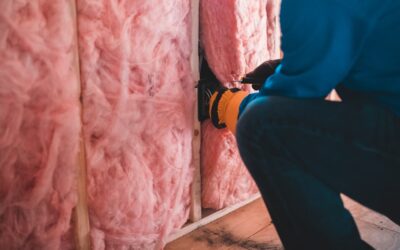
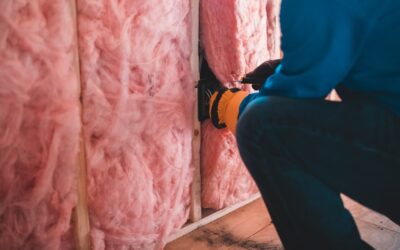
America’s dominant insulation — the pink, yellow, or white batts and blown fluff in most homes — is literally glass. Manufacturers melt a blend of silica sand, soda ash, limestone, and 40 to 60 percent recycled glass cullet at around 2,700°F, then force the molten glass through fine spinnerets in a process much like making cotton candy. The resulting fibers, a few microns thick, are bonded with a resin binder (traditionally phenol-formaldehyde; most major brands now use acrylic or bio-based binders — that’s what Owens Corning’s “pink” and Knauf’s “EcoBatt” brown colors reflect) and formed into batts, rolls, or chopped loose-fill.
The glass itself doesn’t insulate — the fiber matrix holding pockets of still air does, delivering R-2.9 to R-4.3 per inch depending on density. Because it’s mineral, fiberglass won’t burn, rot, absorb much water, or feed mold or insects, and it never chemically degrades. Its weaknesses are mechanical: it itches during handling (wear sleeves and an N95), performs poorly if compressed or gapped, and does nothing to stop air leakage.
Mineral Wool: Spun Volcanic Rock and Slag
Mineral wool (Rockwool being the brand everyone knows) takes the same spinning idea and applies it to rock. Basalt — volcanic stone — and recycled steel-mill slag are melted around 2,900°F and spun into dense fiber, typically 16 to 75 percent recycled content by product. The result is a heavier, stiffer, greenish-gray batt or board with R-3.0 to R-4.3 per inch.
The rock heritage buys three distinctive properties: fire resistance that borders on theatrical (mineral wool withstands 2,000°F without melting and is used as passive fire protection in commercial construction), excellent sound absorption thanks to its density, and hydrophobic behavior — water beads off rather than soaking in, and the material drains and dries without damage. It costs 25 to 50 percent more than fiberglass, which is the main reason it hasn’t taken over.
Cellulose: Recycled Paper and Borates
Cellulose is the recycling success story of the industry: about 80 to 85 percent shredded recycled newsprint and cardboard, hammered into fluffy gray fiber and treated with 15 to 20 percent borate minerals (borax and boric acid, sometimes with ammonium sulfate) for fire and pest resistance. The plant fiber itself is, chemically, the same cellulose that makes up wood — which is why the borate treatment matters and why reputable products pass the same flame-spread tests as everything else on the shelf.
Blown loose in attics or dense-packed into walls, cellulose delivers R-3.2 to R-3.8 per inch and, at dense-pack densities, resists airflow better than any other fibrous insulation — a real-world advantage in leaky old houses. Its manufacturing footprint is the lowest of any mainstream insulation (low-temperature mechanical processing versus furnaces). The trade-offs: it settles 15 to 20 percent in open attics (installers compensate by over-blowing), it holds water if soaked and dries slowly, and it’s dusty during installation.
Foam Plastics: Polystyrene and Polyurethane
The rigid boards and spray foams are petrochemical products — polymers puffed full of gas bubbles:
- EPS (expanded polystyrene): the white bead-board. Polystyrene beads containing pentane are steamed until they expand 40-fold and fuse in a mold. About 98 percent air by volume; R-3.6-4.2 per inch
- XPS (extruded polystyrene): the pink/blue boards. Molten polystyrene is extruded with a blowing agent into a continuous closed-cell foam with a moisture-shedding skin; R-5 per inch. Modern “NGX”-era boards use low-global-warming blowing agents
- Polyiso (polyisocyanurate): a thermoset foam — chemically a cousin of polyurethane — blown with pentane and faced with foil or fiberglass; the R-per-inch champion of boards at R-6 to 6.5
- Spray polyurethane foam: two liquid components (an isocyanate “A side” and a polyol “B side”) that react and expand on the wall in seconds. Open-cell cures soft at R-3.5-3.7 per inch using water-blown CO2 bubbles; closed-cell cures rigid at R-6 to 7 using chemical blowing agents, and adds structural stiffness and a vapor retarder
Foams owe their high R-values partly to trapped gases that conduct heat less than air. Their shared limitations: they’re combustible (building codes require thermal barriers like drywall over foam in living spaces), UV-sensitive, and the least environmentally benign category — though blowing-agent reforms since 2020 have cut the worst climate impacts dramatically.
The Specialty Shelf: Wool, Denim, Aerogel, and Radiant Foil
Beyond the big four families, a niche market thrives. Sheep’s wool insulation (R-3.5-3.8 per inch) manages humidity remarkably — wool absorbs and releases moisture without losing R-value — at two to three times fiberglass prices. Recycled denim batts turn post-industrial cotton scrap into an itch-free, sound-absorbing batt with borate treatment, popular with chemically sensitive owners. Hemp and wood-fiber boards are growing in green building. At the exotic end, aerogel blankets — silica gel with the liquid replaced by air, the lowest-conductivity solid known — hit R-10 per inch and appear where space is priceless, at prices to match.
Radiant barriers deserve their own note because they work on a different principle entirely: a polished aluminum foil facing an air gap doesn’t slow conduction, it reflects radiant heat — up to 97 percent of it. Stapled under hot-climate roof rafters, foil can cut attic heat gain 5 to 10 percent, but layered flat inside a wall with no air gap it does approximately nothing. Vacuum insulated panels and reflective bubble wraps round out the category, the latter heavily oversold for general use.
What the Materials Mean for Your Choice
The ingredient list predicts behavior better than marketing does. Mineral products (fiberglass, rock wool) shrug off fire, water, and time but leak air. Plant products (cellulose, cotton, wool) pack tighter, use less energy to make, and handle sound well, but depend on chemical treatments and careful moisture management. Petrochemical foams deliver the most R per inch plus air and vapor control, at the cost of combustibility and embodied carbon. That’s why real houses mix them: foam at the foundation and rim joist where moisture and air sealing rule, fibrous fill in walls and attics where volume is cheap, and a radiant barrier under a Texas roof deck.
Health-wise, the modern products are well-studied: fiberglass was cleared of its 1990s cancer-listing concerns (fibers are soluble and cleared by the body — respirators are still smart during installation), formaldehyde binders have largely left the market, and borate-treated cellulose is benign in place. The one genuine hazard is legacy vermiculite attic fill from the Libby, Montana mine, which may contain asbestos — never disturb it without testing.
How to Read the Label Like a Pro
Every legitimate product wears a federally mandated label listing R-value, coverage, and required thickness — the FTC’s R-value Rule makes those claims enforceable, which is why the fly-by-night “paint-on insulation” pitches never carry one. Compare products on R per inch and R per dollar for your specific cavity, check the flame-spread and smoke-developed indexes for anything left exposed, and look for GREENGUARD or similar certifications if indoor air quality drives the decision. Recycled content varies wildly even within a category — 20 to 60 percent for fiberglass brands, up to 85 percent for cellulose — so the label, not the bag color, tells you what you’re actually buying.
The Bottom Line
So what is insulation made of? Spun glass and stone, shredded paper laced with borates, foamed plastics, and the occasional flock of sheep — all engineered toward the same physics: immobilize air, slow heat. Match the material’s nature to the job’s demands — mineral where fire and moisture threaten, foam where every inch and every air leak counts, plant fiber where budget and green goals lead — and check the R-value per inch, not just the brand. The ingredients are humble; installed thoughtfully, they’re the cheapest energy technology your house will ever own.