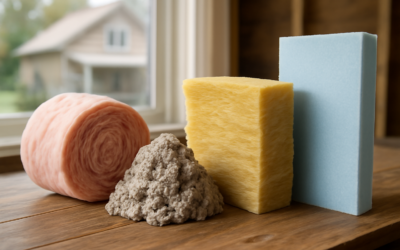
Pull back a corner of attic flooring in a house built before 1990 and you might find anything from loose gray powder to fluffy pink batts hiding under decades of dust. Knowing which old insulation types are sitting above your ceilings matters because some are harmless, some kill efficiency, and a few can land you in a hazmat-grade abatement bill. After two decades doing energy audits in pre-war homes and mid-century ranches, I have crawled through every flavor of insulation North America has ever shipped, and a quick visual ID usually tells me whether to leave it alone or call a professional.
Vermiculite: The One That Scares Everyone
Loose, pebbly, grayish-brown granules that look like puffed wheat cereal almost always mean vermiculite. Around 70 percent of vermiculite installed between the 1940s and 1990 came from the Libby mine in Montana, and that source was contaminated with asbestos. Zonolite was the dominant brand name.
Do not disturb it. The EPA recommends leaving vermiculite undisturbed and budgeting for licensed abatement before any attic work, which typically runs $1,500 to $4,000 for an average 1,200 sq ft attic. If you suspect vermiculite, pay a certified inspector $200 to $400 for a lab-tested sample before any further work.
Asbestos Pipe Wrap and Boiler Insulation
Basements in homes built before 1975 often carry white plaster-like wrapping around heating pipes and around the old octopus boiler itself. That corrugated paper or chalky cement-style coating is frequently asbestos. Cut, crushed, or sanded asbestos releases respirable fibers linked to mesothelioma and lung disease.
Intact wrap is generally low risk, but any flaking, water-damaged, or torn section needs encapsulation or removal. Encapsulating with a fiber-reinforced wrap-and-paint product like Fiberlock 6451 costs about $200 to $500 in DIY materials, while professional abatement of a typical basement runs $2,500 to $6,000.
Rock Wool and Slag Wool
This dense, gritty insulation looks like coarse gray or brownish steel wool and was poured loose or formed into batts from roughly 1900 through the 1980s. It is made from molten basalt or steel-mill slag spun into fibers and is non-combustible, fire-resistant to about 2,150°F, and free of asbestos in nearly all formulations.
Rock wool actually performs well — R-3 to R-3.3 per inch — and modern brands like Rockwool Comfortbatt are still sold today. If your old rock wool is dry, settled less than 20 percent, and uncontaminated by rodent droppings, top it off with fresh blown cellulose rather than removing it. You will save $1,500 to $2,500 versus a full strip-out.
Fiberglass Batts: The Pink and Yellow Workhorses
Owens Corning pink and Johns Manville yellow batts dominated US homes from the 1960s onward. Older batts often lack a kraft or foil vapor barrier and have settled to half their original thickness. Their R-value drops with compression, so a 1970s R-19 batt may only deliver R-11 today.
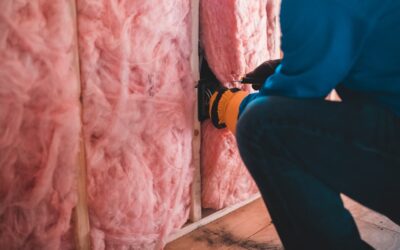
Fiberglass is itchy and irritating but not classified as a carcinogen at typical residential exposure levels. You can pull and replace it as a weekend DIY job with a Tyvek suit, P100 respirator, and large contractor bags. Plan on about 8 to 10 hours for a 1,000 sq ft attic and $600 to $900 in fresh R-38 batts to bring it up to current code.
Cellulose: Old Versus New
Loose gray-brown shredded paper fluff is cellulose. Pre-1980 cellulose was treated with boric acid for fire and pest resistance, and it is generally safe to leave in place. The problem is settling — original 10-inch installations often compress to 6 inches over 30 years, dropping R-value by a third.
Newer dense-pack cellulose from manufacturers like Greenfiber or Applegate runs about $1.20 to $1.80 per sq ft installed at R-49 attic depth. Topping off settled old cellulose is straightforward, but check first that the old material is dry, rodent-free, and not coated in a black sooty film from past furnace backdrafting.
Newspaper, Sawdust, and Other Vintage Surprises
Houses built before 1940 sometimes contain genuinely improvised insulation. I have pulled crumpled newspaper from 1923, untreated sawdust, dried seaweed, horsehair plaster, and bagasse cane fiber out of stud cavities in old farmhouses. None of it offers meaningful R-value by modern standards, and most of it is a fire hazard.
- Newspaper: R-3 per inch when fluffed, near zero when compressed. Replace during any wall opening
- Sawdust: Settles severely, attracts insects, and burns. Remove during renovation
- Horsehair plaster: Acts as both wall finish and minor insulator, generally fine to leave alone unless damaged
- Cork board: Used in early 20th century iceboxes and some walls, R-3.6 per inch and stable
Urea-Formaldehyde Foam (UFFI)
Yellowish, brittle, crumbly foam injected into walls during the late 1970s energy crisis was almost always UFFI. The product was banned in the United States in 1982 after off-gassing complaints, though the ban was later overturned. Older UFFI installations have generally finished off-gassing by now, but moisture-damaged sections can release formaldehyde again.
If your home tests above 0.1 ppm formaldehyde, encapsulate with a vapor-barrier paint like Insul-Aid or remove the affected wall sections during remodeling. Removal is intrusive and runs $5 to $9 per sq ft of wall area.
How to Test Without Disturbing Anything
Run a borescope camera through a small drilled hole behind a switch plate or baseboard, and you can see the cavity content without releasing fibers. A basic Depstech borescope costs $40 to $80. For loose-fill identification, pull a sample with long tweezers, seal it in a Ziploc, and ship to an EPA-NLLAP accredited lab like EMSL Analytical for around $35 per sample.
Knowing the old insulation types in your house drives every decision afterward, from whether you can DIY an attic upgrade to whether your remodel needs a hazmat line item. Spend the $200 on testing before you spend the $5,000 on a guess.