
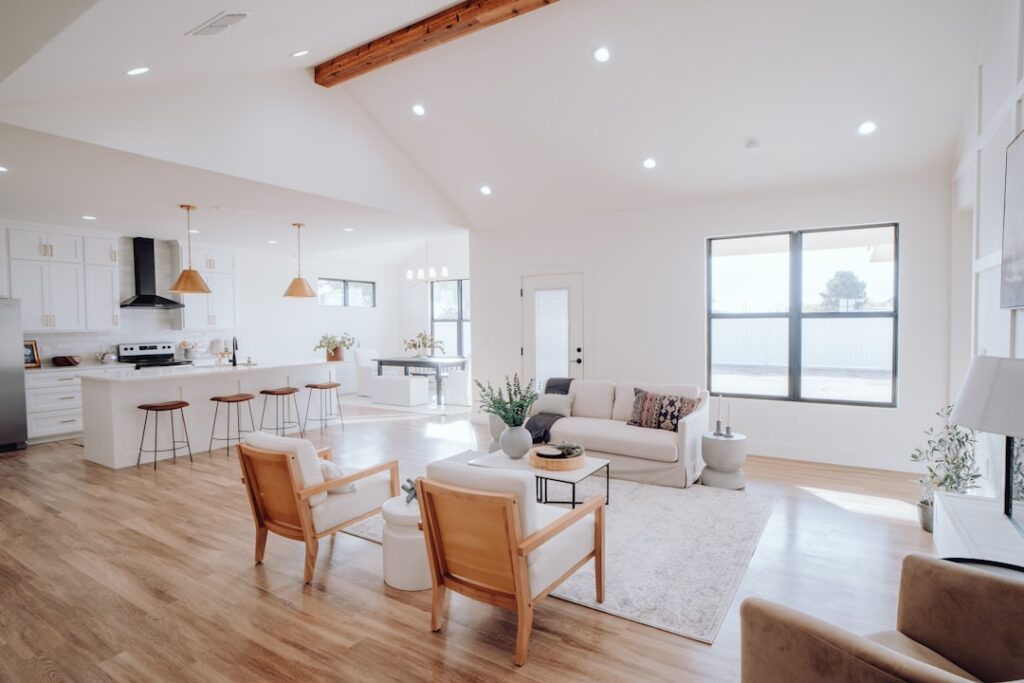
After installing floors in hundreds of homes, the question I hear most from homeowners deciding between the two premium mid-range options is simple: is engineered hardwood better than LVP? The honest answer is that neither product wins across the board. Engineered hardwood gives you genuine wood and stronger resale appeal, while luxury vinyl plank (LVP) gives you a fully waterproof, budget-friendly floor that shrugs off scratches. The right pick depends on your rooms, your budget, and how you actually live.
Below I break down both floors category by category the way I would walk a client through it on-site, with real cost ranges and the tradeoffs that matter once the floor is down and you have to live on it.
What Each Floor Actually Is
Engineered hardwood is real wood. Each plank has a top veneer of solid hardwood, usually 0.6mm to 6mm thick, bonded over a plywood or high-density fiberboard core. Because the core is cross-layered, it resists the seasonal expansion and contraction that plagues solid hardwood, which is why it can go over concrete and in basements where solid wood cannot.
LVP is a synthetic plank built from several PVC layers with a printed photographic film that mimics wood grain, sealed under a clear wear layer. Better products use a rigid SPC (stone plastic composite) or WPC (wood plastic composite) core. The wood look is a high-resolution image, not real timber, but modern embossing and beveled edges make it convincing at arm’s length.
Water Resistance: LVP Wins Clearly
This is the most decisive category. LVP is 100 percent waterproof. The core does not swell, warp, or delaminate when it gets wet, which is why it dominates bathrooms, kitchens, laundry rooms, mudrooms, and basements. You can let a spill sit for hours and wipe it up with no damage.
Engineered hardwood is more water-resistant than solid hardwood, but it is not waterproof. The wood veneer can stain, cup, or discolor from standing water, and prolonged moisture can lift the finish. If you have kids, pets, or a leaky dishwasher risk, this matters. For any room that regularly sees water, LVP is the smarter call, full stop.
Durability, Scratches, and Dents
LVP’s wear layer resists scratches and scuffs better than a wood veneer. Dog nails, dragged chairs, and grit tracked in from outside are far less likely to leave a mark. A quality 20-mil (0.5mm) wear layer will look good for years in a busy household.
Engineered hardwood, being real wood, dents and scratches more easily, especially softer species like hickory-alternatives or wide-plank oak with a thin veneer. The upside is that surface wear on wood often reads as character or patina, whereas a deep gouge through LVP’s wear layer exposes the printed film and cannot be fixed. Here is the practical summary:
- Everyday scratch resistance: LVP ahead.
- Hiding minor wear over time: wood ahead, because patina looks intentional.
- Recovering from deep damage: wood ahead, because it can be sanded; LVP planks must be replaced.
Cost Per Square Foot
Budget is where a lot of decisions land. Here are realistic 2020s material ranges before installation:
- LVP material: roughly $2 to $7 per square foot. Entry-level runs $2 to $3; thick SPC planks with a heavy wear layer run $5 to $7.
- Engineered hardwood material: roughly $4 to $13 per square foot. Thin-veneer economy products start near $4; wide-plank white oak with a thick wearable veneer climbs to $10 to $13.
Installation adds about $2 to $6 per square foot for either floor depending on the method and your region. LVP click-lock floating installs tend to be cheaper and are far more DIY-friendly. Glue-down or nail-down engineered hardwood typically costs more in labor. Across a 500-square-foot living area, LVP frequently comes in $1,000 to $2,500 cheaper installed than a comparable-looking engineered wood floor.
Refinishing and Lifespan
Engineered hardwood can be refinished, but only if the veneer is thick enough. A 2mm or thicker wear layer usually allows one light sanding and refinish; 4mm to 6mm veneers can handle two. That means a scratched or dated floor can be sanded and restained to look new, extending its life to 25 to 40 years or more.
LVP cannot be refinished at all. The wear layer is the wear layer; once it is worn through or gouged, the fix is replacing planks. Good LVP still lasts 15 to 25 years, which is plenty for many homeowners, but you are eventually replacing rather than renewing. If you want a floor your grandchildren could sand down, engineered wood is the only option here.
Comfort, Feel, and Sound
Underfoot, the two feel different. Engineered hardwood has the solid, slightly warm feel of real wood and a natural acoustic warmth. LVP is a touch softer and quieter, especially WPC cores with attached underlayment, and it stays warmer to bare feet than tile. Some people find rigid SPC planks feel hollow or plasticky, and cheaper LVP over an uneven subfloor can telegraph unevenness and click underfoot. A good underlayment and a flat subfloor solve most of that.
Resale Value and Buyer Perception
Real wood still carries weight with buyers and appraisers. Listings that say hardwood, even engineered, tend to signal quality, and in higher-end homes engineered wood supports the price. LVP is widely accepted now and no longer reads as cheap, but in a luxury market it will not command the same premium as genuine wood. In a starter home or rental, buyers often prefer LVP’s durability and waterproofing. Match the floor to the house.
Maintenance and Cleaning
Day-to-day care tips the scales for busy households. LVP is the low-maintenance champion. Sweep or vacuum, damp-mop with a mild cleaner, and you are done. It tolerates steam mops on many products and never needs waxing, oiling, or resealing. Standing water is a non-issue.
Engineered hardwood asks for more attention. You should avoid excess water, wipe spills quickly, use only wood-safe cleaners, and skip steam mops entirely, since heat and moisture can damage the finish and lift the veneer. Felt pads under furniture and area rugs in high-traffic zones extend its life. Neither floor is hard to keep clean, but if you want a truly worry-free surface, LVP again has the edge.
Installation Difficulty
If you plan to DIY, this matters. Most LVP is click-lock floating plank that a confident homeowner can install over a flat subfloor in a weekend with basic tools, no glue or nails required. Engineered hardwood comes in floating, glue-down, and nail-down versions; floating click products are DIY-friendly, but glue-down and nail-down installs are best left to a pro and add labor cost. For a first-time installer chasing the lowest all-in price, LVP is the more forgiving project.
Which Should You Choose?
Choose engineered hardwood if you want authentic wood, you are flooring living rooms and bedrooms rather than wet zones, you value refinishing and long-term resale, and your budget has room. Choose LVP if you need waterproof performance, you have pets or young kids, you want the lowest installed cost, or you are doing a basement, kitchen, or bathroom. Many homeowners split the difference, putting engineered wood in the main living spaces and LVP in the wet and high-traffic rooms so the two look coordinated but each does its job.
Is engineered hardwood better than LVP for a kitchen?
No. For kitchens, LVP is the better choice because it is fully waterproof and handles spills and dropped items without damage. Reserve engineered hardwood for drier living areas.
Does LVP or engineered hardwood add more home value?
Engineered hardwood generally adds more resale value because buyers and appraisers respond to real wood, especially in mid-to-high-end homes. LVP is a smart, cost-effective upgrade but rarely commands the same premium.
Can you put engineered hardwood in a basement?
Yes, unlike solid hardwood, engineered hardwood can go over concrete in a basement thanks to its stable cross-layered core. That said, LVP is still safer where flooding or high humidity is a real risk.
How long does each floor last?
Quality LVP lasts about 15 to 25 years before replacement. Engineered hardwood lasts 25 to 40-plus years, especially if the veneer is thick enough to refinish once or twice.
Bottom line: LVP wins on price, waterproofing, and scratch resistance, while engineered hardwood wins on authenticity, refinishing, and resale. Pick based on the room and how hard you live on your floors, not on a single headline.
Prefer to explore on your own?
See how new flooring looks in your actual room in seconds — free, no signup.
Try the free Floor Studio →

