Engineered hardwood flooring vs LVP is one of the most common showdowns homeowners face today, and the deciding factor often comes down to a single statistic: luxury vinyl plank is fully waterproof, while even the best engineered hardwood is only water-resistant. But waterproofing is just one piece of a much bigger picture that includes feel, durability, resale value, and cost. At D and G Flooring we help readers weigh these two excellent products against their real priorities, and this guide lays out the key differences side by side.
What Each Product Actually Is
Engineered hardwood is real wood. It has a genuine hardwood top layer, the veneer or lamella, bonded over a stable plywood or fiberboard core. You are walking on authentic oak, hickory, or maple, and the floor can often be sanded and refinished. Luxury vinyl plank, or LVP, is a fully synthetic product. It uses a rigid or flexible PVC core topped with a printed photographic design layer that mimics wood, then sealed under a clear wear layer. LVP looks like wood but contains none; engineered hardwood is wood with a smarter construction.
Water Resistance: The Biggest Difference
This is where the two products diverge most sharply. LVP is waterproof. Its plastic core does not absorb water, swell, or warp, so spills, pet accidents, and humidity are non-issues at the plank level. That makes LVP the default for bathrooms, laundries, kitchens, basements, and any moisture-prone space. Engineered hardwood, despite its stable core, still has a real wood surface that can stain, cup, or be damaged by standing water and is not recommended for full bathrooms or below-grade basements. If your room sees water, LVP wins decisively.
Look and Feel Underfoot
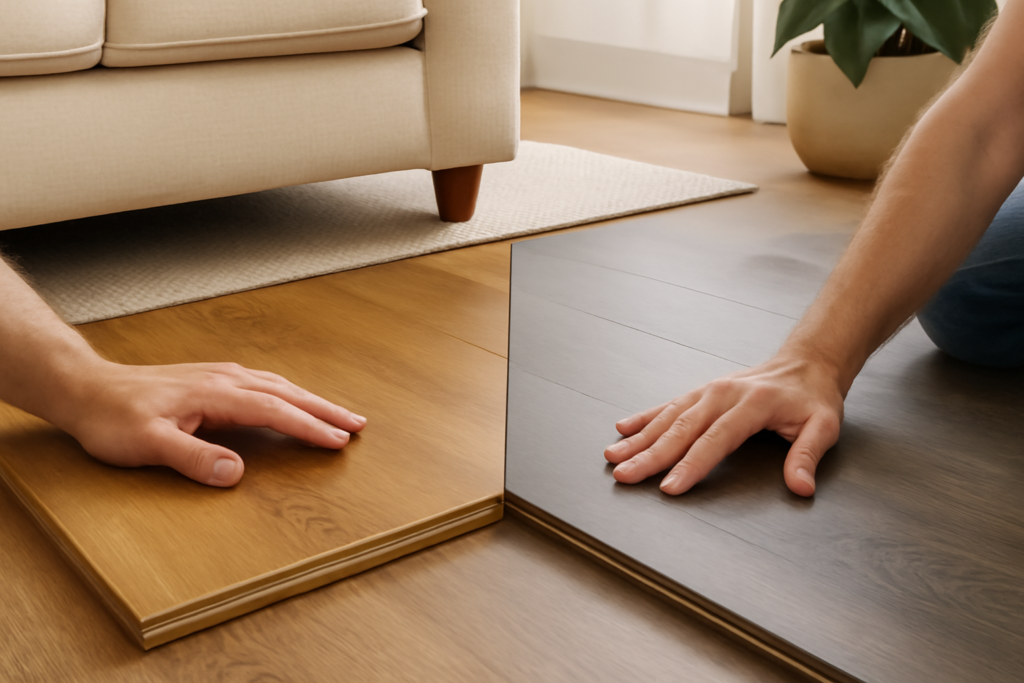
Here engineered hardwood pulls ahead. Because it is real wood, it has natural grain variation, depth, and warmth that printed vinyl cannot fully replicate. Run your hand across it and it feels like timber, because it is. High-end LVP has become remarkably convincing, with embossed textures registered to the print, but up close and underfoot most people can still tell the difference. Engineered hardwood also tends to feel more substantial, while LVP, especially over a thin pad, can feel slightly hollow or plasticky. For the authentic hardwood experience, engineered wood is unmatched.
Durability and Wear
Both are durable, but they fail differently. LVP resists scratches, dents, and moisture extremely well, shrugging off pets, kids, and rolling chairs, which is why it dominates high-traffic family homes. Its weakness is that deep gouges expose the core and cannot be sanded out; a damaged plank must be replaced. Engineered hardwood can dent and scratch more easily, especially softer species, but a board with a thick wear layer can be sanded and refinished one or more times, erasing years of wear and even letting you change the color. So LVP is harder to damage, while engineered hardwood is more renewable.
Cost Comparison
- LVP material: commonly $2 to $5 per square foot for quality products, with premium lines higher.
- Engineered hardwood material: commonly $4 to $12 per square foot, with wide-plank European oak reaching well above that.
- Installation: LVP is often cheaper to install because many products are floating click systems suited to DIY, while engineered hardwood may require glue-down or nailing and more skilled labor.
Overall, LVP is usually the more budget-friendly choice both in material and installation, while engineered hardwood is a larger investment that can pay back in other ways.
Resale Value and Buyer Perception
Real wood still carries prestige. Many buyers and appraisers view engineered hardwood as a premium, permanent feature that adds to a home’s value and appeal, especially in mid-to-high-end markets. LVP is increasingly accepted and even expected in family-friendly and rental properties, but it is generally seen as a practical mid-tier surface rather than a luxury upgrade. If maximizing resale in a higher-end neighborhood is a priority, engineered hardwood often has the edge; if durability and value in a rental or busy family home matter most, LVP makes more sense.
Installation and Subfloor
LVP is famously forgiving. Rigid-core planks float over most existing hard surfaces, tolerate minor subfloor imperfections, and many homeowners install them without professional help. Engineered hardwood is more demanding: the subfloor must be flat and dry, moisture testing over concrete is critical, and glue-down or nail-down installs reward experience. Both benefit from acclimation and expansion gaps, but LVP is the clear winner for DIY simplicity.
Comfort, Sound, and Temperature
Engineered hardwood feels warm and solid, and with the right underlayment it sounds rich underfoot. LVP can feel cooler and, if not installed over a good pad, can sound hollow or click. However, LVP with an attached cork or foam pad is quiet and comfortable, and its slight give is easier on dropped dishes. Both work with radiant heat when the manufacturer approves it, though you must follow temperature limits carefully for each.
How to Decide: A Quick Framework
- Choose LVP if the room gets wet, you have pets or young kids, you want a DIY-friendly install, you are furnishing a rental or basement, or budget is the top priority.
- Choose engineered hardwood if you want the authentic look and feel of real wood, you value the ability to refinish, you are in a dry above-grade room, and you want to maximize premium resale appeal.
- Consider the whole house. Many homeowners use engineered hardwood in living and bedroom areas and LVP in baths, laundries, and basements for the best of both.
Maintenance Differences
LVP is nearly maintenance-free: sweep and damp-mop, with no refinishing ever needed. Engineered hardwood asks for a bit more care; keep grit swept up, avoid excess water, use felt pads, and recoat the finish when it dulls. Neither is high-maintenance, but LVP is the easier of the two to live with day to day.
The Bottom Line
Neither product is universally better; they excel at different things. LVP is the waterproof, durable, budget-friendly, DIY-friendly choice that thrives in wet and high-traffic areas. Engineered hardwood is the authentic, refinishable, resale-friendly choice that delivers real wood warmth in dry living spaces. Match the product to the room and your priorities rather than chasing a single winner. If you would like help comparing specific products for your home, the team at D and G Flooring can walk you through the trade-offs room by room.
Prefer to explore on your own?
See how new flooring looks in your actual room in seconds — free, no signup.
Try the free Floor Studio →