
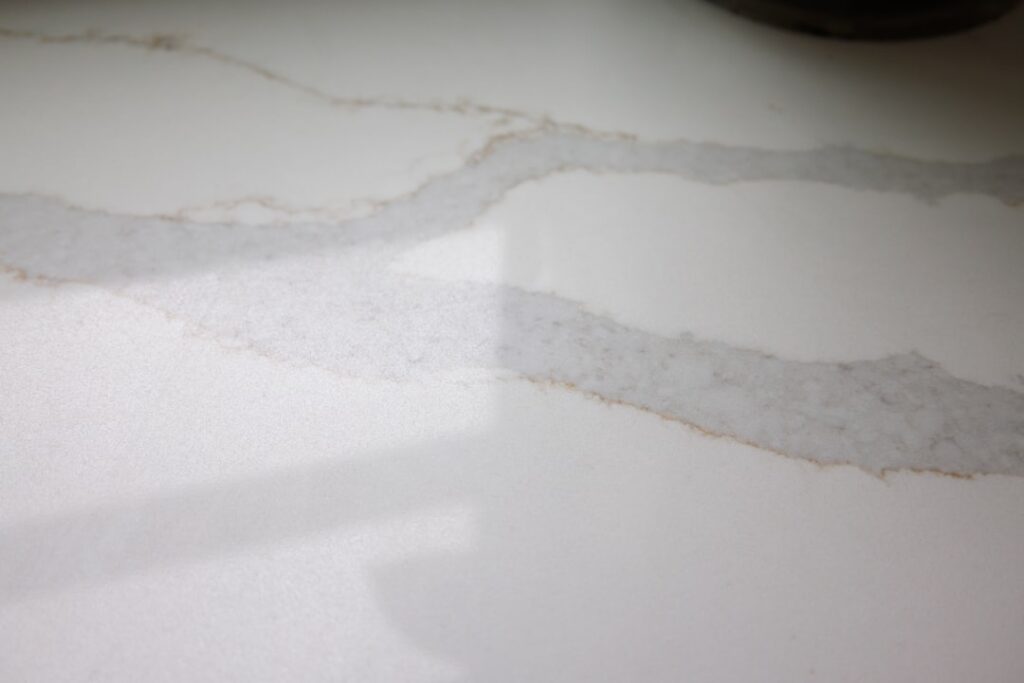
The countertop quote you got is probably for the most popular options on the showroom floor, which means you are seeing prices in the middle of each material’s range. Is quartz or granite more expensive is one of the most common kitchen renovation questions, and the honest answer is that they overlap heavily; the cheaper granite slab is less than the cheaper quartz, but premium granite often costs more than premium quartz. After pricing more than 100 kitchen countertop jobs across the past few years, I have a clear picture of what drives the cost differences and where each material represents better value.
Part of our Countertops guide — explore the full guide →
- The Direct Price Comparison
- Why Quartz Tends to Cost More on Average
- What Makes Granite Vary So Much
- Installation Cost Breakdown
- Maintenance Cost Over Time
- Performance Differences That Affect Long-Term Value
- Resale Value Impact
- Which One Is the Better Value
- Hidden Costs to Budget For
- Where to Save Without Sacrificing Quality
- Bottom Line
The Direct Price Comparison
For 2026 installed pricing in most US markets:
- Entry-level granite: $40 to $60 per sq ft installed
- Mid-grade granite: $60 to $95 per sq ft installed
- Premium granite (exotic colors, large slabs): $95 to $175 per sq ft installed
- Entry-level quartz (builder grade): $55 to $80 per sq ft installed
- Mid-grade quartz (Caesarstone, Silestone, MSI): $80 to $120 per sq ft installed
- Premium quartz (Cambria, Vicostone, designer Caesarstone): $120 to $170 per sq ft installed
For a typical 50 sq ft kitchen, mid-grade granite runs $3,000 to $4,750 installed; mid-grade quartz runs $4,000 to $6,000.
Why Quartz Tends to Cost More on Average
Quartz countertops are an engineered product made from 90 to 95 percent crushed quartz mixed with resins and pigments. The manufacturing process is consistent and predictable, which means pricing reflects manufacturing cost plus brand premium rather than raw material rarity.
Cambria, Caesarstone, and Silestone command higher prices because of brand recognition, warranty support, and consistent quality. Cheaper Chinese-imported quartz brands undercut these by 30 to 50 percent but often have lighter resin formulations that are less heat and stain resistant.
What Makes Granite Vary So Much
Granite is natural stone, so price depends on:
- Origin: Brazilian and Italian granite costs more than domestic US or Indian
- Slab size: larger slabs reduce seams but require special handling
- Color rarity: blue granites and exotic patterns cost 2 to 4x standard colors
- Movement and pattern: dramatic veining costs more than uniform tones
- Thickness: 3cm slabs cost about 25 percent more than 2cm
Common granites like Uba Tuba, Santa Cecilia, and Tan Brown run at the low end. Designer choices like Blue Bahia, Persian Pearl, or Taj Mahal hit the premium tier easily.
Installation Cost Breakdown
Both materials require similar installation:
- Template and measure: $200 to $400
- Slab fabrication (cuts, edges, sink cutout): included in installed price
- Edge profile upgrade (ogee, bullnose): $10 to $15 per linear foot extra
- Sink cutout: included; second cutout adds $100 to $200
- Tear-out of existing counters: $150 to $400 per kitchen
- Plumbing disconnect/reconnect: $150 to $300 (separate plumber)
The installation labor portion is essentially identical between quartz and granite, so price differences come from material cost.
Maintenance Cost Over Time
Quartz requires zero maintenance other than regular cleaning. No sealing, no special products. Granite requires a penetrating sealer reapplication every 1 to 3 years depending on stone porosity. Sealer costs $20 to $40 and takes 30 minutes to apply.
Over 20 years of ownership, granite maintenance adds $200 to $400 in sealer products plus your time. Not a major factor in the total cost equation but worth noting.
Performance Differences That Affect Long-Term Value
Quartz is non-porous, so it never stains and resists bacteria better than granite. It does not tolerate heat above 300°F; placing a hot pan directly on quartz can damage the resin matrix and discolor the surface permanently.
Granite handles heat directly from a 500°F pan with no damage. It is porous when unsealed, so spills (red wine, oil, citrus) can stain if left overnight. Sealed granite resists most household stains for 6 to 24 months between treatments.
Resale Value Impact
Both materials add roughly the same resale value to a home: about 60 to 70 percent of the install cost is recouped at sale. Real estate agents in 2026 increasingly view quartz as the modern preferred option in mid-priced homes ($350K to $750K), while granite remains popular in higher-end traditional homes.
The specific color and pattern matter more than material choice for resale. Neutral whites, warm grays, and beige tones appeal to the broadest buyer pool in either material.
Which One Is the Better Value
For a budget-conscious renovation, entry-level granite at $40 to $60 per sq ft installed beats any quartz option on price. For a kitchen you plan to use heavily for the next 20 years and want zero maintenance, mid-grade quartz at $80 to $120 per sq ft delivers the best long-term value.
Premium quartz and premium granite are roughly equivalent in price; choose based on aesthetic preference rather than budget.
Hidden Costs to Budget For
- Backsplash continuation if you choose a slab backsplash: doubles the slab quantity
- Edge upgrades from standard eased edge to ogee or waterfall: $10 to $50 per linear foot
- Underlayment plywood if your existing cabinets need reinforcement: $100 to $300
- Permit fees (rare for countertop replacement, but check locally)
- Accidental damage to cabinets during install: budget 5 percent contingency
Where to Save Without Sacrificing Quality
Buy remnant slabs for small projects. Fabricators sell leftover pieces at 30 to 50 percent off slab price; perfect for bathroom vanities, bar tops, or laundry counters under 25 sq ft.
Choose stock colors at major suppliers. Custom-order colors require longer lead times and sometimes upcharge fees. Cambria’s Quartz Quartet collection or MSI’s Q Premium Natural Quartz are reliable mid-range options at competitive prices.
Bottom Line
On average, quartz costs about 10 to 25 percent more than granite for equivalent quality and finish. The difference shrinks at the entry level and disappears at the premium tier. Choose based on aesthetic, maintenance preference, and the specific slab you fall in love with rather than category-level pricing alone.


