
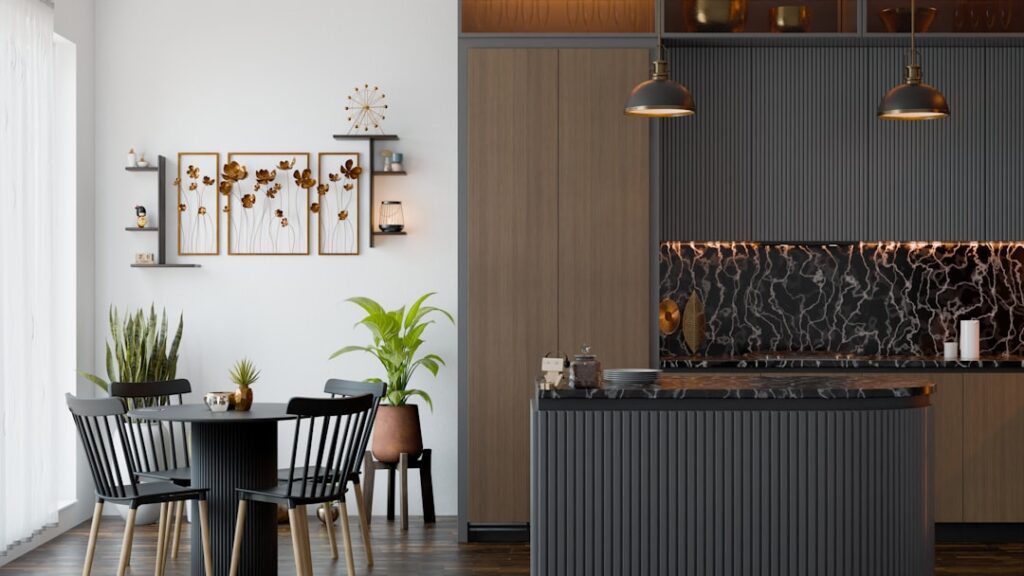
The single biggest visual decision in any kitchen remodel is the cabinet doors, since they cover roughly 30 percent of the room’s visible surface. Choosing among the many kitchen cabinet door styles shapes whether your space reads traditional, transitional, or crisply modern, and it drives a surprising share of the budget. A door style can swing cabinet pricing by 20 to 40 percent, so it pays to understand the options before you commit.
Part of our Kitchen Remodeling guide — explore the full guide →
Shaker: The Enduring Favorite
Shaker doors dominate American kitchens for good reason. Their five-piece construction features a flat recessed center panel framed by four square-edged rails and stiles. The look is clean and simple, which lets it blend into farmhouse, transitional, and modern kitchens alike.
Because Shaker doors avoid ornate detailing, they are also easy to clean and hard to date. Painted white Shaker remains the most requested cabinet in the country, though deep greens, navy, and warm woods have surged in popularity. Expect to pay a moderate price, since the extra rails and stiles use more material than a flat slab.
Slab: Sleek and Modern
A slab door is exactly what it sounds like, a single flat panel with no frame or detailing. This minimalist style anchors contemporary and European kitchens, and it works beautifully in high-gloss finishes or dramatic wood grains like walnut and rift-cut oak.
Slab doors clean up in seconds because there are no grooves to trap grease. They also tend to cost less to manufacture, though premium veneers and specialty finishes can push the price well above Shaker. Pair them with integrated or edge-pull hardware to keep the seamless look intact.
Raised Panel: Traditional Character
Raised panel doors bring depth and formality. The center panel is contoured so it sits proud of the surrounding frame, casting subtle shadow lines that read as classic and substantial. These doors suit traditional and old-world kitchens, especially in stained cherry, maple, or oak.
The extra machining makes raised panel doors more expensive than flat-panel Shaker, and the profiled edges collect more dust. If you love traditional style but want easier maintenance, a flat-panel or beadboard alternative delivers a similar feel with less upkeep.
Comparing the Main Choices
Here is how the leading door styles stack up at a glance:
- Shaker: Versatile, mid-range cost, fits nearly any design
- Slab: Modern, easiest to clean, wide price range depending on finish
- Raised panel: Traditional, higher cost, more upkeep
- Beadboard: Cottage and coastal charm, vertical grooved panel
- Glass front: Opens up upper cabinets, showcases dishware
- Louvered: Slatted look, good for ventilation, harder to dust
Material Choices Matter Too
Door style and material work together. Solid wood offers warmth and can be refinished, but it expands and contracts with humidity, which sometimes cracks painted finishes at the joints. MDF resists that seasonal movement, making it the preferred substrate for painted Shaker and slab doors because it holds paint smoothly and will not telegraph wood grain.
Thermofoil, a vinyl layer heat-sealed over MDF, gives you a durable painted look at a lower price, though it can peel near heat sources like ovens. For a truly seamless modern kitchen, high-pressure laminate and acrylic slab doors resist scratches and moisture better than most alternatives.
Matching Style to Your Home
The best door style honors your home’s architecture. A 1920s bungalow feels natural with Shaker or beadboard, while a mid-century or new-build modern home carries slab doors effortlessly. Fighting your home’s bones, such as installing ultra-modern gloss slabs in a Craftsman cottage, usually produces a kitchen that feels off no matter how nice the components are.
Think about resale too. Neutral Shaker in white or a soft gray appeals to the widest pool of buyers, which matters if you plan to sell within a few years. Bold colors and dramatic finishes personalize a forever home but can narrow your future buyer audience.
Frameless Versus Framed Construction
Door style is only half the equation; how the door meets the cabinet box matters just as much. Traditional American cabinets use framed construction, where a face frame surrounds the box opening and the doors mount to that frame. This approach is sturdy, forgiving of slight misalignment, and pairs naturally with Shaker and raised-panel doors.
Frameless cabinets, sometimes called full-access or European construction, drop the face frame entirely so the doors cover the whole box edge. This yields wider drawers, easier access, and the seamless, gap-free look that suits slab doors and modern kitchens. Frameless boxes demand more precise installation because there is no frame to hide imperfections, so hinges and door alignment must be dialed in exactly. When you choose a door style, ask which construction the cabinet line uses, since the two decisions shape both the look and the everyday function of your kitchen.
Hardware and Finishing Touches
Door style sets the stage, but hardware completes the look. Shaker doors accept nearly any pull or knob, from bin pulls to modern bars. Slab doors look best with minimalist edge pulls or no hardware at all. Raised panel doors call for more traditional cup pulls and rounded knobs in finishes like oil-rubbed bronze or antique brass.
Whatever you choose among these kitchen cabinet door styles, order a sample door before committing to a full set. Seeing the profile, finish, and hardware together under your own kitchen lighting prevents the expensive regret of a color or texture that looked different in the showroom.


