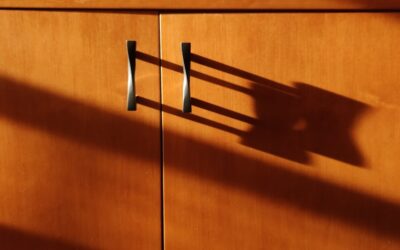
Frameless kitchen cabinets, often called European or full-access cabinets, ditch the front face frame that traditional American cabinets rely on, giving you wider openings, more usable storage, and a clean, modern look. If you are planning a remodel and torn between styles, understanding how frameless kitchen cabinets are built – and where they shine or fall short – will save you costly second-guessing.
Part of our Kitchen Remodeling guide — explore the full guide →
- Frameless Kitchen Cabinets: What “Frameless” Actually Means
- The Full-Access Advantage
- The Modern Look
- How the Hardware Differs
- Cost: What to Expect
- Frameless vs. Framed: Trade-Offs
- Box Materials and What to Look For
- Best Rooms and Styles for Frameless
- Installation Considerations
- Maintenance and Longevity
- Are Frameless Kitchen Cabinets Right for You?
Frameless Kitchen Cabinets: What “Frameless” Actually Means
A traditional framed cabinet has a 1-1/2 inch wide hardwood face frame attached to the front of the box, like a picture frame around the opening. Doors mount to that frame. A frameless cabinet skips it entirely. The doors attach directly to the sides of the box, and the box walls are typically thicker – usually 3/4 inch plywood or particleboard – to carry the structural load the face frame used to provide. This construction originated in post-war Europe as a fast, efficient, material-saving standard, which is why you still hear it called European-style or “full-access.”
The Full-Access Advantage
The phrase “full access” is the whole selling point. Without a face frame narrowing the opening, you get the entire interior width of the box. On a 24-inch base cabinet, that difference is real: framed cabinets lose about 1-1/2 inches per side to the frame, while frameless gives you nearly the full opening. That means:
- Wider drawers that hold more and slide fully into large sheet pans and pots
- Easier reach into corners and the back of deep base cabinets
- Roughly 10 to 15 percent more usable storage volume across a typical kitchen
- Adjustable shelves that use the entire box width
For small kitchens where every inch counts, that reclaimed space is often the deciding factor.
The Modern Look
Frameless construction naturally produces a full-overlay door, meaning the doors cover almost the entire face of the box with only a thin reveal – typically 1/8 inch – between them. The result is a sleek, continuous run of doors and drawers with no visible frame peeking through the gaps. This is why nearly every flat-panel, slab-door, and contemporary kitchen you see in design magazines is built frameless. That said, you can put shaker or raised-panel doors on frameless boxes too, so you are not locked into an ultra-modern aesthetic.
How the Hardware Differs
Frameless cabinets use concealed European hinges (also called cup hinges) that mount into a 35mm bored hole on the door and screw to the cabinet side wall. Brands like Blum and Grass dominate here, and quality soft-close versions have three-way adjustment – height, depth, and side-to-side – so you can dial in perfect reveals after installation. Drawers ride on full-extension undermount slides, again usually Blum (Tandem) or Grass, that hide beneath the drawer box and pull out completely. This hardware is a big part of why frameless feels premium: the motion is smooth, quiet, and adjustable.
Cost: What to Expect
Frameless and framed cabinets overlap heavily in price – the style matters less than the material grade and brand. Rough ranges for a 10×10 kitchen (a common estimating benchmark):
- Stock frameless (RTA or big-box): $4,000 to $8,000
- Semi-custom frameless: $8,000 to $18,000
- Full-custom frameless: $18,000 to $35,000 and up
Ready-to-assemble frameless lines from European-focused sellers are often the best value, delivering plywood boxes and Blum hardware at stock prices. The premium hinges and slides frameless requires can nudge cost up slightly versus a bargain framed line, but quality-for-quality the two styles land close.
Frameless vs. Framed: Trade-Offs
Frameless is not automatically better – it is a set of trade-offs. Here is the honest comparison:
- Storage: frameless wins, with more usable interior space
- Modern look: frameless wins for slab and full-overlay styles
- Structural rigidity: framed has a slight edge; the face frame resists racking, so frameless relies on precise, square installation and sometimes stretchers
- Installation forgiveness: framed is easier to shim and scribe against out-of-square walls because the frame hides gaps; frameless demands level, plumb, and square work
- Door adjustment: frameless hinges adjust more easily, but tight full-overlay reveals show any misalignment
- Traditional aesthetic: framed cabinets more naturally suit inset and classic partial-overlay looks
Box Materials and What to Look For
With frameless cabinets, the box does structural work the face frame used to handle, so the material grade matters more than in framed construction. Look for 3/4-inch box sides rather than thin 1/2-inch panels, and favor plywood over particleboard where you can. Plywood holds screws better, resists sagging over a long shelf span, and survives a plumbing leak under the sink far better than particleboard, which swells and crumbles when it gets wet. Melamine-faced boxes are common and perfectly fine for the interiors; the wipeable white surface is easy to keep clean. Check the back panel too – a full 3/8 or 1/2-inch back that captures into a groove is much stronger than a stapled-on 1/8-inch panel, and it is what your wall screws bite into.
Ask about edge banding on exposed edges. A thick PVC or wood edge band resists chipping, while a thin printed tape peels within a few years. These details separate a frameless line that stays tight for decades from one that loosens and looks dated fast.
Best Rooms and Styles for Frameless
Frameless earns its keep anywhere storage is tight or the design leans modern. Small galley kitchens and condos benefit most from the reclaimed interior width, and the clean full-overlay look makes a compact space feel less busy. Slab-door and flat-panel European kitchens are the natural fit, but frameless also carries a soft-modern shaker beautifully, which is why it dominates transitional remodels. Bathrooms, laundry rooms, and built-in offices are all strong candidates too. Where frameless is a harder sell is a period restoration – a Craftsman or Colonial kitchen aiming for authentic inset doors is usually better served by framed construction, which was the historical norm and hides the wavy walls those old houses come with.
Installation Considerations
Because frameless boxes lack the reinforcing frame, precise installation matters even more. Walls and floors are rarely perfectly straight, so shim carefully and check that each box is plumb and square before joining it to its neighbor – a racked frameless box will throw off the tight door reveals that make the style look good. Many installers add a thin scribe filler at walls to close gaps cleanly, since there is no face frame overhang to hide behind. If you are hiring out the job, ask whether your installer has frameless experience; the tolerances are tighter than framed work.
Maintenance and Longevity
Frameless cabinets are easy to live with because the hardware does most of the fussy work. Soft-close hinges and undermount slides from Blum or Grass are rated for hundreds of thousands of cycles, so the mechanisms usually outlast your taste in door styles. When a reveal drifts out of alignment – which happens as a house settles – you fix it in seconds with the three adjustment screws on each hinge rather than rehanging anything. Wipe melamine or thermofoil interiors with a damp cloth; avoid soaking the bottom of a sink base, since standing water is the one thing that damages any cabinet material over time. Because the full-overlay doors sit so close together, keeping the reveals even is the main cosmetic upkeep, and it takes a screwdriver and five minutes once a year at most.
Are Frameless Kitchen Cabinets Right for You?
Choose frameless kitchen cabinets if you want maximum storage, a clean contemporary look, and smooth European hardware, and if you or your installer can commit to precise, square installation. Lean framed if you love a traditional inset aesthetic, want extra structural rigidity, or are fitting cabinets to an old house with wavy walls where the frame’s forgiveness helps. Either way, spend your money on plywood boxes and quality soft-close hardware – those two choices affect daily satisfaction far more than the framed-versus-frameless debate itself.