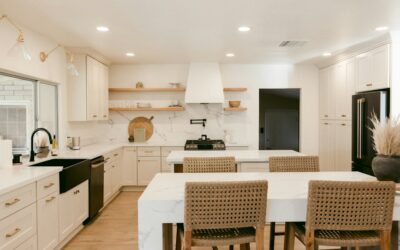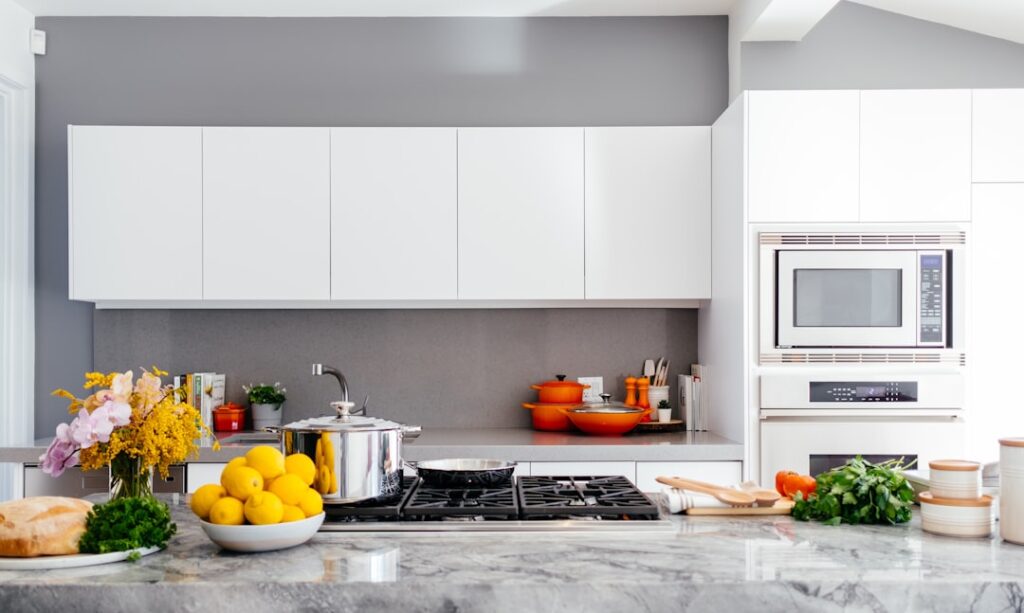
Look at any kitchen and the first thing your eye lands on is the cabinet doors and drawer fronts, not the boxes behind them. That’s why kitchen cabinet faces carry so much visual weight; they define the style of the entire room while the cabinet boxes do the quiet structural work. Whether you’re building new, refacing existing cabinets, or just swapping doors, understanding the styles, materials, and construction options helps you get the look you want without overspending. This guide walks through door styles, materials, the reface-versus-replace decision, and how to plan a smart update.
Part of our Kitchen Remodeling guide — explore the full guide →
- What “Cabinet Faces” Means
- Framed vs Frameless in Practice
- Popular Door Styles
- Materials That Make the Face
- Refacing vs Replacing
- Finish and Color Considerations
- Hardware and the Details That Matter
- Planning Your Project
- Overlay Styles and How Doors Sit
- Timelines and Living Through the Project
- Getting the Look You Want
What “Cabinet Faces” Means
The term covers the visible fronts of your cabinets: the doors, the drawer fronts, and often the face frame that surrounds them on framed cabinets. Together these are the parts you see and touch every day, and they’re what changes when you reface a kitchen. The interior boxes, shelves, and structure stay put, which is exactly why refacing can transform a kitchen at a lower cost than a full replacement.
Cabinets come in two broad construction types. Framed cabinets have a face frame around the box opening, giving a classic, sturdy look. Frameless, or European-style, cabinets skip the face frame so the doors cover nearly the entire front, creating a sleeker, more contemporary appearance with slightly more interior access. The construction affects how doors mount and how the finished kitchen reads.
Framed vs Frameless in Practice
The framed-versus-frameless choice affects more than looks. Framed cabinets, with their face frame, are the traditional American standard and tend to be a bit more rigid, since the frame reinforces the box. The frame does slightly reduce the size of the opening, which can make reaching into corners or fitting large items marginally tighter. Frameless cabinets maximize the opening because there’s no frame in the way, giving you fuller access to the interior and drawers that can be as wide as the box.
Neither is universally better; it comes down to the look you want and how you use your cabinets. Framed construction supports the classic overlay and inset door styles many traditional kitchens rely on, while frameless suits the clean, full-overlay European aesthetic. When you shop, ask which construction a given cabinet line uses, because it determines the hinges, the door sizing, and the overall feel of the finished kitchen.
Popular Door Styles
Door style is the biggest driver of your kitchen’s look. A handful of styles dominate American kitchens:
- Shaker: a simple recessed flat center panel with a clean square frame, endlessly popular because it suits traditional and modern kitchens alike
- Flat or slab: a single flat panel with no framing, the go-to for contemporary and minimalist designs
- Raised panel: a center panel that stands proud of the frame, giving a more traditional, formal feel
- Beadboard: vertical grooves in the panel for a cottage or farmhouse look
- Glass-front: framed doors with glass inserts to display dishes or break up a wall of solid doors
Shaker remains the safe, versatile choice because it rarely looks dated and works with almost any hardware. Slab doors lean modern and are the easiest to clean since there are no grooves to catch grease. Raised-panel and beadboard doors bring character but read more traditional, so pick based on the overall style you’re after.
Materials That Make the Face
The material behind the finish affects durability, cost, and how the doors handle a busy kitchen’s humidity and temperature swings.
Solid wood doors offer the richest look and can be sanded and refinished, but they cost more and can expand and contract with humidity, sometimes showing hairline gaps at the joints. Plywood and MDF (medium-density fiberboard) are common for painted doors because MDF has no grain and takes paint smoothly without the seasonal movement of solid wood, giving a crisp, uniform finish. Thermofoil doors wrap an MDF core in a vinyl film for a seamless, easy-to-clean surface at a budget price, though the film can peel near heat sources over time. Laminate and melamine faces are durable and affordable, popular in frameless designs.
For painted kitchens, MDF center panels with wood or MDF frames often deliver the best-looking, most stable result. For a natural wood-grain look, solid wood or wood-veneer plywood is the way to go.
Refacing vs Replacing
This is the key decision for most remodels. Refacing keeps your existing cabinet boxes and replaces only the doors, drawer fronts, and the visible face-frame veneer. If your boxes are solid and the layout works, refacing can give you a brand-new look for a meaningful fraction of the cost of new cabinets, and it’s faster with far less demolition and disruption.
Full replacement makes sense when the boxes are damaged, water-stained, falling apart, or when you want to change the layout, add cabinets, or move to a different configuration entirely. If you’re gutting the kitchen and relocating the sink or appliances anyway, new cabinets are usually the better investment. A middle path is a simple door swap, where you buy new doors and drawer fronts sized to your existing boxes and leave the frames as they are, which works well if your face frames are in good shape and you’re happy with the finish on them.
Finish and Color Considerations
Once you’ve chosen a style and material, the finish sets the mood. White and off-white painted faces remain the most popular because they brighten a kitchen and pair with almost any countertop and backsplash. Warmer wood tones bring coziness and hide wear better than crisp white. Bold or dark colors like navy, deep green, and charcoal have grown popular, especially on islands, and two-tone kitchens mix a colored lower with lighter upper cabinets.
Whatever you choose, factory finishes generally outperform brush-applied paint for durability and smoothness, since they’re often sprayed and cured in controlled conditions. If you’re painting existing doors yourself, proper cleaning, sanding, priming, and a durable cabinet-grade enamel are essential for a finish that holds up to hands, grease, and cleaning.
Hardware and the Details That Matter
Hinges and pulls are the working hardware behind and on the faces. Concealed European hinges hide inside the cabinet and often include soft-close, which slows the door so it can’t slam. Soft-close drawer slides do the same for drawers and are a worthwhile upgrade for daily comfort and to protect the boxes. Knobs and pulls are the jewelry of the kitchen; matching their finish to your faucet and lighting keeps the room cohesive.
Small details separate a polished result from a rough one. Consistent reveals, the small gaps around each door, make a kitchen look professionally installed. Doors that are all hung at the same height and aligned edges signal quality. If you’re refacing, taking time to adjust every hinge for even gaps is what makes the finished job look custom.
Planning Your Project
Before you start, take careful measurements of every door and drawer front, noting the exact sizes and how the doors overlay the openings, since ordering replacements requires precise dimensions. Decide early whether you’re refacing, doing a door swap, or replacing entirely, because that drives your budget and timeline. If the layout is changing or the boxes are compromised, lean toward new cabinets; if the bones are good and you mainly want a fresh look, refacing is the value play.
Get a couple of quotes if you’re hiring out the work, and ask exactly what’s included, since refacing scopes vary. A quality reface should include new doors, drawer fronts, matching veneer on exposed cabinet ends and face frames, and new hardware.
Overlay Styles and How Doors Sit
How the door sits relative to the cabinet frame is a detail that quietly shapes the whole look. There are three main overlay styles. Full overlay doors cover almost the entire face frame, leaving only thin reveals between doors, for a clean, modern appearance that’s standard on frameless cabinets. Partial overlay, common on older and budget framed cabinets, leaves more of the frame visible around each door. Inset doors sit flush inside the frame, level with the face, which is the most traditional and precise look and typically the most expensive to build because of the tight tolerances involved.
If you’re replacing doors on existing boxes, you generally need to match the overlay your cabinets were built for, since the hinge type and door sizing depend on it. Moving from partial to full overlay, or to inset, usually isn’t a simple door swap; it can require new hinges and sometimes new boxes. Knowing which overlay you have helps you order correctly and sets realistic expectations for what a reface can change.
Timelines and Living Through the Project
One underrated advantage of refacing over full replacement is how much less it disrupts your daily life. A door swap or a professional reface often wraps up in a matter of days, and because the boxes stay in place, your kitchen remains largely usable throughout. A full cabinet replacement, by contrast, means tearing out the old boxes, which can put the kitchen out of commission for a week or more and often ripples into countertop, backsplash, and plumbing work.
If you’re painting existing doors yourself, plan for the doors to be off the cabinets for several days while they cure, and set up a temporary spot for the items you use most. Whatever route you choose, build in a little buffer time, since finishing details like adjusting every hinge for even gaps and touching up the last few spots always take longer than expected. Rushing the final adjustments is what leaves a kitchen looking almost, but not quite, professionally done.
Getting the Look You Want
Your kitchen cabinet faces do more to define your kitchen than any other single element, so it pays to choose the style, material, and finish deliberately rather than by default. Match the door style to your home’s overall look, pick a material suited to how your kitchen gets used, and decide honestly whether refacing or replacing fits your boxes and your budget. Get those choices right and even an older kitchen can look fresh, current, and built to last for years to come.