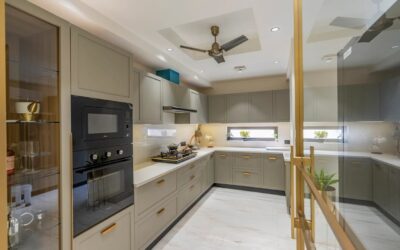
Cabinets eat up to 40 percent of a typical kitchen remodel budget, which makes them the one decision most worth getting right. A modern kitchen cabinet is defined less by a single look and more by a philosophy: clean horizontal lines, minimal ornamentation, and storage engineered to disappear until you need it. Whether you lean warm and woody or cool and monochrome, the same core rules produce a kitchen that looks current and works hard.
Part of our Kitchen Remodeling guide — explore the full guide →
What Defines Modern Cabinetry
Traditional kitchens celebrate detail with raised panels, crown molding, and decorative corbels. Modern cabinetry strips all of that away. The hallmarks are flat slab or minimal Shaker doors, long linear hardware or no visible hardware at all, and an emphasis on uninterrupted surfaces.
Frameless (European-style) construction underpins most modern cabinets. Without the face frame of traditional boxes, drawers and doors sit edge to edge, giving that seamless full-access look and a bit more interior room in every cabinet.
Door Styles That Read Modern
Three door profiles dominate the modern category, and each sets a different mood:
- Flat slab: The purest modern door. No frame, no panel, just a clean face in wood, laminate, or painted MDF.
- Slim Shaker: A Shaker frame narrowed down for a transitional feel that still fits contemporary spaces.
- Handleless slab: Slab doors with routed finger channels or push-latches for a completely uninterrupted front.
If your home blends styles, slim Shaker is the safe bridge. For a strictly modern build, flat slab is the definitive choice.
Finishes and Color Directions
Modern kitchens have moved well past all-white. The two strongest current directions are warm naturals and moody two-tones. Natural oak, walnut, and rift-cut veneers bring warmth and grain without ornamentation, while matte finishes in deep green, charcoal, and navy add drama on lower cabinets and islands.
Matte and super-matte laminates are especially popular now because they resist fingerprints far better than gloss and give a soft, sophisticated surface. High-gloss acrylic still has its place for a sleek, reflective, light-amplifying effect in small kitchens.
Materials and What They Cost
The box behind the pretty door determines how long the cabinet lasts. Here is how the common materials stack up:
- Plywood boxes: The durability benchmark, holding screws and resisting moisture better than particleboard. Worth the upgrade.
- MDF doors: Ideal for painted slab fronts because there is no grain to telegraph and no seams to crack.
- Thermofoil and laminate: A vinyl or melamine skin over MDF, affordable and easy to clean, though heat near ovens can peel cheaper thermofoil.
- Solid wood and veneer: Premium natural looks for slab doors, priced accordingly.
Budget roughly $100 to $280 per linear foot for quality semi-custom modern cabinets, with fully custom running well above that.
Hardware and the Handleless Look
Hardware is punctuation in a modern kitchen. Long tubular bar pulls in matte black, brushed brass, or stainless reinforce the horizontal lines. For a cleaner face, many homeowners choose integrated edge pulls or touch-to-open mechanisms and skip visible hardware entirely.
Whatever you pick, keep it consistent. Mixing three finishes across the room reads as indecision, while a single repeated pull across every drawer and door looks deliberate and calm.
Interior Storage That Works
Modern design hides the mess, so the interior organization is doing real work. Full-extension soft-close drawers let you reach the very back without stooping, and deep pot drawers replace the awkward lower shelves of older kitchens. Corner units, pull-out pantries, and built-in trash and recycling drawers keep countertops clear.
Under-cabinet LED lighting is nearly standard in modern kitchens now. It removes shadows on the counter and, on a dimmer, doubles as ambient evening light that makes the whole space feel finished. Add lighted or vented toe-kicks, integrated charging drawers, and pull-out waste bins, and the cabinetry starts to feel engineered rather than merely assembled. These built-in conveniences are what separate a genuinely modern kitchen from one that only looks the part on the surface.
Frameless vs Face-Frame Construction
The construction style under the doors quietly shapes the whole kitchen. Frameless cabinets, the European standard, attach the doors directly to the box sides, giving full access to the interior and that seamless edge-to-edge look modern design wants. There is no center stile blocking a wide drawer, so you get slightly more usable space.
Face-frame cabinets add a wood frame around the box opening, the traditional American approach. They are sturdy and forgiving during installation, but the frame narrows the opening and interrupts the clean lines. For a strictly modern kitchen, frameless is almost always the better match, both structurally and visually.
Two-Tone and Mixed-Material Designs
One of the strongest current trends is moving away from a single cabinet color. A two-tone scheme, such as warm walnut uppers over matte charcoal base cabinets, adds depth and keeps a large kitchen from feeling flat. A common formula puts the darker or bolder tone on the island and lower run while keeping perimeter uppers light and airy.
Mixing materials works the same way. Pairing a wood-grain laminate with a painted MDF, or adding a single run of glass-front cabinets, breaks up an expanse of identical doors. The key is discipline: two materials and two colors read as designed, while four of each reads as chaotic. Choose one dominant surface and one accent, and let them do the work.
Planning and Buying Smart
Start with function before finish. Map the sink, range, and refrigerator into a comfortable work triangle, then decide how many drawers versus doors your cooking style needs. Order a door sample in your top two colors and view it in your actual kitchen light, because matte greens and warm woods shift dramatically between showroom and home.
A well-chosen modern kitchen cabinet should still look intentional a decade from now. Spend on the box construction and the storage engineering, keep the palette disciplined, and the clean-lined look will outlast whatever color happens to be trending.