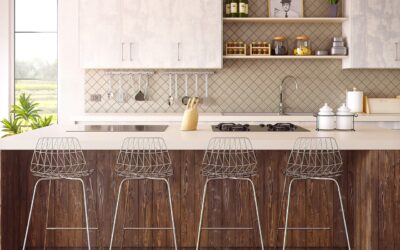
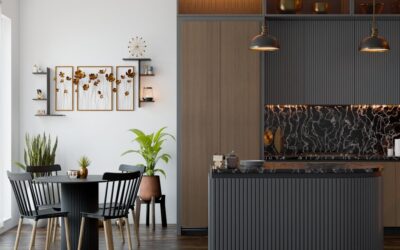
Nothing changes the character of a kitchen faster than the doors. Swap fussy raised-panel doors for clean flat fronts and a dated space suddenly looks a decade newer. Modern cabinet doors strip away ornamentation in favor of flat surfaces, hidden hardware, and honest materials, and after building and refacing hundreds of kitchens, I can tell you the style choices here matter more to the final look than almost anything else in the room.
Part of our Kitchen Remodeling guide — explore the full guide →
This guide walks through the main door styles, the materials and finishes behind them, real-world pricing, and the two paths for modernizing what you already have.
- The Core Modern Door Styles
- Materials That Define the Finish
- Matte vs. Gloss
- What Modern Doors Cost
- Modernizing Existing Cabinets: Two Paths
- Popular Modern Colors and Wood Tones
- Hinges, Reveals, and Soft-Close Hardware
- Measuring and Ordering Replacement Doors
- Making Handleless Doors Work Day to Day
- Getting the Details Right
The Core Modern Door Styles
“Modern” is a family, not a single look. The most common members:
- Slab (flat) doors: A single smooth panel with no frame or profile. The workhorse of modern design, endlessly versatile in wood, laminate, or painted MDF.
- Flat-panel / recessed-panel: A minimal frame around a flat center, sometimes called a Shaker cousin. Slightly softer than a pure slab, it bridges modern and transitional.
- Handleless / push-to-open: No visible hardware at all. Doors open via a tip-on latch or a routed finger groove along the top edge. This is the cleanest, most European look going.
- Glass and aluminum-frame: Thin aluminum frames holding frosted, reeded, or clear glass. Great for upper cabinets and glass-front display runs; the metal frame keeps it crisp.
Handleless designs come two ways. Push-to-open uses a spring mechanism behind the door, while a “gola” or J-channel profile builds a continuous grip channel into the cabinet so you hook your fingers behind the door edge. Both eliminate pulls, but J-channel avoids the occasional double-tap frustration of push latches.
Materials That Define the Finish
The substrate under the finish decides durability and price:
- MDF (painted): The default for painted slab doors. Dense, stable, no wood grain telegraphing through, and it takes paint beautifully. My top pick for a smooth painted modern look.
- Thermofoil: A vinyl film heat-pressed over MDF. Seamless and affordable, though it can be sensitive to high heat next to ovens.
- High-pressure laminate and melamine: Tough, scratch-resistant surfaces available in solids, woodgrains, and stone looks. Excellent value.
- Veneer over MDF or plywood: Real wood face for a genuine walnut, oak, or rift-cut grain, the premium natural option.
- Acrylic / high-gloss: A glass-like acrylic sheet, mirror-smooth, for the boldest modern statement.
Matte vs. Gloss
The sheen of a door is a design decision, not just a preference. Here is how I frame it for clients:
- Matte: Hides fingerprints and minor scratches, reads warm and sophisticated, and photographs well. The dominant trend right now, especially in deep colors and super-matte “fingerprint-resistant” laminates.
- High gloss: Reflective, bright, and expands small kitchens by bouncing light. The trade-off is that gloss shows every smudge and swirl; you will wipe these doors often.
For a household with kids, matte or a textured super-matte laminate is the practical winner. Gloss belongs where the wow factor outweighs the upkeep.
What Modern Doors Cost
Pricing swings widely with material. Rough per-door figures (a standard 15 x 30 in door):
- Painted MDF slab: $30 to $70 per door.
- Laminate or thermofoil slab: $25 to $60 per door.
- Wood veneer slab: $70 to $150 per door.
- High-gloss acrylic: $90 to $200 per door.
- Aluminum-frame glass: $80 to $180 per door.
A typical kitchen has 25 to 40 doors and drawer fronts. Replacing just the fronts on that kitchen lands roughly $1,200 to $5,000 in materials depending on the finish, before labor. That is a fraction of a full cabinet replacement, which is exactly why door swaps are such a popular remodel.
Modernizing Existing Cabinets: Two Paths
If your cabinet boxes are solid, you rarely need to gut the kitchen. You have two real options:
- Reface: Keep the boxes, replace the doors and drawer fronts, and cover the visible cabinet frames with a matching veneer or laminate skin. This gives a fully new look and typically runs $4,000 to $10,000 installed for an average kitchen, a fraction of new cabinetry.
- Replace doors only: Order new slab doors sized to your existing boxes, add matching hinges, and swap them yourself. This is the budget route, often under $2,000 in doors, and a capable DIYer can do it over a weekend.
For the door-only path, measure each opening precisely and note your hinge type; frameless (European) boxes and face-frame boxes use different hinges and overlays. Concealed soft-close hinges from Blum or Grass are the standard for a quiet, modern feel and run about $4 to $8 per hinge.
Popular Modern Colors and Wood Tones
Color and grain do the heavy lifting on a flat door. Right now the strongest looks are warm neutrals, greige, mushroom, and soft off-white, alongside deep saturated tones like forest green, navy, and charcoal on islands or lower runs. Natural wood is back in a big way: rift-cut white oak, walnut, and warm-toned veneers add grain and depth that a painted slab cannot, and they pair beautifully with a matte painted perimeter in a two-tone scheme.
Whatever you choose, order a physical sample and view it vertically under your own lighting. Undertones shift hard between a 2700K warm bulb and a 4000K daylight bulb, and a green-gray that looked perfect on a chip can read cold and flat across a whole wall.
Hinges, Reveals, and Soft-Close Hardware
The mechanics decide whether a modern kitchen feels custom or cheap. Concealed European cup hinges are the standard, and soft-close versions from Blum or Grass, roughly $4 to $8 each, give that quiet, damped shut that reads as quality. On drawers, full-extension soft-close undermount slides do the same job. The single most visible detail is the reveal, the even gap between doors and drawers; aim for a consistent 1/8 to 3/16 inch across the whole run, because on a minimal front the eye has nothing else to judge but that line.
Six-way adjustable hinges let you fine-tune height, depth, and side-to-side after hanging, so budget time to walk the finished kitchen and even out every gap once all the doors are on. That final adjustment pass is what separates a sharp install from a sloppy one.
Measuring and Ordering Replacement Doors
If you are swapping fronts on existing boxes, precise measuring is the whole game. First identify whether your cabinets are frameless (European) or face-frame, because the hinge type and overlay differ. Then:
- Measure each opening’s height and width individually; older boxes drift out of square.
- Decide your overlay, full overlay covers most of the frame and gives the seamless modern look.
- Note the existing hinge cup size (usually 35mm) and its bore location so new doors line up.
- Order one door first as a test fit before committing to the full set.
Get the overlay and hinge type right and a door-only swap transforms the kitchen for a fraction of new cabinetry, often in a single weekend of work.
Making Handleless Doors Work Day to Day
The fully handleless look is the most requested modern detail, but it needs planning to live with. Push-to-open tip-on latches are the cleanest, though they leave finger marks where you press and can double-tap open on a heavy drawer. The J-channel or gola profile builds a continuous grip into the top or side of the cabinet, so you hook your fingers behind the door with no visible hardware and no smudging. For most families the gola channel is the more livable choice.
Whichever you pick, add a couple of small conveniences: matching magnetic catches on the doors you open constantly so they never stick, and a soft-close damper behind every push latch so the door does not bounce back open. Test a single push-latch door for a week before committing the whole kitchen, since some households simply prefer the certainty of a slim pull.
Getting the Details Right
A few things separate a modern kitchen that looks custom from one that looks like a rushed update:
- Keep grain direction consistent, run wood-grain doors vertically on tall units and consider horizontal grain on drawer banks for a deliberate look.
- Mind the reveal, the even gap between doors. Tight, consistent reveals of 1/8 to 3/16 in read as high quality.
- If you go handleless push-to-open, add matching latches to a few doors you open constantly so they never stick.
- Order a sample door before committing to a whole kitchen; color and sheen look different at scale than on a swatch.
Modern cabinet doors are one of the highest-impact, best-value upgrades in a kitchen. Whether you choose a warm matte slab, a dramatic gloss acrylic, or a fully handleless European look, matching the material to how your household actually cooks and cleans is what makes the result last. Pick the finish for real life, nail the reveals and hinges, and the room will look sharp for many years.