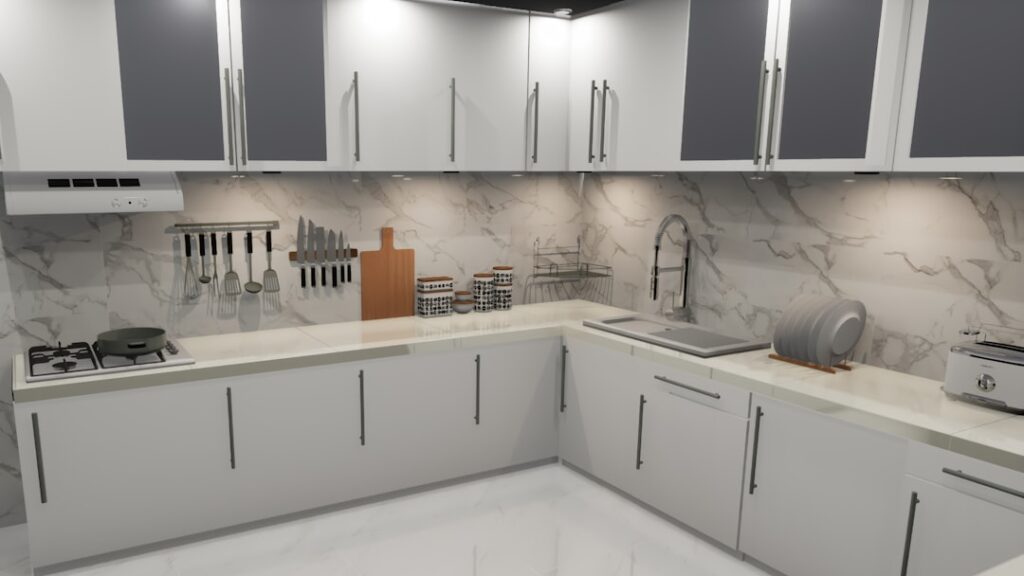
The average mid-range kitchen remodel in the U.S. now runs north of $25,000, a number that stops most homeowners cold. Here’s the part the design magazines skip: you can transform a tired kitchen for a fraction of that if you spend strategically. A successful kitchen reno on a budget isn’t about doing everything cheaply; it’s about knowing which dollars deliver the biggest visual return and which projects you can safely skip. With a smart plan, $3,000 to $5,000 can buy a kitchen that looks like it cost five times as much.
Part of our Kitchen Remodeling guide — explore the full guide →
- Decide What Stays and What Goes
- Paint Cabinets Instead of Replacing Them
- Choose Affordable Countertop Alternatives
- Update the Backsplash for Under $300
- Where It Pays to Splurge
- Smart Ways to Slash Labor Costs
- A Sample $4,000 Budget Breakdown
- Refresh the Flooring Without Replacing It
- Don’t Overlook Paint and Lighting Color
- Final Thoughts
Decide What Stays and What Goes
The fastest way to blow a budget is to demolish things that work. Before you swing a hammer, walk your kitchen and sort every element into keep, refresh, or replace. Solid wood cabinet boxes almost always belong in the “refresh” pile, even when the doors look dated. The layout itself, your sink, range, and fridge locations, should stay put unless they’re genuinely dysfunctional, because moving plumbing and gas is where budgets hemorrhage.
Be honest about what’s cosmetic versus structural. A scratched countertop and yellowed cabinets read as “old kitchen,” but they’re surface problems with affordable surface solutions.
Paint Cabinets Instead of Replacing Them
New cabinets eat 40 to 50 percent of a typical remodel budget, often $10,000 or more. Painting the ones you have costs $200 to $600 in materials and a few weekends of labor. Clean the doors with a degreaser, sand lightly, prime with a bonding primer like Zinsser B-I-N, and finish with a durable enamel such as Benjamin Moore Advance.
Swap the hinges and pulls while you’re at it. A set of modern matte-black or brushed-brass pulls runs $2 to $5 each and instantly modernizes the whole room. New hardware on freshly painted cabinets is the single highest-impact change in any budget kitchen.
Choose Affordable Countertop Alternatives
You don’t need $4,000 of quartz to get a clean, modern surface. Several materials punch well above their price.
- Butcher block: $40 to $60 per linear foot, warm and DIY-friendly to install.
- Laminate (modern patterns): $20 to $50 per square foot installed; today’s options mimic stone convincingly.
- Prefab quartz or granite: $35 to $55 per square foot if you stick to standard sizes.
- Concrete overlay or counter resurfacing kits: under $200 to skin existing counters.
If your current counters are structurally fine, a resurfacing kit from a brand like Giani or Daich can fake the look of stone for a couple hundred dollars and a weekend’s work.
Update the Backsplash for Under $300
A backsplash frames the whole kitchen, and you can install one for the price of a nice dinner out. Peel-and-stick tile from Smart Tiles or similar costs $8 to $15 per square foot and requires no grout, no thinset, and no wet saw. For a more permanent look, classic 3-by-6 white subway tile runs about $0.20 to $0.50 per tile, and a small kitchen’s worth of materials rarely exceeds $150.
This is a true beginner project. Most homeowners can finish a backsplash in a single afternoon with a tile cutter and a level.
Where It Pays to Splurge
Budget renovating doesn’t mean buying the cheapest of everything. A few targeted splurges protect both function and resale value. Put real money into the faucet, since you touch it dozens of times a day, and a quality model from Moen or Delta in the $150 to $300 range lasts decades. Spend on lighting too: under-cabinet LED strips and a statement pendant or two, totaling $100 to $250, dramatically change how the room feels at night.
The sink is worth an upgrade as well. A deep single-basin stainless or composite sink in the $150 to $350 range makes daily use noticeably better and looks far more current than a dated double-bowl.
Smart Ways to Slash Labor Costs
Labor often equals or exceeds materials, so the more you DIY, the further your dollars stretch. Painting, hardware swaps, backsplash, and faucet replacement are all genuinely doable for a motivated homeowner. Reserve professional help for the jobs where mistakes are costly or dangerous, such as electrical, gas lines, and any plumbing behind the wall.
Hunt for materials at the ReStore (Habitat for Humanity’s outlet), at appliance scratch-and-dent sales, and during holiday weekends when home centers discount appliances 20 to 40 percent. A floor-model range with a tiny dent in the side panel can save you $400 and no one will ever notice.
A Sample $4,000 Budget Breakdown
To make this concrete, here’s how a realistic kitchen reno on a budget might allocate $4,000:
- Cabinet paint and primer: $400
- New hardware and hinges: $250
- Butcher block or laminate counters: $1,200
- Peel-and-stick or subway backsplash: $250
- Faucet and sink upgrade: $450
- Lighting (under-cabinet plus pendant): $300
- Paint, flooring refresh, and supplies: $700
- Contingency buffer: $450
Notice the buffer. Every renovation surprises you, and a 10 to 15 percent contingency keeps a single setback from derailing the whole project.
Refresh the Flooring Without Replacing It
Kitchen floors take abuse, but you rarely need to rip them out to make them look new. Luxury vinyl plank that floats over the existing floor runs $2 to $5 per square foot and installs in a weekend with no demolition. For a smaller kitchen, that’s often under $500 in materials for a waterproof, modern floor that clicks together without glue.
If your floor is structurally fine but dated, peel-and-stick vinyl tiles cost even less, often under $1.50 per square foot. Painting an existing vinyl or wood floor with a durable porch-and-floor enamel is the cheapest option of all, transforming the look for the price of a couple gallons of paint and a primer.
Don’t Overlook Paint and Lighting Color
The cheapest transformation in any kitchen is a coat of paint. A couple gallons of quality interior paint, around $80 to $120, can lighten a dark kitchen and make it feel twice as large. Light, neutral walls bounce more light and read as clean and current, while a bold accent on a single wall or the island adds character for almost nothing.
Pay attention to bulb color temperature too. Swapping warm-yellow bulbs for crisp 3000K to 4000K LEDs costs a few dollars per bulb and makes counters, cabinets, and backsplash all look sharper. It’s a near-free upgrade that ties the whole refresh together.
Final Thoughts
A beautiful kitchen has far less to do with your budget than with your priorities. Keep the bones, refresh the surfaces and floors, splurge on the few things you touch daily, and do the safe work yourself. Plan it carefully and a kitchen reno on a budget delivers a space you’re proud of without the five-figure invoice or the months of disruption.