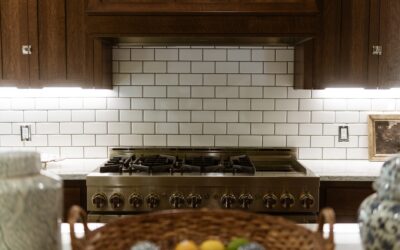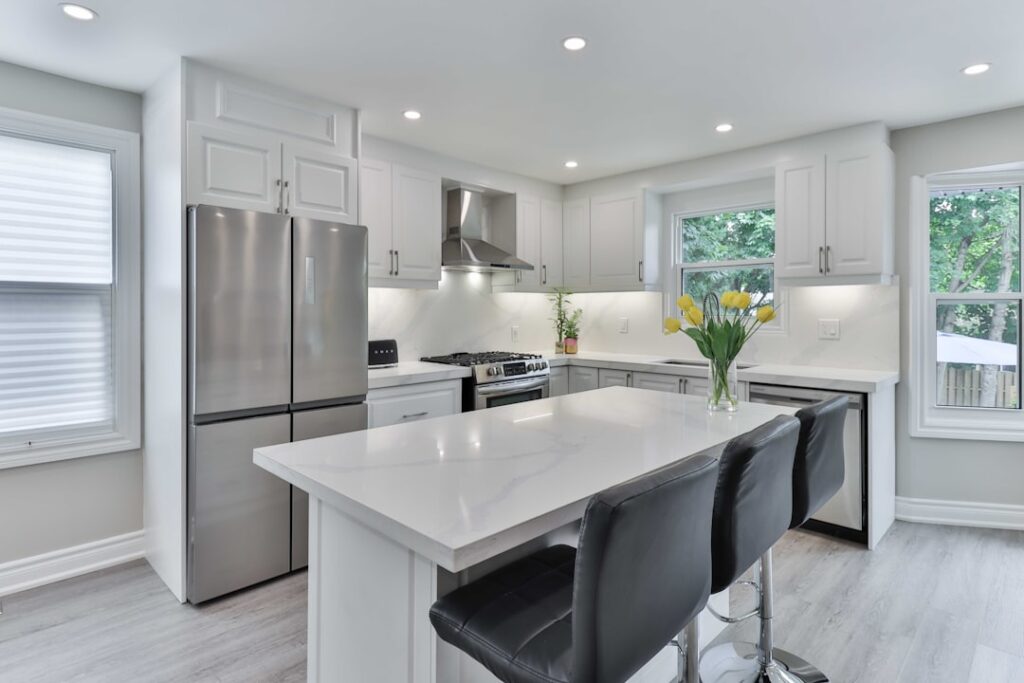
The all-white kitchen that ruled the 2010s is finally on its way out, and the cycle moving in is warmer, moodier, and more textural than anything we have seen since the early 2000s. Today’s kitchen trends emphasize natural wood cabinets, statement-piece range hoods, mixed metal finishes, and large-format porcelain tile that mimics travertine or marble at a fraction of the cost. If you are planning a remodel in 2026 or just want to know which design choices will look dated by 2030, here is the honest read on what is taking off, what is fading, and what is worth your budget right now.
Part of our Kitchen Remodeling guide — explore the full guide →
Warm Woods Are Replacing All-White
The biggest shift in kitchen design is the return of natural wood cabinetry. White oak, walnut, and rift-cut quarter-sawn oak are appearing in 60-70% of high-end remodel portfolios from designers in Atlanta, Dallas, Denver, and the Pacific Northwest.
Specific finishes gaining traction:
- White oak with a natural matte finish (Rubio Monocoat, Bona Naturale)
- Walnut with a hand-rubbed oil finish for that mid-century revival look
- Stained alder in warm honey tones replacing painted maple
- Reclaimed barn wood as a single accent island base
Painted cabinets are not gone — but the trend has shifted from crisp white (Sherwin-Williams Pure White SW 7005) to warmer off-whites (Benjamin Moore White Dove OC-17) and earthy greens like Farrow & Ball Calke Green or Sherwin-Williams Pewter Green.
Two-Tone and Three-Tone Cabinet Combinations
Single-color kitchens are giving way to mixed material designs. The most popular combination right now: walnut or white oak base cabinets paired with painted upper cabinets in cream, sage green, or charcoal. A contrasting island in deep navy (Benjamin Moore Hale Navy HC-154) or matte black anchors the room.
For a typical 12×14 kitchen, expect to pay $18,000-$32,000 for semi-custom mixed-material cabinets from KraftMaid, Medallion, or Wellborn. Fully custom from a local cabinet shop runs $30,000-$60,000.
Statement Range Hoods
The range hood has become the kitchen’s focal point. Plain stainless steel chimney hoods are being replaced by:
- Plaster or drywall hoods built into the cabinetry, painted to match the wall
- Wood-clad hoods with metal strapping, often in oak or walnut to match cabinets
- Curved decorative hoods reminiscent of Provençal kitchens
- Aged brass, blackened steel, or hammered copper for industrial-luxe looks
Custom plaster hoods run $1,500-$3,500 from a millwork shop. Production decorative hoods from ZLINE, Vent-A-Hood, or Best by Broan land at $800-$2,500 for liner inserts plus the decorative shell.
Mixed Metal Finishes
Designers have officially declared the matchy-matchy single-finish kitchen over. Today’s kitchen trends embrace mixing two or three metals across faucets, cabinet hardware, lighting, and appliance handles. Common combinations that work:
- Aged brass cabinet pulls + matte black faucets + brushed nickel pendants
- Polished nickel faucet + unlacquered brass pulls + black industrial pendants
- Matte black hardware + polished chrome faucet + warm brass lighting
The trick is to repeat each finish in at least two places so it looks intentional. A single brass pendant over a kitchen full of nickel hardware looks like a mistake.
Countertop Trends
Quartz still dominates, but the popular looks have shifted significantly:
- Veined whites and creams: Cambria Brittanicca, Caesarstone Statuario Maximus, and MSI Calacatta Laza all sell out at $70-$110 per sq ft installed.
- Warm taupes and creams: Replacing cool grays. Silestone Cala Blue and Ethereal Glow are top sellers.
- Honed and leathered finishes: Polished is out for some buyers. Honed quartzite and leathered granite add tactile depth.
- Natural stone revival: Marble, soapstone, and quartzite are making a comeback in higher-end projects.
- Waterfall edges: Still popular on islands but executed in warmer materials, not stark white.
Butcher block continues as a budget alternative for a single section ($30-$70/sq ft installed), and concrete countertops are growing among design-forward homeowners willing to tolerate maintenance.
Large-Format Tile and Slab Backsplashes
The 3×6 subway tile that defined kitchens for over a decade is being pushed aside. Today’s backsplashes lean toward:
- Full-height slab backsplashes matching countertop quartz or marble
- Large-format porcelain tile (24×48 inches) with thin grout lines
- Zellige or handmade Moroccan-style tile in earthy tones
- Vertical stack subway tile in glossy white as a budget update
Slab backsplashes cost $40-$90 per sq ft installed. Large-format porcelain runs $15-$40 per sq ft. Zellige tile from Clé or Riad sits at $25-$45 per sq ft, plus higher labor for the imperfect, hand-cut edges.
Smart Kitchen Tech Worth Buying
Smart kitchen integration has matured past gimmicks. The features actually worth installing:
- Touchless faucets (Moen Arbor Smart Faucet, Delta VoiceIQ) — $400-$700
- Induction cooktops with built-in ventilation (Bosch Benchmark, Thermador Liberty) — $3,500-$6,500
- Steam ovens (Wolf, Miele, Anova) — $2,500-$8,000
- Smart refrigerators with internal cameras (LG InstaView, Samsung Family Hub) — $2,800-$5,500
- Under-cabinet motion-activated LED lighting — $300-$800 for a kitchen install
Skip touchscreen refrigerator panels and Wi-Fi dishwashers — they offer minimal real-world utility and become obsolete within 5-7 years as software support drops.
Flooring Trends in the Kitchen
Hard flooring continues to dominate kitchens, but the popular materials have shifted:
- Wide-plank engineered hardwood (7-10 inch widths) in white oak or walnut
- Large-format porcelain tile that mimics natural stone (Daltile Marble Attache, MSI Eden)
- Luxury vinyl plank in herringbone patterns from COREtec and Karndean
- Honed limestone or travertine for higher-end builds
Tile remains the safest waterproof option in busy kitchens. Engineered hardwood is acceptable with quick spill response. LVP is the budget hero, with COREtec Pro Plus running $4-$7 per sq ft installed.
Kitchen Layouts and Islands
Open-concept kitchens are still preferred, but the configuration has evolved:
- Bigger islands: 10-12 feet long, often with seating for 4-6 stools
- Double islands: Becoming a status feature in 400+ sq ft kitchens
- Hidden pantries: Walk-in pantries behind a hinged cabinet door
- Coffee and beverage stations: Dedicated 24-36 inch zones with built-in fridges and water lines
- Smaller “kitchen rooms”: A backlash to fully open plans, with broader doorways but a defined kitchen footprint
What to Skip Right Now
Several once-popular features are being avoided in 2026 remodels:
- All-white kitchens with cool gray accents (overdone, dating fast)
- Open shelving as the only upper storage (impractical for daily use)
- Gray-stained hardwood floors (cycle is ending)
- Travertine-look LVP that obviously photographs as plastic
- Mass-market shaker cabinets in builder-grade thermofoil
- Single-bowl undermount sinks in undersized 30-inch sink bases (32-36 inches is now standard)
Pick the trends that match your home’s architecture and your honest cooking style. Trends fade in 5-7 years, but quality cabinetry, real materials, and proportionate layouts age gracefully no matter what design magazines feature next year.