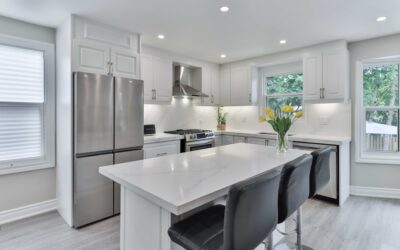
Cabinets set the tone for the entire kitchen — they are the largest visual element in the room and the biggest line item in most remodels, so getting the style right matters. The current kitchen cabinet trends are moving decisively away from the all-white, cool-gray look that dominated the last decade and toward warmth, texture, and personality. Homeowners are embracing color, mixing door styles, and treating cabinet hardware as jewelry for the kitchen. At the same time, the biggest shift is happening inside the boxes, where smart organization has become just as important as the finish on the doors. Here is what is defining kitchen cabinetry right now.
Part of our Kitchen Remodeling guide — explore the full guide →
- Warm and Moody Colors Take Over
- Slab and Shaker Doors Dominate
- Two-Tone and Contrasting Islands
- Statement Hardware
- Smart Interior Organization
- Texture, Fluting, and Natural Materials
- Open Shelving Used Sparingly
- The Return of the Range Hood as a Focal Point
- Refacing and Painting as Budget Updates
- Putting the Trends Together
Warm and Moody Colors Take Over
The crisp white kitchen is giving way to richer, warmer palettes. Deep greens, warm earthy tones, soft clay and mushroom neutrals, and moody navy and charcoal blues are everywhere. Many homeowners keep uppers light and airy while grounding the space with a saturated color on the lower cabinets or the island. Natural warm-toned wood — walnut, white oak, and honey-stained species — is having a major resurgence, celebrated for its visible grain and organic feel. If all-white feels dated to you, you are sensing this shift correctly.
Slab and Shaker Doors Dominate
Two door styles lead the market, each with a different vibe. Their popularity comes down to clean, timeless lines:
- Shaker doors — the recessed flat-panel with a simple square frame remains the most versatile and enduring choice, fitting traditional, transitional, and modern-farmhouse kitchens alike.
- Slab (flat-panel) doors — completely flat, frameless fronts define the modern and European look. In natural wood veneer they show off gorgeous grain; in a matte painted finish they read sleek and minimal.
Ornate raised-panel and heavily detailed doors have fallen out of favor as the trend leans cleaner and simpler.
Two-Tone and Contrasting Islands
Mixing finishes is one of the strongest current looks. A two-tone kitchen pairs one color on the perimeter cabinets and a contrasting color or material on the island — think white or light oak perimeter cabinets with a deep green or navy island, or natural wood uppers over painted lowers. This approach adds depth, breaks up a large expanse of cabinetry, and lets you use a bold color without committing the whole room to it. The island increasingly reads as a statement piece rather than a matching afterthought.
Statement Hardware
Cabinet hardware has become a deliberate design accent rather than an utilitarian add-on. The trends here include:
- Warm metals — brushed brass, champagne bronze, and matte black are replacing the shiny chrome and brushed nickel of years past.
- Mixed metals — pairing, say, black pulls with brass faucets for a curated, layered look.
- Longer pulls and oversized hardware that make a bolder statement on drawers and doors.
- Integrated and hidden pulls on slab-door kitchens for a seamless, handleless minimalist finish.
Swapping hardware is also the cheapest way to refresh existing cabinets without a full remodel.
Smart Interior Organization
The most functional trend is invisible from the doorway. Buyers now expect cabinets to be engineered for storage, not just looks. Popular built-in features include deep pot-and-pan drawers instead of low doors, pull-out pantry towers, tray dividers, hidden trash and recycling pull-outs, spice organizers, and appliance garages that hide small appliances behind a lift-up door. Full-height and floor-to-ceiling cabinetry maximizes vertical space and reduces the dust-collecting gap above the uppers. This focus on organization reflects how much people value a kitchen that works as hard as it looks.
Texture, Fluting, and Natural Materials
Adding tactile interest is a defining thread. Fluted and reeded cabinet fronts — vertical grooved detailing — bring subtle texture and a boutique feel, often used on an island or a panel to add depth. Natural materials in general are on the rise, from the return of real wood grain to stone-look details, all part of a broader move toward warmth and craftsmanship over cold, flat perfection.
Open Shelving Used Sparingly
Open shelving had a big moment, and it has settled into a more measured role. Rather than replacing all the upper cabinets, homeowners now mix a section or two of open wood shelving into an otherwise closed-cabinet kitchen, often flanking a window or a range hood. This gives the airy, display-friendly look without sacrificing the enclosed storage that keeps a kitchen tidy. Floating wood shelves in a warm species pair naturally with the broader move toward organic materials, and glass-front cabinets offer a middle ground — a curated display behind a door that still keeps dust out.
The Return of the Range Hood as a Focal Point
The cooking zone is increasingly a design centerpiece. Custom wood or plaster range hoods, statement metal hoods in brass or blackened steel, and hoods wrapped to match the cabinetry all draw the eye and anchor the kitchen. Paired with cabinets that flank the range, the hood becomes architecture rather than an appliance. This ties directly into the trend toward warmth and craftsmanship, replacing the plain stainless microwave-over-range look with something intentional and characterful.
Refacing and Painting as Budget Updates
Not every kitchen needs new cabinets to feel current. Two of the most cost-effective ways to ride these trends are refacing and painting. Refacing keeps your existing cabinet boxes and replaces just the doors, drawer fronts, and hardware, letting you shift from dated raised-panel oak to clean shaker or slab fronts in a fraction of a full remodel’s cost. Repainting existing cabinets in a warm, on-trend color and swapping to updated warm-metal hardware can transform the room for a modest investment. Adding pull-out organizers inside the existing boxes brings the interior up to modern standards too. These approaches let you follow the current kitchen cabinet trends without gutting the space.
Putting the Trends Together
You do not have to chase every trend to feel current. A safe, timeless update follows the through-line of all these current kitchen cabinet trends: warmer tones, clean shaker or slab doors, a two-tone island, updated warm-metal hardware, and smarter interior storage. If you want to invest cautiously, keep the perimeter neutral and let color, hardware, and texture carry the personality — those elements are easier to change as tastes evolve. The overall direction is clear: kitchens are getting warmer, more natural, more organized, and far more personal than the uniform white boxes of the recent past. Whether you are planning a full remodel or a budget refresh, leaning into warm color, clean door lines, and smarter storage will keep your kitchen feeling current for years, while still leaving room to make it unmistakably your own.