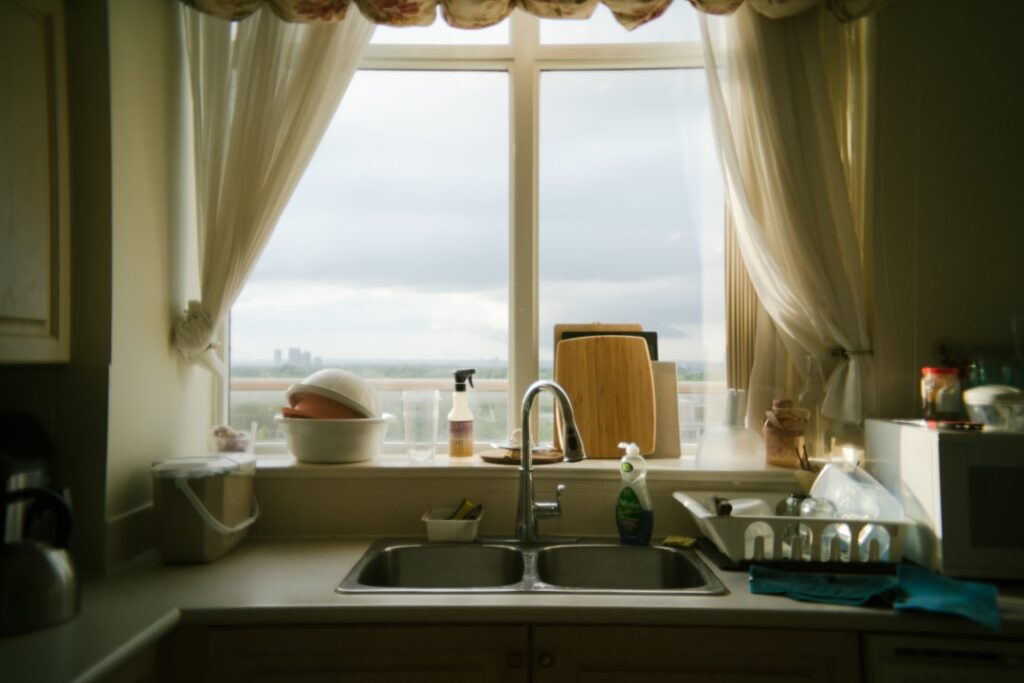
Choosing kitchen window curtains over the sink is trickier than dressing any other window in the house, because this spot fights constant moisture, splashes, grease, and heat from cooking. The wrong fabric ends up limp, stained, or mildewed within a season. The right treatment adds softness and privacy while shrugging off daily kitchen abuse. This guide covers the smartest styles, fabrics, and lengths for the sink window, plus practical tips on hardware, cleaning, and real costs so you get a look that lasts.
Part of our Kitchen Remodeling guide — explore the full guide →
What Makes the Sink Window Different
The window above the sink lives in the messiest zone of the kitchen. Water splashes up, steam rises from the faucet, and airborne grease settles on anything nearby. Long, flowing drapes that pool on the floor are a poor fit here — they’d sit in the spray zone and dangle into the sink. Instead, this window calls for short, functional treatments that clear the counter and resist moisture.
Function comes first, but light matters too. Because the sink is where you spend real time, you want a treatment that softens the view and adds privacy without blocking the natural light that makes dish duty bearable.
Best Curtain Styles for Over the Sink
A handful of styles are proven winners above the sink because they stay short, tidy, and out of the water:
- Cafe curtains: The classic choice. They cover just the bottom half of the window for privacy while leaving the top open for light. Hung from a tension rod, they’re endlessly adjustable.
- Valance: A short fabric topper covering the upper 12 to 18 inches. Adds color and softness with zero interference at counter level.
- Tier curtains: Short panels that hang to the sill or just below. They frame the window and can be tied back for more light.
- Roman shades: A tailored, structured look that pulls up and out of the way. Choose a moisture-friendly fabric and a cordless lift for safety.
- Cafe-and-valance combo: Pairs a top valance with bottom cafe curtains for a finished, layered look.
For most sink windows, cafe curtains or a simple valance deliver the best balance of style, light, and practicality.
Choosing Moisture-Smart Fabrics
Fabric choice determines whether your curtains last five years or five months. Skip heavy, absorbent materials near the sink and lean toward light, washable, quick-drying options.
- Cotton or cotton blends: Breathable, easy to launder, and available everywhere. A poly-cotton blend resists wrinkles and dries faster.
- Linen blends: Airy and casual, but pure linen wrinkles heavily — a blend holds up better in humidity.
- Polyester: The most practical near water. It resists mildew, dries fast, and wipes clean. Ideal for the splash zone.
- Sheer synthetics: Filter light beautifully and dry almost instantly, though they offer less privacy.
Avoid silk, velvet, and heavy lined drapes here — they trap moisture, absorb odors, and are a pain to clean. Whatever you pick, confirm it’s machine washable so you can toss it in on a warm gentle cycle when grease builds up.
Getting the Length and Fit Right
Length is where sink curtains most often go wrong. The fabric should never reach the counter or the faucet. A few reliable guidelines:
- Cafe curtains: End at or just above the sill, keeping a clear gap above the countertop.
- Valance: Cover the top 12 to 18 inches of the window frame — no lower.
- Tier curtains: Stop at the windowsill, not below it, so they don’t sit in splash range.
Measure the window width and add 1.5 to 2 times that number in fabric width for a gathered, full look. For a flatter, modern panel, 1 to 1.5 times the width is enough. Standard tension rods span 16 to 48 inches, which fits most sink windows without drilling.
Hardware and Hanging Options
You don’t always need to drill. A spring-loaded tension rod fits inside the window frame, holds light cafe curtains easily, and installs in seconds — perfect for renters. For heavier treatments or a more polished look, a mounted rod on brackets gives you the option to extend the curtains slightly past the frame, which makes a small window look wider.
For Roman shades, choose a cordless or motorized lift, especially in homes with kids. Match the rod finish to your kitchen hardware — brushed nickel, matte black, or brass — so the window feels intentional rather than an afterthought.
Color and Pattern Ideas
The sink window is a natural focal point, so it’s a low-risk place to add personality. A few directions that consistently look good:
- Crisp white or cream for a clean, timeless kitchen that stays bright.
- Gingham, ticking stripe, or small floral for cottage and farmhouse warmth.
- Bold botanical or geometric prints as a valance to inject color without overwhelming the room.
- Sheer neutrals when you want privacy and light more than pattern.
Tie the color to something already in the room — the backsplash, a rug, or your dish towels — so the window reads as part of a cohesive design.
Cleaning and Maintenance
Kitchen curtains need washing more often than curtains elsewhere — plan on every four to eight weeks. Grease and cooking film build up fast. Machine wash cotton and polyester on warm, gentle, and hang or tumble dry low to avoid shrinkage. Give them a quick shake-out and vacuum with a brush attachment between washes to lift dust. Buying two sets lets you rotate one while the other is in the laundry.
What It Costs
Dressing a sink window is refreshingly affordable. Ready-made cafe curtains or a valance run $10 to $40 per panel at home stores. A tension rod costs $6 to $20, and a mounted rod with brackets $15 to $50. Custom Roman shades in a quality fabric climb to $80 to $250 depending on size and lift. For most kitchens, a complete cafe-curtain or valance treatment lands under $60 — one of the cheapest high-impact updates you can make.
Alternatives to Traditional Curtains
Fabric isn’t your only option above the sink, and in high-splash setups a hard treatment can make more sense. Consider these alternatives when a curtain feels impractical:
- Faux wood or vinyl blinds: Wipe clean in seconds and tolerate moisture far better than real wood. They give precise light control and cost $20 to $60 for a small window.
- Cellular (honeycomb) shades: Filter light softly and add a bit of insulation, though they need occasional dusting.
- Window film: A frosted or decorative film adds privacy while leaving the sill completely clear — ideal above a deep sink where nothing should hang.
- Cafe-style shutters: Half-height plantation shutters offer a built-in, upscale look and shrug off humidity entirely.
Many homeowners combine approaches — a simple valance for softness over a functional blind or film for privacy and light control. That layered strategy gives you the warmth of fabric without sacrificing the practicality the sink zone demands.
Frequently Asked Questions
What length should curtains be over a kitchen sink?
Keep them short — cafe curtains and tiers should end at or just above the sill, and valances should cover only the top 12 to 18 inches. Nothing should reach the counter, faucet, or floor.
What is the best fabric for kitchen curtains over the sink?
Polyester and cotton or cotton-poly blends are best because they resist moisture, dry quickly, and machine wash easily. Avoid silk, velvet, and heavy lined drapes that trap grease and mildew.
Do I need curtains over the kitchen sink at all?
Not necessarily, but they add privacy, soften hard surfaces, and filter harsh light. If your window faces a neighbor or the street, even a simple cafe curtain or valance is worth adding.
How often should I wash kitchen sink curtains?
Every four to eight weeks, since grease and cooking film accumulate quickly in this zone. Machine wash washable fabrics on warm and gentle, and buy two sets so you can rotate them.
Can I hang curtains without drilling?
Yes. A spring-loaded tension rod fits inside most window frames and holds lightweight cafe curtains without any hardware or holes — ideal for renters and quick updates.