A wobbly, cracked, or permanently stained toilet seat is one of those small annoyances you tolerate for months before finally fixing it in 15 minutes. A kohler toilet seat replacement is genuinely one of the easiest bathroom upgrades there is, no plumber, no shutting off water, just a screwdriver and the right seat. The trick is buying the correct shape and hinge style the first time so you don’t make a second trip. This guide walks you through measuring, choosing, and installing so you get it right on the first try.
Part of our Bathroom Remodeling & Flooring guide — explore the full guide →
First, Identify Your Seat Shape
Toilet seats come in two primary shapes, and getting this wrong is the number one reason people return them.
- Round: The bowl measures about 16.5 inches from the seat bolts to the front edge. Common in older homes and small bathrooms.
- Elongated: The bowl measures roughly 18.5 inches, an oval shape that’s now the more common installation.
Measure your bowl before ordering. Lay a tape from the center of the two mounting-bolt holes at the back to the tip of the bowl at the front. If it’s around 16.5 inches, buy round; near 18.5 inches, buy elongated. Kohler labels every seat clearly with its shape.
Match the Hinge and Features
Kohler builds several seat lines, and part of the appeal is their hinge technology. Know which you want before buying.
Quick-Release Hinges
Kohler’s Quick-Release system lets you pop the entire seat off the hinge with a squeeze of two buttons, so you can deep-clean around the bolts, no more grime trapped where the seat meets the bowl. This is worth prioritizing if easy cleaning matters to you.
Quiet-Close (Soft-Close)
Instead of slamming, a Quiet-Close seat lowers itself slowly and silently. Once you live with one, a slamming lid feels barbaric. Most mid-range and premium Kohler seats include both Quiet-Close and Quick-Release together.
Grip-Tight Bumpers
These rubber bumpers keep the seat from shifting side to side, eliminating the annoying wobble that develops on cheap seats.
What You’ll Spend
Kohler seats span a wide range depending on features and material:
- Basic polypropylene, round: $25 to $40
- Quiet-Close elongated with Quick-Release: $40 to $70
- Premium models with reinforced hinges or nightlights: $70 to $120
Most homeowners land in the $40 to $70 sweet spot, which buys both soft-close and quick-release in either shape.
Tools You Need
- A flathead or Phillips screwdriver
- An adjustable wrench or pliers for stubborn nuts
- Penetrating oil if the old bolts are corroded
- A rag and disinfectant to clean the newly exposed area
Removing the Old Seat
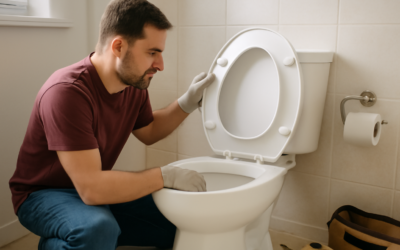
Look at the back of your current seat for two bolt caps. Flip them open with a screwdriver to reveal the bolts.
- Hold the nut underneath the bowl with a wrench and turn the bolt from the top with your screwdriver.
- If the plastic bolts spin freely without loosening, they’ve fused, cut them off with a hacksaw or an oscillating multi-tool, protecting the porcelain with tape.
- For metal bolts locked with rust, spray penetrating oil, wait ten minutes, then work them loose.
- Lift the old seat away and scrub the exposed mounting area, this is the only time you’ll reach it easily.
Installing the New Kohler Seat
Kohler’s design makes this the satisfying part.
- Set the new seat’s hinges over the two bolt holes at the back of the bowl.
- Drop the included bolts through the hinges and holes; Kohler often uses a top-tightening design so you don’t have to reach underneath.
- Hand-thread the nuts on from below, then snug them with the wrench, firm but not overtightened, over-cranking cracks the hinge.
- Sit on the seat and shift your weight, if it wobbles, tighten a quarter turn more or adjust the Grip-Tight bumpers.
- Snap the bolt caps closed and test the soft-close by lifting and releasing the lid.
Troubleshooting Common Snags
A few issues trip people up. If the new seat sits too far forward or back, you likely bought the wrong shape, double-check round versus elongated. If the seat still shifts after tightening, the bumpers may need to be repositioned or the top-mount hinge isn’t fully seated in the bolt slot. And if a Quiet-Close lid slams anyway, the damper hinge may have been forced past its stop; let it move only under its own gentle resistance.
Matching the Seat to Your Kohler Toilet
If you own a Kohler toilet, buying a matching Kohler seat gets you a color and contour that line up perfectly with the bowl. Kohler finishes like Biscuit, Almond, and various whites are notoriously hard to match with off-brand seats, a generic white often reads slightly too blue or too gray against a Kohler bowl. Check the model number stamped inside your tank or on the bowl and cross-reference Kohler’s seat compatibility so the color and shape are an exact match. For popular models like the Cimarron, Highline, and Wellworth, Kohler lists the recommended seat right on the spec sheet.
Material matters too. Most Kohler seats are molded polypropylene, which resists staining and cleans easily. A few premium lines use compression-molded wood with a painted finish for a more traditional, solid feel, though these cost more and can chip if dropped. For a busy family bathroom, the durable plastic seats are the practical pick; for a formal powder room, the heavier wood-core option adds a touch of luxury.
How Long a Seat Should Last
A quality Kohler seat should give you five to ten years of daily use before the hinges loosen or the finish dulls. Signs it’s time to replace include a seat that won’t stay tight no matter how you adjust it, hairline cracks around the bolt holes, a soft-close mechanism that no longer dampens, or staining that won’t scrub away. Because the swap costs so little and takes so little time, there’s no reason to live with a wobbling or discolored seat. Keep the original bolt caps and any adjustment tools that came in the box, and the next replacement will go even faster.
Why Kohler Is Worth the Premium
Keep the whole job clean and simple by gathering your supplies before you start. Have the new seat, a screwdriver, an adjustable wrench, a hacksaw or multi-tool for stuck bolts, penetrating oil, and disinfecting wipes within reach. Working through the steps in order, remove, clean, mount, adjust, test, means you finish in one uninterrupted go rather than making a mid-project trip to the hardware store. A little preparation turns this into one of the most satisfying quick wins in home maintenance.
You can buy a generic seat for $15, but it’ll wobble, stain, and its hinges will yellow and crack within a year or two. A kohler toilet seat replacement costs a bit more up front and rewards you with quieter operation, a seat that lifts off for real cleaning, and hardware that survives daily use for years. Measure your bowl, pick the right shape and hinge, and you’ll turn a nagging bathroom annoyance into a quarter-hour weekend win.
If you’re upgrading several bathrooms, buy the seats together and confirm each bowl’s shape and bolt spread, elongated in the main bath, round in a compact powder room, so you don’t return a seat that overhangs or falls short. Standardizing on the same Kohler line also keeps the soft-close feel and finish consistent from room to room. For the cost of a nice dinner out, you can refresh every toilet in the house in one afternoon, and the quiet, wobble-free result is something you’ll appreciate every single day.