That bare, root-choked circle under your shade tree is one of the trickiest spots in the yard, and it is also where most homeowners accidentally kill the very tree they are trying to beautify. When you landscape around trees the right way, you work with the root system and the shade instead of fighting them, choosing shallow-rooted plants, mulching correctly, and never piling soil against the trunk. Done well, the result turns a problem area into one of the prettiest beds on the property.
The reason this spot trips up so many people is that our instincts work against us here. When we want to make a bed, we dig, we amend, we add soil, we build things up, and every one of those instincts is exactly wrong under a mature tree. What looks like an improvement to us reads as an assault to the tree, whose survival depends on an undisturbed layer of oxygen-hungry feeder roots sitting just beneath the surface. The homeowner who lovingly builds a raised, soil-filled flower ring around a beloved maple is often the one who watches it decline over the next few years without ever connecting the two events. So the first rule of this project is counterintuitive: do less. Disturb less soil, add less material, and work with the conditions the tree has created rather than trying to override them. Once you accept that constraint, the rest becomes straightforward, and the sections below show you exactly which plants, mulching methods, and finishing touches turn that tricky zone into an asset.
- Understand the Root Zone First
- The Fatal Mistake: Volcano Mulching
- Choose the Right Plants for Shade and Dry Soil
- Plant Without Harming the Tree
- Alternatives When Nothing Will Grow
- Ongoing Care
- Edging and Finishing the Bed
- Trees That Are Especially Tricky
- Sizing the Mulch Ring and Setting Safe Planting Distances
Understand the Root Zone First
Before you plant a single thing, you need to respect how a tree actually grows. The majority of a mature tree’s feeder roots live in the top 12 to 18 inches of soil and extend out to the drip line and beyond, not deep down as many people assume. Those roots need oxygen and water, and they are easily damaged by digging, compaction, and smothering.
This changes everything about how you plant. Deep digging severs roots and invites disease. Adding more than a couple inches of soil over the root zone suffocates the roots and can kill a big tree over a few seasons. The safest approach is minimal disturbance: small planting holes, shallow-rooted plants, and no grade changes under the canopy.
The Fatal Mistake: Volcano Mulching
Walk through any suburb and you will see mulch piled a foot high against tree trunks in a cone shape. This so-called volcano mulching is one of the worst things you can do. Mulch against the bark traps moisture, invites rot and pests, and encourages girdling roots that slowly strangle the tree.
Do the opposite. Spread mulch in a wide, flat ring 2 to 3 inches deep, and pull it back several inches from the trunk so the root flare, the point where the trunk widens into roots, stays visible and dry. A proper mulch ring conserves moisture, moderates soil temperature, and eliminates the string-trimmer damage that comes from mowing right up to the bark. Think doughnut, not volcano.
Choose the Right Plants for Shade and Dry Soil
Under a tree you face two challenges at once: shade and dry, root-filled soil that competes for every drop of water. The plants that thrive there are tough shade lovers with shallow roots.
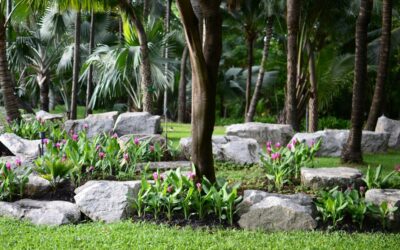
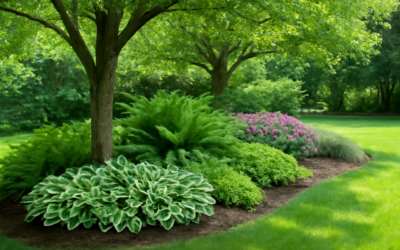
- Hostas: The classic choice, thriving in shade with bold foliage in dozens of sizes.
- Ferns: Native and ornamental ferns love the cool, shaded root zone.
- Astilbe and heuchera: Add color and texture where flowers are scarce.
- Vinca, sweet woodruff, and ajuga: Spreading ground covers that knit the bed together.
- Spring bulbs: Daffodils and crocus bloom before the canopy leafs out and steals the light.
Plant small. Use quart-size or 4-inch nursery plants and dig only the small holes they need, tucking them between roots rather than hacking through them.
Plant Without Harming the Tree
Technique matters more here than anywhere else in the garden. Never build a raised bed of soil over the root zone to plant into; even a few inches of added soil across the whole area can suffocate roots. Instead, work with the existing grade, digging individual holes just big enough for each plant and slipping them between the larger roots you encounter.
If you hit a root thicker than an inch or two, move over and plant somewhere else rather than cutting it. Water the new plants in well, since they are competing with a thirsty tree, and be prepared to water the bed more often than an open bed during the first season while everything establishes.
Alternatives When Nothing Will Grow
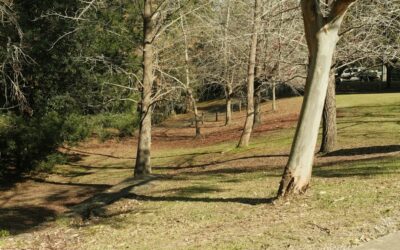
Under a dense-canopy tree like a maple or a mature evergreen, shade and root competition can be so severe that even shade lovers struggle. When that is the case, stop fighting it. A simple, wide mulch ring is clean, attractive, and genuinely good for the tree.
You can also set container plantings on the surface, letting you grow color without disturbing a single root, and move the pots when you want a change. A curved bed edge, a bench, or a few large stones can make that mulched area look intentional and finished rather than like a spot where you gave up.
Ongoing Care
Once the bed is planted, maintenance is light but specific. Refresh the mulch ring each spring to keep it at 2 to 3 inches, always pulling it back from the trunk. Hand-pull weeds rather than tilling, which would tear feeder roots. Water deeply during dry spells, remembering the plants and the tree are drinking from the same soil.
Watch the tree itself for stress, thinning leaves, early fall color, or dieback can signal you disturbed too many roots or piled mulch too high. Correct course quickly.
Edging and Finishing the Bed
A defined edge is what separates a planted tree ring that looks intentional from one that looks like a weedy afterthought. Cut a clean, shallow trench around the bed with a spade to create a crisp border, or install a low edging of steel, stone, or brick set at grade so you can mow right up to it. Avoid the tall plastic or rubber tree rings that trap moisture against the trunk and look cheap.
A gentle curve reads as more natural than a perfect circle, especially under a spreading canopy. Repeat the same mulch and edging style you use elsewhere in the yard so the tree beds tie into the overall design rather than standing out as isolated islands. A few well-placed stones, a shepherd’s hook with a lantern, or a small bench can turn the space into a genuine feature. The finishing touches cost little and make the whole planting look professionally done.
Trees That Are Especially Tricky
Some trees make underplanting far harder than others, and knowing which ones you are dealing with saves a lot of wasted effort. Maples, especially Norway and silver maples, have shallow, greedy surface roots and dense shade that starve almost anything planted beneath them. Beeches and mature evergreens like spruce and pine cast such deep shade and drop such acidic, root-filled litter that few plants survive.
Black walnut is a special case: it releases a compound called juglone that is toxic to many plants, so tomatoes, azaleas, and numerous perennials simply will not grow under it. For these difficult trees, lean on the toughest shade lovers, ferns, certain hostas, and native woodland ground covers, or accept a clean mulch ring and container plantings as the smarter solution. Fighting a maple or a walnut with delicate perennials is a losing battle. Handled with care, the space beneath your trees becomes a lush, layered garden that flatters the tree instead of endangering it, and that is the whole goal when you set out to landscape around trees.
Sizing the Mulch Ring and Setting Safe Planting Distances
Getting the geometry right protects the tree far more than any plant choice. On a young tree, size the mulch ring to at least a 3-foot radius from the trunk, and on an established shade tree extend it out to the drip line if you can, since every square foot of bed you create is a square foot of turf that is no longer stealing water and choking roots. Keep the ring an even 2 to 3 inches deep and, critically, leave a 3-to-6-inch gap of bare soil around the trunk so the root flare breathes. As a rule of thumb, hold all digging at least 3 to 4 feet back from the trunk of a mature tree, because the structural roots closest to the base are the ones that anchor the whole canopy, and severing them invites both decline and windthrow.
Within that safe zone, match your groundcover to the light the canopy actually casts. For deep, dry shade under a maple or spruce, wild ginger, sweet woodruff, and epimedium tolerate root competition and knit together in two to three seasons, spreading roughly 12 to 18 inches per clump. In part shade at the canopy edge, foamflower and creeping Jenny fill in faster. Set these small plugs 10 to 12 inches apart, water them through the first summer at least twice a week, and expect full coverage by the second or third year rather than the first, since everything under a tree grows slower while it fights for moisture and light.