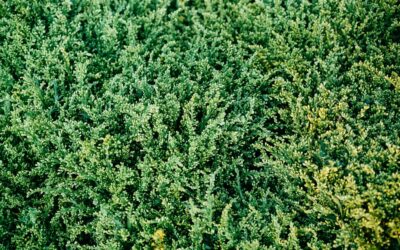
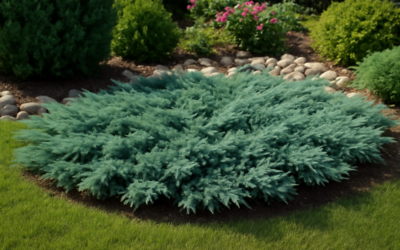
When a client points to a bare, sun-baked slope that nothing will hold and no mower can reach, creeping juniper is usually the first plant I reach for. Learning to landscape creeping juniper well solves some of the most stubborn problems in a yard: erosion on a bank, weeds in a hot strip along the driveway, and dead zones where lawn refuses to grow. Juniperus horizontalis is a low, spreading evergreen that hugs the ground, tolerates brutal heat and drought, and asks for almost nothing once it is rooted. Give it full sun and soil that drains, and it forms a dense, weed-smothering carpet that stays green or blue-gray all year.
What Creeping Juniper Is
Creeping juniper is a prostrate, groundcover-type conifer that grows wide instead of tall. Most varieties top out between 6 and 18 inches high but spread 4 to 8 feet across, trailing their branches flat along the ground and rooting where they touch. The foliage is needle-like or scale-like depending on the cultivar, ranging from silvery blue to deep green, and many types take on a purplish or plum tint in winter cold. It is hardy across a wide swath of the country, generally USDA zones 3 through 9, which makes it one of the most broadly adaptable evergreen groundcovers you can plant. Because it is a true juniper, it is also notably deer-resistant, a real advantage in rural and suburban yards.
Best Varieties to Plant
The cultivars differ mostly in color, height, and texture, so pick for the look and scale you want.
- Blue Rug (J. horizontalis ‘Wiltonii’) — the classic, only 4 to 6 inches tall spreading 6 to 8 feet, with silvery-blue foliage that turns plum in winter. The flattest, most carpet-like choice.
- Bar Harbor — 8 to 12 inches tall, blue-gray, tough and fast, excellent for seaside and salt exposure.
- Andorra (J. horizontalis ‘Plumosa’) — 12 to 18 inches, soft gray-green turning rich purple in winter.
- Blue Chip — 8 to 10 inches, bright silver-blue holding color well through summer.
- Prince of Wales — 4 to 6 inches, bright green, very cold-hardy and dense.
- Lime Glow — 12 to 18 inches, chartreuse-gold, a vase-shaped accent that brightens a bed.
Sun, Soil, and Site
Creeping juniper is a full-sun plant, and this is not negotiable. It needs at least six hours of direct sun a day to stay dense and healthy; in shade it thins out, stretches toward the light, and becomes far more prone to disease. Soil is where it is generous. Junipers thrive in poor, dry, rocky, sandy, and even lightly alkaline soils that would kill fussier plants, and they tolerate a pH from about 6.0 to 7.5. The one thing they cannot survive is wet feet. Constantly moist or poorly drained soil brings on root rot and blight, so a well-drained site is the single most important requirement. On a slope, drainage takes care of itself, which is one reason junipers and banks go together so naturally.
How to Landscape With Creeping Juniper
Once you know its needs, the design uses almost pick themselves. A few of the jobs it does best:
- Erosion control on slopes. The spreading, rooting branches knit the soil together on banks too steep to mow, holding the ground against runoff.
- Weed-smothering groundcover. A mature planting forms a dense mat that shades out most weeds, replacing lawn in hot, hard-to-maintain strips.
- Spilling over walls and edges. Planted at the top of a retaining wall or raised bed, it cascades down the face for a soft, established look.
- Rock gardens and xeriscapes. Its drought tolerance and low, sprawling habit fit perfectly among boulders and gravel in low-water designs.
- Foundation and border filler. Low varieties carpet the front of a bed without ever blocking a window or needing shearing.
Planting and Spacing
Spring and early fall are the best planting windows, giving roots time to establish before summer heat or hard freeze. Dig each hole twice as wide as the root ball and just as deep, set the plant so the top of the root ball is level with or slightly above grade, and backfill with the native soil; there is no need to over-amend, since junipers actually prefer lean ground. Spacing is a balance. For a groundcover that fills in reasonably fast, set plants 3 to 5 feet apart on center for the wide-spreading types, closer for the smaller cultivars. Tighter spacing covers the ground sooner but costs more plants; wider spacing is cheaper but leaves bare soil to weed for a season or two. Mulch between young plants with 2 to 3 inches of bark or gravel to suppress weeds while they spread, and water them in well.
Growth Rate, Watering, and Feeding
Creeping juniper grows at a moderate pace, typically adding about 6 inches to a foot of spread per year once established, so a bed planted at proper spacing knits together over two to three seasons. During that establishment period, water deeply about once a week in the absence of rain to build a strong root system. After that, it is genuinely drought-tolerant and rarely needs supplemental water except in extreme, prolonged dry spells. In fact, the most common way people kill junipers is by overwatering, especially in heavy soil. Feeding is minimal: a light application of a balanced or evergreen fertilizer in early spring is plenty, and many established plantings never need feeding at all. This low-input nature is a big part of why creeping juniper is such a workhorse in low-maintenance landscapes.
Pruning and Long-Term Maintenance
Creeping juniper needs little pruning, and heavy pruning is actually a mistake. Junipers do not readily resprout from old, bare wood, so if you cut back into the leafless brown interior, that branch will not regrow and you will be left with a dead patch. Limit pruning to shaping the outer, green-tipped growth in early spring, trimming stray branches that overrun a walkway or wall. Remove any dead or diseased branches whenever you spot them, cutting back to healthy wood or the main stem. Because the plants spread by rooting where branches touch the soil, an established bed largely maintains itself, filling gaps on its own. Refresh the mulch each spring, pull the occasional weed that pokes through, and clear fallen leaves that settle into the foliage, since trapped debris holds moisture and encourages disease.
Pests and Diseases to Watch
Healthy junipers in full sun and well-drained soil are tough, but a few problems show up on stressed or crowded plants. Phomopsis and Kabatina blight are the main diseases, causing branch tips to brown and die back, especially in wet, humid conditions or shade; prune out affected branches, disinfect your shears between cuts, and improve air circulation. Spider mites attack in hot, dry weather, stippling and dulling the foliage and leaving fine webbing; a strong hose spray and horticultural oil knock them back. Bagworms can defoliate junipers quickly, so pick off and destroy the spindle-shaped bags in late winter before eggs hatch. Juniper scale and twig borers appear occasionally but rarely cause serious harm. Nearly every one of these problems is worse on plants growing in too much shade or wet soil, which brings it back to the two rules that matter most: full sun and good drainage. Get those right, and creeping juniper will blanket your slope or border for many years with almost no effort from you.
Companion Plants and Design Tips
Creeping juniper looks best when it has something to play against, since a large expanse of it alone can read as flat and monotonous. Break up the carpet with upright accents that share its love of sun and dry soil: ornamental grasses like blue fescue and little bluestem, spring-flowering bulbs pushing up through the mat, and drought-tolerant perennials such as sedum, coreopsis, and black-eyed Susan. On a slope, dot a few boulders among the junipers for structure and a naturalistic, rock-garden feel. Mixing blue and gold cultivars, such as a drift of silvery Blue Rug next to a patch of chartreuse Lime Glow, adds depth without any extra maintenance. Keep the junipers a foot or two back from walkways and driveways at planting time, remembering they will spread several feet over the years, so you are not constantly trimming branches off the pavement. Used thoughtfully with a few companions and some hardscape, creeping juniper delivers year-round evergreen color, holds difficult ground, and frees you from mowing and weeding the very spots that used to be the biggest headaches in the yard.