A three-foot boulder does something no shrub ever will: it anchors a landscape instantly, permanently, and without a drop of irrigation. Large landscaping rocks — from knee-high accent stones to multi-ton feature boulders — are the skeleton of good outdoor design, and they are having a moment as homeowners trade thirsty turf for hardscape that looks better every year it weathers. The catch is that rock is unforgiving to buy badly: it is priced by the ton, brutal to move twice, and a poorly placed boulder looks exactly like what it is — a rock dropped on a lawn. Here is how to choose the right stone, what it really costs delivered and set, and the placement rules that make it look like the glacier left it there.
The Main Types of Large Landscape Rock
Suppliers sell boulders by material, shape, and size class. The common options:
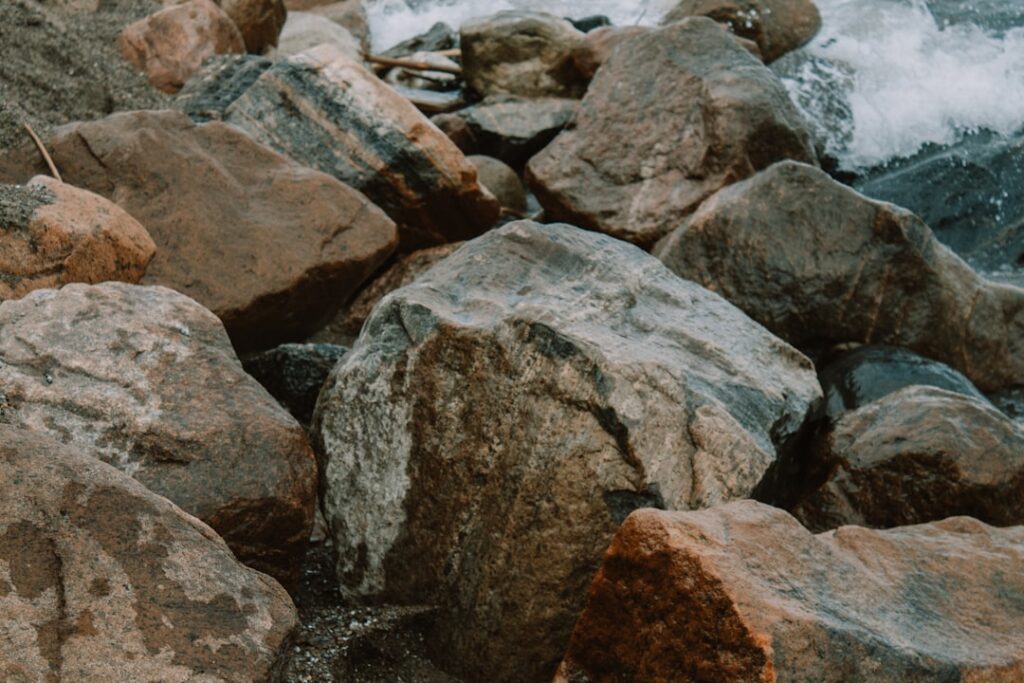
- Granite boulders: the workhorse — speckled grays, tans, and pinks, extremely durable, rounded (river/glacial) or angular (quarried). $150 to $350 per ton
- Limestone: soft grays and buffs with fossil texture; weathers beautifully and stacks well for outcroppings. $100 to $300 per ton
- Sandstone / flagstone boulders: warm buffs, reds, and browns with layered bedding lines; the friendliest color palette for Southwest and prairie plantings. $150 to $400 per ton
- Basalt: dense charcoal-black stone, often sold as columns and dish rocks for modern designs and water features. $300 to $600 per ton
- Moss rock / fieldstone: weathered surface stone with lichen and moss patina intact — the instant-aged look, priced at a premium. $250 to $500 per ton
- Quartzite and specialty stone: sparkle and dramatic color banding for feature placements. $300 to $600-plus per ton
A rough translation from tons to reality: an 18-inch boulder weighs 200 to 300 pounds; a 2-foot stone runs 400 to 700 pounds; a 3-footer commonly hits 1,200 to 2,000 pounds. One ton of boulders is far less rock than most first-time buyers picture.
What Large Rocks Cost, Delivered and Placed
Three numbers make up your real cost. Material runs $100 to $600 per ton at the stone yard, as above. Delivery adds $75 to $200 for a local dump-truck drop, more for long hauls. Placement is the number people forget: getting a half-ton stone from the driveway to the backyard takes equipment — a skid steer or mini excavator rents for $250 to $450 a day, and landscape crews charge $50 to $150 per boulder to set stones, more for crane work over fences or houses ($500 to $1,500 for a crane mobilization). Budget honestly: a project with five 2-to-3-foot boulders typically lands at $1,000 to $2,500 all-in. Two money-saving moves that work: buy from a local quarry rather than a garden center (often half the price per ton), and have the delivery truck place stones as close to final position as access allows — every additional move costs money or vertebrae.
Design Rules That Make Rock Look Natural
Nature rarely deposits one lonely rock, and never on the surface. Borrow its habits:
- Bury the bottom third. A boulder sitting on grade looks delivered; a boulder seated 4 to 12 inches into the soil looks geological. This is the single highest-impact rule
- Group in odd numbers. Clusters of three or five stones of varied sizes read as an outcropping; matched pairs read as gateposts (fine if a gatepost is what you want)
- Match the stone to your region. Local rock always looks right; imported color often fights the setting. Bring home samples before ordering tons
- Orient the grain consistently. Sedimentary stones have bedding lines — keep them running the same direction across a grouping, roughly horizontal, as they would lie in nature
- Best face forward, then stop fussing. Every boulder has one good face; find it before the machine releases the stone, because you will not be rotating it by hand later
Where Big Stones Earn Their Keep
Beyond pure looks, large rocks solve problems. On slopes, partially buried boulders slow runoff and hold soil where a wall would cost ten times more — a scattered “boulder terrace” on a 3:1 slope is a legitimate erosion strategy. At driveway edges and lawn corners, a 300-pound stone is polite but permanent traffic control that no delivery truck will argue with. In dry-country yards, boulder groupings carry the visual weight that lawns used to, pairing naturally with ornamental grasses, agaves, and gravel mulch for near-zero water use. Around ponds and dry creek beds, big anchor stones make the smaller cobble read as intentional rather than dumped. And as informal seating or a kids’ climbing rock, a flat-topped 24-to-30-inch boulder outlasts any bench you can buy.
Moving and Setting Without Injury or Regret
Respect the weights. Up to about 200 pounds, two people with a ball cart, hand truck, or pry bars and pipe rollers can manage on firm ground. From 200 to 1,000 pounds you want machinery — a rented skid steer with forks or a tractor loader — plus chains or lifting slings rated for the load, never rope. Above a half ton, hire the crew; they carry insurance for the fence panel and the gas line you are about to discover. Before any stone lands, call 811 for utility marking if you are digging seats, and prepare each pocket: excavate a depression matching the stone’s base, tamp it, and set the boulder so it sits stable without rocking, then backfill and dress with soil or mulch. Set your largest anchor stone first and arrange companions to it — never the reverse.
Sourcing: Quarry, Yard, or Free
Where you buy changes the price more than what you buy. Stone yards and garden centers offer selection and small-quantity convenience at the highest per-ton rates. Quarries and aggregate pits sell the same granite for $80 to $150 a ton if you can take delivery of a full truck or haul it yourself with a trailer rated for the load. Then there is the free market: excavation contractors and new-construction sites routinely pay to dispose of boulders, and a polite call or a “wanted” post often yields stones for the cost of hauling — farmers in glacial-till country will frequently let you pick rock piles for nothing. Free stone comes with caveats: you take what the dig produced (colors and shapes vary), you arrange the machinery, and you should rinse field stone before placing it near plantings in case it carries herbicide residue from crop edges. For a designed front-yard feature, hand-tagged yard stone earns its premium; for filling out a slope or a dry creek’s supporting cast, cheap and free rock stretched with two or three purchased hero boulders is how the pros keep budgets sane.
Planting Around Boulders
Stones and plants flatter each other when the pairing follows a few habits. Tuck plants against the boulder’s north and east faces, where the rock shades roots and condenses overnight moisture — old gardeners call boulders “slow-release water tanks” because the soil beneath their edges stays damp days longer than open bed. Scale matters in both directions: a 3-foot boulder wants at least one companion planting of real mass (a juniper, a big bluestem clump, a dwarf pine) so it does not sit lonely, while groundcovers like creeping thyme, sedum, or moss knitting against the base make the stone read as long-settled. Ornamental grasses are the reliable partner — their motion against the stone’s stillness is the whole show. Avoid ringing a boulder with a necklace of small matching plants, which reads like a museum exhibit; nature clusters asymmetrically. And think seasonally: stones carry the composition in winter when perennials vanish, which is precisely why designers in snow country weight their budgets toward rock and evergreens rather than flowers.
Buying Checklist
Visit the yard in person and tag specific stones rather than ordering “three tons of granite boulders” sight unseen — variation within a pallet is enormous. Confirm per-ton versus per-pound pricing, delivery fees, and whether the truck can reach your placement zone (measure gate widths; a loaded skid steer needs roughly 6 feet). Ask for moss rock to be loaded gently so the patina survives. And over-order small: one extra 18-inch stone costs $40 and always finds a home, while an extra ton clutters the driveway for a season. Chosen well and seated deep, large landscaping rocks are the rare purchase that is genuinely one-time — the same stones will be anchoring your yard, unwatered and unbothered, in fifty years.