Designers reach for one tool again and again when a room feels chaotic: a big, calm floor. A large neutral area rug is the quiet foundation that lets everything else in the space breathe, from a bold sofa to a rotating cast of throw pillows. Unlike a trendy color you might tire of in two years, ivory, greige, and oatmeal read as timeless. This guide walks you through choosing the right neutral shade, the materials that add texture without adding color, how to size up correctly, and the maintenance realities of light-colored rugs in a real household.
- Why Neutrals Anchor a Room So Well
- Choosing the Right Neutral Shade
- Which Neutrals Hide Dirt and Which Show It
- Material Choices That Add Interest Without Color
- Sizing Up: Getting "Large" Right
- Layering and Styling Your Neutral Base
- Keeping a Light Rug Looking Fresh
- Is a Large Neutral Rug the Right Call?
Why Neutrals Anchor a Room So Well
Neutral tones work because they recede. Instead of competing with your furniture and art, a soft beige or taupe floor gives the eye a place to rest and makes the room feel larger and more intentional. That restraint is also practical over the long haul. Repaint the walls, swap the couch, change the curtains from linen to velvet, and a well-chosen neutral rug still belongs. You are buying a piece you will keep for a decade, not a season.
There is a psychological angle too. Warm neutrals like cream and camel make a space feel cozy and inviting, while cooler greiges and dove grays read crisp and modern. Because the color is doing so little work, texture and scale become the stars, which is exactly why interior pros lean on large neutral rugs to ground a room without dictating its mood.
Choosing the Right Neutral Shade
Not all neutrals behave the same way, and the undertone matters more than the name on the label. Before you order an 8×10 online, understand the family you are shopping in.
- Ivory and cream — the brightest, airiest choice; opens up a dark room but shows the most dirt
- Beige and sand — warm and forgiving, the classic middle ground for most living rooms
- Greige — a gray-beige hybrid that flexes between warm and cool decor
- Taupe and mushroom — deeper and richer, excellent at hiding foot traffic
- Oatmeal and wheat — flecked, multi-tonal neutrals that camouflage crumbs beautifully
Hold a sample against your largest fixed element, usually the flooring or the sofa. If your oak floors are golden, a cool gray rug can fight them; a warm greige or wheat tone will harmonize instead. In a room with cool-gray plank or a charcoal sectional, lean toward a rug with a gray base so the whole palette agrees.
Which Neutrals Hide Dirt and Which Show It
Let us be honest about light rugs. A flat, solid ivory in a busy hallway will look tired fast. The trick is choosing a neutral that works with your life, not against it. Multi-tonal and flecked constructions are your best friend here. A rug woven from several close shades of tan and cream visually breaks up spills, pet hair, and shadow lines the way a speckled countertop hides crumbs.
Solid pale rugs belong in low-traffic, adult, shoes-off zones, such as a formal sitting room or a primary bedroom. For a family room with kids and a dog, step up to a mid-tone taupe or a heathered oatmeal and you will vacuum far less often. As a rule, the deeper and more textured the neutral, the more forgiving it is day to day.
Material Choices That Add Interest Without Color
When you strip out bold color, texture carries the whole design. Choosing the right fiber is how you make a beige rug feel expensive rather than boring.
Wool
Wool is the gold standard for a large neutral rug. It is naturally stain-resistant thanks to lanolin, springs back under heavy furniture, and develops a soft patina over years. Expect to pay $8 to $20 per square foot, so a hand-knotted 9×12 can run $1,500 to $3,000. It rewards the investment with a 20-year lifespan.
Jute and Sisal
Natural jute delivers instant texture and an organic, coastal feel at $2 to $6 per square foot. The tradeoff is comfort and cleanability: jute is coarse underfoot and hates moisture, so keep it out of damp basements and away from wine-spill zones.
Wool Blends and Polypropylene
A wool-polyester blend splits the difference on price and durability. For families, machine-made polypropylene is the workhorse. It resists stains and fading, wipes clean, and a large 8×10 costs just $150 to $400, making it the smart pick under a dining table or in a playroom.
Sizing Up: Getting “Large” Right
The most common mistake homeowners make is buying too small. A rug that floats in the middle of the room with a lonely coffee table shrinks the space and looks like an afterthought. Since you are already searching for a large rug, commit to a size that actually defines the seating area.
- 8×10 — the everyday large size; fits a standard 12×14 living room with front furniture legs on the rug
- 9×12 — generous enough to put all furniture legs on the rug in a bigger great room
- 10×14 — for open-concept spaces and large sectionals where you want a true wall-to-seating footprint
Aim to leave 8 to 18 inches of bare floor between the rug edge and the walls so the room feels framed, not carpeted. Under a dining table, size the rug so the chairs stay on it even when pulled out, which usually means adding 24 inches to each side of the table footprint.
Layering and Styling Your Neutral Base
A large neutral rug is a launchpad, not a finish line. Once it is down, you can build warmth and personality on top without commitment. Float a smaller patterned or vintage rug over a big jute foundation to add pattern in the center while keeping the calm border. Vary your throw pillows and blankets seasonally, going warm and nubby in winter and light and linen in summer, and the room transforms while the floor stays constant.
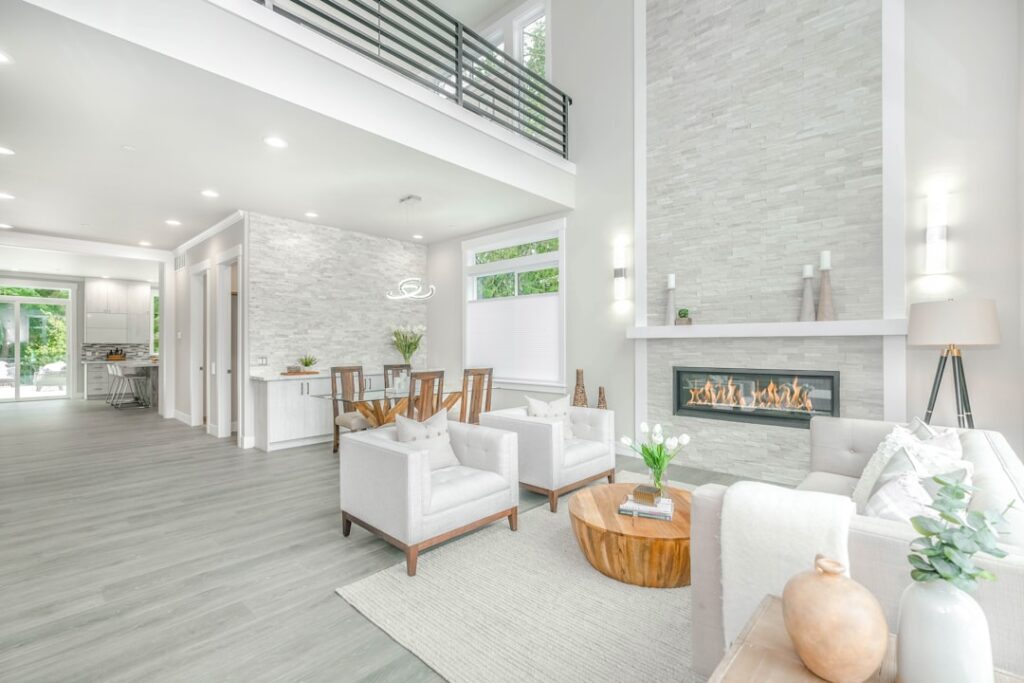
Pay attention to warm versus cool pairings. In a room full of walnut, brass, and terracotta, a creamy wheat rug amplifies the coziness. In a space with white oak, black metal, and cool paint, a greige or dove rug keeps the palette clean and contemporary. Matching the rug’s undertone to the room’s metals and woods is the difference between a look that feels curated and one that feels slightly off.
Keeping a Light Rug Looking Fresh
Maintenance is where neutral rugs earn or lose their keep. A good rug pad is non-negotiable: it prevents slipping, extends the life of the fibers by absorbing impact, and lets air circulate for easier vacuuming. Vacuum a large neutral area rug weekly, and more often in a pet household, using suction rather than an aggressive beater bar on wool.
Blot spills immediately with a clean white cloth, working from the outside in so you do not spread the stain. For wool, use a mild pH-neutral cleaner and never saturate the backing. Rotate the rug 180 degrees every six months so sun fading and foot traffic wear evenly. Once a year, a professional cleaning brings a light rug back to life for $150 to $400 depending on size, which is a small price to protect an investment you plan to keep for years.
Is a Large Neutral Rug the Right Call?
For most homeowners, the answer is yes. A large neutral area rug is the most flexible flooring decision you can make, forgiving of decor changes, friendly to resale, and calming in a busy home. Choose a warmer or cooler tone to match your fixed elements, lean into texture through wool or a multi-tonal weave, size it generously so it anchors the seating, and back it with a quality pad. Do that, and you will have a foundation that quietly makes every other choice in the room look better for the next ten years.